Applications Library • Confectionery

Chocolate & praline inclusions

A procurement-ready guide to hazelnut ingredients used in chocolate and praline inclusions — including the best product formats (paste, praline, meal/flour, and controlled cuts), roast and flavor alignment, particle size targets for refining, stability and oxidation control, and packaging approaches that protect aroma and crunch throughout shelf life.

Back to applications
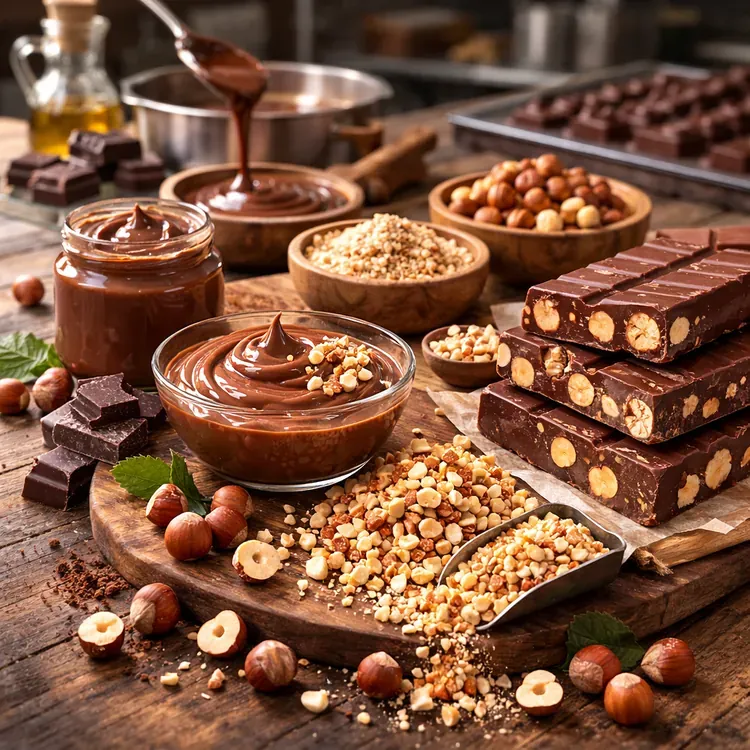
Chocolate & praline inclusions illustration

Where it fits

Hazelnuts are a signature confectionery ingredient because they deliver a recognizable roasted-nut aroma, a naturally sweet profile, and a clean fat content that pairs exceptionally well with cocoa and milk solids. In chocolate and praline systems, hazelnuts appear in two broad roles:

  • Refined inclusions and fillings — praline pastes, nut bases, and smooth hazelnut-chocolate systems where particle size and viscosity matter.
  • Textural inclusions — diced/chopped nuts or crunchy clusters where moisture and crunch retention are the key quality drivers.

For manufacturers, the core success factors are flavor consistency (roast and lot uniformity), particle control (for refining, mouthfeel, and processability), and shelf stability (oxidation management and packaging protection). We support confectionery producers by aligning hazelnut format, roast profile, and packaging to your line and finished product targets.

Roast profile alignment Particle-size control Oxidation protection Export-ready documentation

Recommended formats

Typical starting points for pilots and scale-up. We align roast level, grind/particle targets, and packaging based on whether the application is refined (praline base) or textural (crunch inclusions).

  • Hazelnut paste / puree — foundation for praline and smooth inclusions
  • Hazelnut meal / flour — helps tune texture, solids loading, and refining behavior
  • Diced / sliced / chopped — inclusions for crunch, visual impact, and premium positioning
  • Roasted kernels — for in-house roasting/grinding when you control flavor development

Technical considerations

The variables that most often affect throughput, taste, and shelf-life in chocolate and praline inclusions.

  • Roast profile: light/medium/dark targets aligned to cocoa profile and brand taste
  • Particle size: affects mouthfeel and refining (grit vs smoothness)
  • Viscosity control: nut solids and oil content change flow and enrobing behavior
  • Oxidation risk: roasted fats require oxygen/light protection to prevent rancid notes
  • Crunch retention: moisture migration can soften pieces or clusters over shelf life
  • Allergen controls: segregation, labeling, and documentation for retailer compliance

Packaging approach

Packaging is a primary lever for preserving aroma and preventing oxidation—especially for roasted cuts and paste. We can supply lined cartons and bulk packaging suited to sea, road, or air freight.

For sensitive formats (paste, roasted pieces), oxygen barrier and temperature management help preserve the roasted notes that define premium praline.

See bulk supply details →

Choosing the right hazelnut format for your inclusion

The “best” format depends on whether you are building a refined base (praline/filling) or a texture inclusion (pieces, clusters, nibs). Procurement typically starts by mapping the product to one of these needs:

Use caseWhy it’s chosenPreferred format
Praline base / smooth fillings Consistent flavor and smooth mouthfeel; easier scaling Roasted paste / puree; optionally meal/flour to tune solids
Chocolate inclusions (refined) Controls texture and viscosity in compound systems Paste + meal/flour with defined particle targets
Crunch inclusions / clusters Premium bite and visual appeal Diced/chopped/sliced, with low fines and moisture control
In-house roasting & grinding Maximum control over aroma development Calibrated kernels (natural or blanched)

If you share your target inclusion type (filling vs piece), refining capability, and finished shelf-life requirement, we’ll recommend the format and packaging level that best protects flavor and texture.

What drives performance in chocolate & praline systems

1) Roast profile and flavor repeatability

Roast is the biggest flavor lever. Small shifts can change perceived sweetness, cocoa pairing, and nutty intensity. For confectionery, many teams lock a roast target (light/medium/dark) and then use sensory checks plus defined acceptance criteria to keep batches aligned.

2) Particle size, refining, and mouthfeel

In refined systems, particle size influences smoothness and flow. If your process includes refining, you typically specify a starting grind or meal profile that supports efficient refining and a consistent final mouthfeel. For inclusions, controlling fines (dust) helps prevent “muddying” the chocolate and keeps visual identity clean.

3) Viscosity and process behavior

Hazelnuts contribute both oil and solids, which can change viscosity in fillings and compounds. Consistent raw material and particle control helps stabilize processing parameters such as pumping, depositing, enrobing, and molding.

4) Crunch and moisture migration

Crunch inclusions can soften over time if moisture migrates from the surrounding matrix. Managing moisture at the ingredient level and choosing packaging that protects from humidity helps retain texture—especially for diced nuts and clusters.

5) Oxidation protection for shelf life

Roasted nut ingredients are aroma-rich but sensitive. Oxygen exposure can dull flavor and introduce rancid notes. High-barrier packaging, headspace management, and temperature-aware logistics protect the roasted profile your product is built around.

Roast consistency Refining-friendly particle control Low fines for clean inclusions Oxygen barrier packaging
Typical specification markers

Below is a practical checklist used by procurement and QA teams for chocolate and praline inclusion programs. We align each item to your destination market, processing level, and whether the ingredient is paste/meal (refined) or diced (textural).

ParameterHow we align it
Roast profile / colorAligned to flavor target; consistent batch sensory checks where required
Particle size / sieve bandDefined for meal and diced pieces; supports refining and clean inclusions
Fines / dust limitControlled screening to reduce “muddying” and improve inclusion definition
MoistureControlled to protect crunch and reduce texture loss over shelf life
Defect sortingScreened and optically sorted where required
Micro profileAligned to customer specifications and destination requirements
AflatoxinManaged through risk-based sourcing and partner controls
PackagingHigh-barrier liners; optional vacuum/MAP; export cartons as required

Final values depend on product form and customer requirements. We share lot documentation with each shipment and can align to your incoming QC workflow and annual program needs.

FAQ

Which hazelnut format is most common for chocolate & praline inclusions?

Most programs use roasted hazelnut paste as the foundation for praline bases and refined fillings, combined with meal/flour when needed to tune solids and refining behavior. For texture-driven inclusions, calibrated diced/chopped pieces are common, with defined sieve bands and low fines.

What is the biggest risk when adding hazelnuts to chocolate inclusions?

The biggest risks are oxidation (off-notes), moisture-driven texture loss (softening of crunchy inclusions), and process shifts such as viscosity changes or particle size not matching refining targets. Controlling roast, particle size, moisture, and packaging barrier reduces these risks.

Can you match a target particle size or cut?

Yes. We can supply calibrated kernels and controlled cuts (sliced, diced or chopped) and align tolerance bands, sieve specs, and fines limits to your process and inclusion design.

Do you support long-term supply programs?

Yes. We structure annual and multi-shipment programs with consistent specifications, batch documentation and forecast-based planning. This improves repeatability and reduces reformulation and line-adjustment risk.

Next step

Send your inclusion type (paste/praline base vs diced texture), target roast profile, particle size expectations, annual volume, and destination. We will propose suitable formats, packaging options, and a shipment plan aligned to your process and shelf-life targets.

  • Product type: praline base, refined filling, crunchy inclusion, cluster, enrobed piece
  • Format: paste / meal / diced (include your sieve band if available)
  • Roast: light / medium / dark (or your color/sensory reference)
  • Shelf life: target months + storage conditions
  • Destination: country + distribution channel
Review products