Traceable lots
Shipments are organized around identifiable lots, with documentation designed to support internal traceability, recall readiness, and supplier approval workflows.
Sustainability is only useful when it’s measurable. We support buyers with traceable lots, ESG-aligned documentation, and packaging/handling controls that protect shelf-life and reduce avoidable waste.
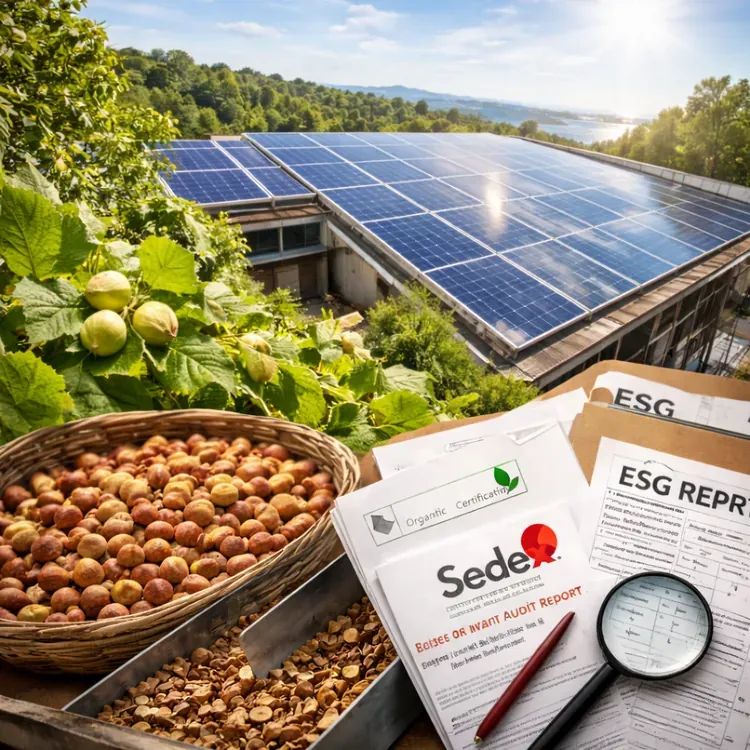
Responsible supply is not a slogan — it is the ability to show where the product comes from, how it was processed, and what controls were applied before shipment. We structure programs around the practical needs of procurement and QA: repeat specifications, stable partners, and documentation that holds up in audits.
If you already have an internal sustainability questionnaire, send it — we’ll map each line item to the correct document, control, and supplier evidence.
Shipments are organized around identifiable lots, with documentation designed to support internal traceability, recall readiness, and supplier approval workflows.
We align sourcing to risk-based controls and supplier policies focused on safe working conditions, ethical practices, and prevention of unacceptable labor in the supply chain.
Where available, we share energy and emissions-related information from processing programs — such as solar initiatives, reduction targets, or verified reporting statements — to support customer ESG reporting.
Hazelnut by-products (shells and skins) can be valorized for industrial uses (e.g., biomass energy or extracts), reducing landfill waste streams when programs and partners support it.
Better barrier packaging and handling guidance reduce oxidation, staling, and avoidable write-offs — especially for roasted cuts, paste, and oil.
Clear paperwork, consistent labeling inputs, and shipment documentation discipline help customers pass audits with fewer back-and-forth requests.
The exact document set depends on product form, destination market, and your internal requirements. Below is a practical view of the information most procurement teams request during supplier onboarding and annual reviews.
| Area | Typical evidence | How it’s used |
|---|---|---|
| Traceability | Lot identification, origin statements (region/province), pallet labels, packing list references | Supplier approval, internal traceability, recall readiness |
| Food safety | COA, product spec sheet, allergen statement, microbiology plan, contamination controls | QA release, customer audits, risk assessments |
| Social compliance | Supplier policies, ethical trade statements, audit participation evidence (where applicable), CAP status | ESG reviews, customer codes of conduct |
| Environment / climate | Energy initiatives, packaging specs, available GHG reporting statements, reduction targets (program-specific) | Customer ESG reporting and disclosure |
| Regulatory export | Certificates aligned to destination, customs docs, origin documentation, shipment documentation discipline | Border clearance, compliant market entry |
If you need a specific framework mapping (buyer questionnaire, supplier code, or ESG platform fields), share it and we’ll return a structured answer set that your team can file internally.
Sustainable supply includes minimizing avoidable spoilage and returns. Hazelnuts and hazelnut ingredients are sensitive to oxygen, heat, and moisture. We align packaging and handling guidance to your format and distribution channel.
| Product form | Sensitivity | Typical control points | Packaging options |
|---|---|---|---|
| Natural kernels | Moisture, foreign matter, rancidity risk over time | Moisture targets, defect sorting, lot separation, dry storage guidance | Industrial cartons/liners, sacks; pallet labeling |
| Roasted kernels / cuts | High oxidation sensitivity; aroma loss | Roast profile control, oxygen exposure minimization, temperature handling | Barrier liners, vacuum/MAP where applicable; export palletization |
| Flour / meal | Moisture pickup, clumping, oxidation | Particle control, moisture stability, sieve/metal control, storage conditions | High-barrier pouches (retail) or lined industrial packs |
| Paste / puree | Oxidation, oil separation, texture drift | Grinding fineness, mixing stability, oxidation controls, temperature guidance | Pails/drums; optional protective headspace / liner programs |
| Hazelnut oil | Light/oxygen sensitivity; peroxide rise | Oxidation protection, filtration clarity, storage and light control | Drums/IBC (industrial) or bottles (retail) with protective packaging |
Better barrier packaging reduces oxidation and staling, preventing write-offs and rework. For aroma-sensitive formats (roasted cuts, paste, oil), shelf-life protection typically delivers more environmental benefit than marginal packaging reduction.
Many buyers run multi-commodity compliance programs (deforestation-free, due diligence, social audits). While hazelnuts are not a regulated “deforestation commodity” under the EU’s deforestation regulation scope, the due-diligence mindset still matters: traceability, supplier risk controls, and clear documentation.
For complex organizations, we can provide a “one-pager” sustainability summary per product program so internal stakeholders can approve quickly.
Türkiye’s hazelnut processing industry includes companies that publicly report concrete initiatives such as solar energy projects, greenhouse-gas reporting, and emissions reduction targets. When customers request ESG support, we benchmark our documentation approach against the kinds of measurable disclosures leading processors publish.
Ask for an ESG evidence pack, and we’ll respond with what is available for your specific product program and supplier pathway.
We can provide traceable lot information, origin statements (region/province), documentation discipline (packing list, pallet labels, COA), and a program-specific evidence pack aligned to your procurement checklist.
Where required, we can align sourcing to supplier sites participating in recognized social audit frameworks and share available audit evidence and corrective action status (subject to supplier permissions and customer requirements).
Depending on the supplier program and site, we can share available GHG reporting statements, energy initiatives (e.g., solar), and reduction targets or related documentation to support customer ESG reporting.
If you require organic or other certifications, share your destination market and certification expectations so we can propose suitable options through partner programs and confirm labeling and pack format needs.
The largest waste lever is preventing quality loss: packaging that protects aroma, moisture stability, and oxidation control for sensitive formats. We also support by-product valorization pathways where processing programs and partners enable it.
Tell us your product form, destination market, and sustainability requirements (questionnaire / platform / audit checklist). We’ll respond with a structured document set and a program path.