Specification lock
Product form, size/cut band, moisture target, skin ratio (where relevant) and packaging are set to match your line and QA requirements.
We lock product specifications, packaging and documentation to your procurement and QA process — then run repeatable shipment programs for stable supply.
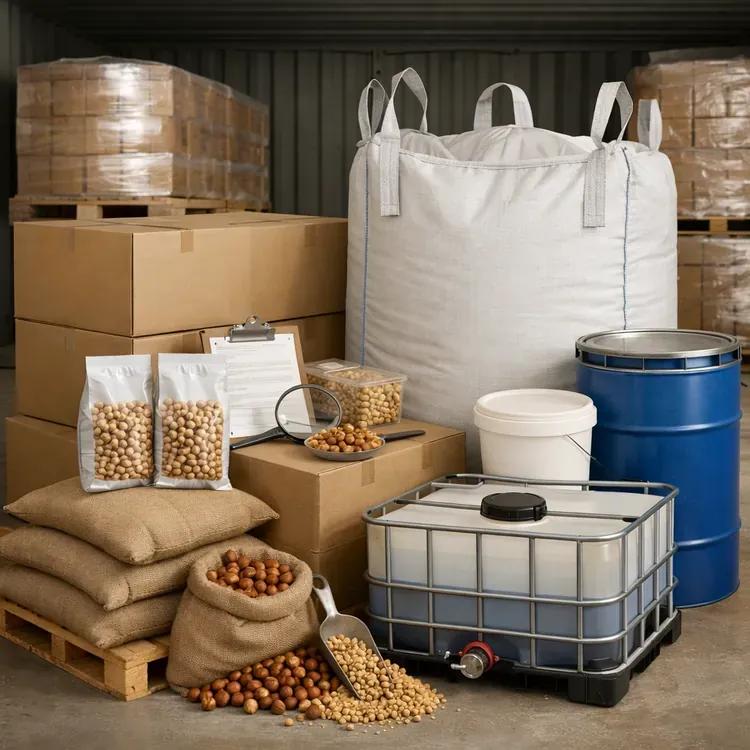
Bulk procurement succeeds when specifications are unambiguous and repeatable. We start by mapping your application and process (roasting, dosing, grinding, mixing) to the correct hazelnut format, then lock the packaging and documentation flow.
Programs can be structured as spot shipments, seasonal coverage, or annual schedules. Where applicable, we support forecast-based allocations.
If you already have an internal specification sheet, send it — we translate it into a production + packaging blueprint and align it to destination requirements.
Product form, size/cut band, moisture target, skin ratio (where relevant) and packaging are set to match your line and QA requirements.
Liner type, oxygen barrier, bag/drum format and pallet pattern are aligned to handling, humidity exposure and freight mode.
Lot traceability + shipment documents are prepared in a procurement-friendly structure, supporting repeat ordering and audit readiness.
A bulk program starts with a shared “blueprint” that defines what will be produced, how it will be measured, and how it will be packed. Below is a practical structure used by industrial buyers to avoid surprises at receiving and on the production line.
| Block | What gets defined | Why it matters |
|---|---|---|
| Format | Kernels (natural / blanched / roasted), diced/chopped, sliced, meal/flour, paste/puree, oil | Determines processing path, packaging protection and expected line behavior |
| Size / cut band | Kernels: 9–15 mm bands (1–2 mm intervals); Diced: 0–12 mm with selected bands; Sliced: ~0.7–1.5 mm; Meal: 0–1.5 / 0–2 / 0–3 mm; Paste fineness target | Controls dosing consistency, melt/texture in inclusions, and grinding performance |
| Moisture target | Example industrial targets: roasted kernels ~0.8–3%; blanched kernels ~3–5%; natural sliced ~4–6%; blanched sliced ~4–5% | Primary driver of shelf stability, clumping, crunch, and migration in chocolate/confectionery |
| Skin ratio (where relevant) | Attached skin bands for “with skin” products or diced formats, defined per application (visual, flavor, and oxidation behavior) | Impacts color, bitterness/astringency, and appearance in finished goods |
| Safety limits | Aflatoxin limits and microbiological criteria; paste programs often specify moisture, peroxide value, and aflatoxin thresholds | Reduces rejection risk; supports regulatory and customer compliance |
| Packaging & logistics | Bag/carton/drum/IBC, liners, oxygen barrier, palletization, marking, incoterm and destination | Prevents transit damage and oxidation; simplifies receiving and storage |
The blueprint is always finalized against your internal spec and destination requirements. The example ranges above reflect commonly published industrial offer sheets from Türkiye-based processors.
Use these as a starting point for RFQs and internal alignment. If your line needs tighter bands (e.g., for volumetric dosing, chocolate enrobing, or high-speed bakery), we can define narrower tolerance windows.
Format + size band, target moisture, skin ratio (if relevant), packaging, destination, and requested limits (aflatoxin/micro). Add: intended application + whether you dose by weight or volume.
For paste: include target roast color (light/medium/dark) and fineness (μ) to match your shear/mixing system.
| Format | Common size / fineness | Moisture examples | Typical applications |
|---|---|---|---|
| Kernels (natural) | 9–11 / 11–13 / 13–15 mm (and other bands) | Defined per buyer spec | Roasting lines, inclusions, repacking, nut mixes |
| Kernels (roasted) | Same kernel bands; roast profile set to aroma + color | ~0.8–3% | Confectionery, bakery, chocolate, snacks |
| Kernels (blanched) | Same kernel bands; skin removed | ~3–5% | Light color targets, dragées, fillings, premium inclusions |
| Sliced | ~0.7–1.5 mm thickness ranges | Natural ~4–6% / Blanched ~4–5% | Pastry topping, biscuits, cereals, chocolate décor |
| Diced / chopped | 0–12 mm catalog with selected bands (e.g., 1–3, 2–4, 4–8, 5–11) | Roasted ~0.8–3% / Blanched ~3–5% | Bars, biscuits, ice cream, cereals, chocolate inclusions |
| Meal / flour | 0–1.5 / 0–2 / 0–3 mm | Defined per process (natural / blanched / roasted) | Gluten-free baking, texture, binding, flavoring |
| Paste / puree | 20–80 μ (or your required fineness) | Often specified (example: moisture max 2%) | Spreads, fillings, creams, wafers, ice-cream variegates |
Packaging is not just a weight choice — it’s your oxidation and humidity-control strategy. We align packaging to product sensitivity, transit time and your receiving workflow.
| Product group | Common industrial packs | Protection notes |
|---|---|---|
| Kernels / diced | 25–50–80 kg sacks (jute / lined); 25–50 kg paper bags; 5–25 kg vacuum bags (with/without carton); 500–1000 kg big bags (where applicable) | For roasted formats: prioritize oxygen barrier + sealing discipline to preserve aroma. For long routes: consider vacuum/MAP strategies per customer spec. |
| Sliced | 10 / 12.5 / 20 kg polylined cartons or cartons with inner nylon bag | Protects fragile slices from breakage; improves line dosing consistency |
| Meal / flour | 25–50 kg lined bags or paper bags; 5–25 kg vacuum bag options (with/without carton) | Moisture ingress control reduces clumping and improves shelf stability |
| Paste / puree | 5 / 10 / 20 kg buckets; 30 / 60 / 200 / 220 kg food-grade drums; 1000 kg IBC; bulk tanker/container (high-volume) | Fineness + roast color + peroxide/aflatoxin criteria should be defined. Temperature management and headspace oxygen control protect flavor. |
| Retail / private label | Jar/pouch/bag formats; shelf-ready cases; pallet labels + barcodes | Label compliance (destination language, allergens, traceability) and case configuration aligned to your retail channel |
Need a specific packing pattern (EU/UK pallet height, corner boards, slip sheets, shrink type, label layout)? Add it to the RFQ and we will mirror it.
Bulk programs run smoothly when every shipment is accompanied by a consistent documentation set and lot traceability. We structure documentation so procurement, QA and warehousing can verify in minutes.
Common buyer-side checks include: moisture, size distribution, foreign matter/defects, skin ratio (where relevant), aflatoxin limits, and microbiological criteria — especially for paste programs.
Example published paste criteria include: moisture max 2%, peroxide max 1.0 meq/kg, aflatoxin B1 max 5 ppb and total max 10 ppb, plus microbiology and storage guidance. Your final limits are set by your internal spec and destination regulations.
We coordinate shipment planning to match your incoterm, destination and receiving constraints — while protecting product quality in transit. For sensitive formats (roasted cuts, paste), oxygen barrier packaging and temperature/humidity discipline are essential for aroma preservation.
Practical bulk routing decisions usually depend on: product type (roasted vs natural), package type (vacuum vs sacks vs drums), transit time, and destination climate. We recommend protection proportional to risk rather than a one-size-fits-all rule.
If your warehouse requires specific pallet height, labeling fields, or quarantine marking, include it — we implement it program-wide.
Destination: country + port/terminal (or final address for DDP)
Mode: sea / road / combined
Handling: pallet type, max height, forklift access, humidity exposure
Receiving: sampling plan, lab tests, and hold/release procedure
Provide the essentials in under a minute. The summary will be inserted into the message field for you.
Tip: Add at least one technical anchor: (1) size band, (2) moisture target, (3) packaging format, (4) destination. If you buy paste, add roast color + fineness target (μ).
This tool does not store your information. It only prepares your message.
Yes. We define a specification blueprint (format, size/cut band, moisture target, skin ratio where relevant, packaging and documentation), then keep it stable across repeat shipments with lot-based traceability and CoAs.
Yes. We structure both full container and consolidated shipments depending on product sensitivity, packaging, and destination.
Yes. Packaging, carton configuration and palletization can be aligned to your warehouse handling, labeling fields, and pallet height limits.
Yes. Common programs use 5–20 kg buckets, 30–220 kg drums, and 1000 kg IBC. Fineness targets (e.g., 20–80 μ) and roast color (light/medium/dark) can be aligned to your process.
We provide shipment documentation and product documentation aligned to the destination market and customer requirements (traceability, CoA, packing list/invoice, origin & transport documentation, and requested compliance statements).