Applications Library • Confectionery

Chopped hazelnuts for nougat

A practical, procurement-ready overview of how hazelnut formats perform in nougat — with detailed guidance on cut size selection, roast and color targets, dust control, packaging options, and specification markers used by QA teams.

Back to applications
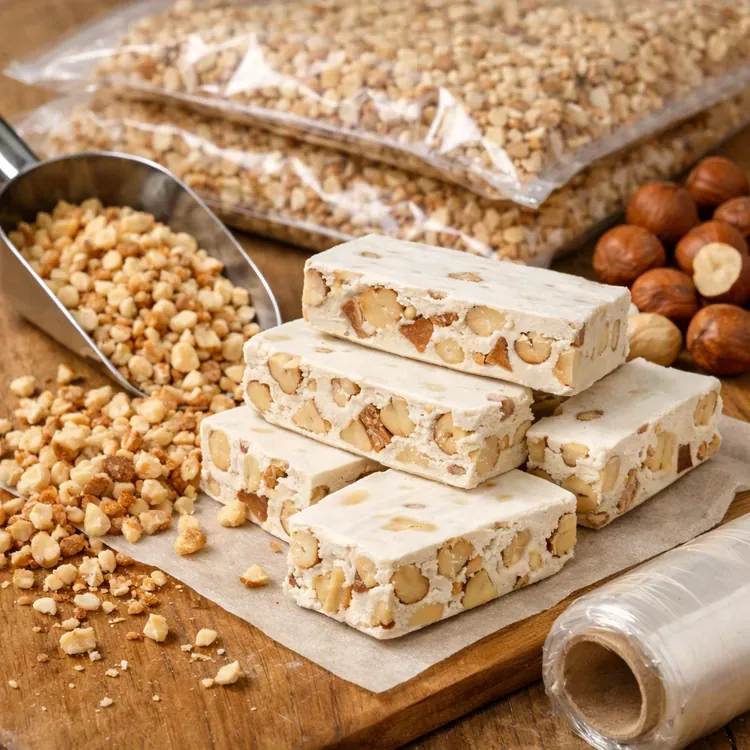
Chopped hazelnuts for nougat illustration

Where it fits

Nougat relies on a balance of sweetness, aeration, and fat management. Hazelnuts contribute roasted aroma, a clean nutty sweetness, and a distinctive bite. In chopped form, hazelnuts are used as visible inclusions (for texture and appearance) or as a functional ingredient (to influence viscosity, stability, and overall flavor delivery).

The procurement drivers are usually the same across confectionery plants: flavor consistency (batch-to-batch continuity), particle control (repeatable dosing and reduced dust), and shelf stability (aroma protection and oxidation management in storage and transit).

We support manufacturers by aligning the hazelnut format and processing level to your line: whole kernels for in-house roasting, blanched kernels for lighter color targets, controlled chops and dices for dosing, and paste/meal for homogeneous bases or fat-rich recipes.

Export-ready documentation Lot traceability Custom cuts Bulk & retail options
Recommended formats

Typical starting points for pilots and scale-up. We adapt roast level, cut tolerance, and packaging to match your dosing equipment, mixing time, and target texture.

  • Chopped / diced (calibrated) for clean inclusions and consistent bite
  • Meal / flour for homogeneous texture, smoother bite, or controlled viscosity
  • Blanched kernels when light color or low skin presence is important
  • Roasted kernels when you want maximum aroma and a stronger nut profile

Technical considerations

The most common variables that impact throughput, flavor, appearance, and stability in nougat lines.

  • Allergen control and segregation planning (site, storage, and transport)
  • Particle size distribution (overs/unders) and dust control for consistent dosing
  • Oxidation management through oxygen barrier packaging and headspace control
  • Fat migration considerations for layered confectionery and coated bars
  • Mechanical stress in mixing (minimizing breakage that creates extra fines)

Packaging approach

We can supply lined cartons, vacuum or MAP options, and palletization suited to sea, road, or air freight. For aroma-sensitive formats (roasted cuts, paste), oxygen protection and temperature management are key.

If you are troubleshooting shelf life, we usually look at: roast intensity, oxygen exposure, storage temperature, and the amount of fines (higher surface area can accelerate aroma loss).

See bulk supply details →

What “good” looks like in nougat

Nougat production benefits from ingredients that are stable and predictable. For chopped hazelnuts, this usually means: a controlled cut size, low dust/fines, clean aroma, and packaging that keeps oxygen exposure low from factory to factory.

When customers share a benchmark sample or an existing specification, we translate that into practical parameters: cut style and distribution, roast/blanch level, moisture range, defect sorting, and packaging performance.

Cut distribution Dust / fines limits Roast & color targets Aroma protection

Cut sizes and where they are used

“Chopped hazelnuts” can mean very different things depending on the product. Some recipes want a fine cut that blends smoothly, while others need a larger, crisp inclusion that remains visible after mixing and forming. Below are common bands used to structure a specification discussion (final selection depends on your line and product target).

Cut style Typical size band (example) Where it fits in nougat Notes for production
Fine chop ~0.5–2 mm Smoother bite, higher dispersion More surface area; dust control and oxidation protection become more important
Medium chop ~2–4 mm Balanced bite and visibility Often the easiest to dose consistently without excessive fines
Coarse chop / dice ~4–8 mm Premium texture and strong visual inclusion Check breakage during mixing and forming; agree overs/unders tolerance
Meal / flour Powdered Homogeneous texture and flavor carry Best for viscosity control; keep an eye on moisture and clumping during storage

Tip: If your line experiences bridging in hoppers or inconsistent dosing, a medium chop with tighter fines control is often a good starting point.

Roast, blanch, and color targets

Nougat recipes vary from light (where inclusions must stay pale) to darker, more aromatic profiles. The right hazelnut processing level depends on the final flavor direction and the degree of heat exposure in your process.

  • Natural kernels (unblanched): more rustic look, stronger nut identity, presence of skin
  • Blanched: cleaner color, lower skin presence, often chosen for premium light nougat
  • Roasted: maximum aroma and stronger flavor; requires stronger oxidation management

For roasted cuts, the key is alignment: roast intensity + cut size + packaging. Higher roast and smaller cuts typically need more protection to keep aroma stable through your target shelf life.

Dosing and dust control

Dust and fines can cause inconsistent feeding, create cleaning burden, and increase oxidation risk. Your spec can include fines limits and agreed sieve distribution to support stable production.

  • Define overs/unders and acceptable fines
  • Confirm compatibility with augers, vibratory feeders, and weigh systems
  • Minimize post-pack movement that can generate extra fines

Shelf-life strategy

Hazelnuts contain natural oils that can oxidize over time. The risk increases with roast intensity and smaller particle size. Packaging and storage conditions are usually the levers that protect flavor.

  • Oxygen barrier packaging (liners and films)
  • Vacuum or MAP options for sensitive SKUs
  • Temperature stability in storage and transport

Process integration

The same cut can behave differently depending on your mixing time, viscosity, and aeration. We can help map hazards and practical controls so you avoid breakage, uneven distribution, or visual defects.

  • When to add inclusions (late addition often reduces breakage)
  • Mix speed and shear control
  • Depositing and forming considerations

Typical specification markers

Below is a practical checklist used by procurement and QA teams. We align each item to your destination market, customer requirements, and processing level (natural/blanched/roasted, whole/cut/meal/paste).

ParameterHow we align it
Cut / sieve distributionAgreed target band and tolerance (overs/unders, fines)
MoistureControlled to your target range to support stability and flow
Defect sortingScreened and optically sorted where required
Micro profileAligned to customer specifications and destination requirements
AflatoxinManaged through risk-based sourcing and partner controls
Foreign matter controlProcess controls and inspection aligned to your expectations
PackagingVacuum / MAP / liners and export cartons as required
Labeling & traceabilityLot coding, COA linkage, and documentation set per shipment

Final values depend on product form and customer requirements. We share lot documentation with each shipment, and can align on a spec sheet format used by your QA team.

Packaging and logistics options

Nougat manufacturers often buy chopped hazelnuts in bulk, then dose directly from cartons or bags into hoppers. To keep product stable and easy to handle, packaging is typically selected based on three practical criteria: oxygen protection, handling efficiency, and transport conditions.

Bulk cartons with liners

A strong default for chopped or diced hazelnuts. Liners help protect from moisture and oxygen exposure during storage and distribution.

Often preferred when you want operational simplicity and stable stacking/palletization.

Vacuum or MAP

Used when aroma retention is critical (especially roasted cuts) or when you need additional shelf-life confidence.

Best discussed early, since it can influence case count, pallet pattern, and opening workflow on site.

Temperature management

Heat and temperature swings can accelerate flavor loss. If your shipping route is exposed to warm conditions, we can plan handling and packaging accordingly.

If you have a target shelf life, share it—this helps choose a realistic packaging approach.

Bulk supply & shipping approach →

Documentation typically requested

Importers and large confectionery groups often require a standard documentation set per shipment. The exact list depends on your destination, your internal requirements, and whether the hazelnuts are used for industrial production or packed for retail.

  • Certificate of Analysis (COA) with lot references
  • Allergen statement and traceability information
  • Product specification sheet (cut, moisture, defect limits, packaging)
  • Commercial invoice, packing list, and shipment details
  • Origin-related documents (as required by destination / customer)
  • Additional documents upon request depending on route and customer requirements

If you share your internal checklist, we can align the deliverable set so your receiving QA process is smooth.

FAQ

Which hazelnut format is most common for chopped hazelnuts for nougat?

Most customers choose calibrated chopped or diced hazelnuts for visible inclusions and consistent bite. Flour or meal is used when you need a more homogeneous texture. The best option depends on your dosing system, texture target, and shelf-life requirements.

Can you match a target particle size or cut?

Yes. We can align cut style (chopped, diced, sliced, meal) and agree tolerance bands so your line runs consistently. Typical discussions include dust limits, overs/unders, and how the cut behaves during mixing and depositing.

How do you protect roasted chopped hazelnuts from oxidation?

Roasted cuts are more aroma-sensitive, so oxygen barrier packaging, vacuum or MAP options, and temperature stability in storage and transit are the usual tools. We recommend confirming your target shelf life and packaging format early.

What information is needed to quote and propose a specification?

Share the product format (cut size and roast/blanch level), monthly or annual volume, destination country, and whether the hazelnut is an inclusion or part of the base. If you have a current spec or benchmark sample, we can map the closest match.

Do you support long-term supply programs?

Yes. We can structure annual or multi-shipment programs with stable specifications, lot documentation, and forecast-based planning to improve continuity— especially important in confectionery where taste and cut consistency are critical.

Next step

Send your target cut size (or a benchmark), roast/blanch preference, annual or monthly volume, and destination country. We will propose suitable formats, packaging options, and a shipment plan aligned to your production flow and shelf-life expectations.

Review products