Applications Library • Retail

Diced hazelnuts for retail toppings

A practical, procurement-ready guide to diced (chopped) hazelnuts sold as retail toppings — with cut-size options, roast choices, dust control, oxidation protection, packaging formats, and QA markers that keep crunch and aroma consistent from production to the consumer’s kitchen.

Back to applications
Diced hazelnuts for retail toppings illustration

Where it fits

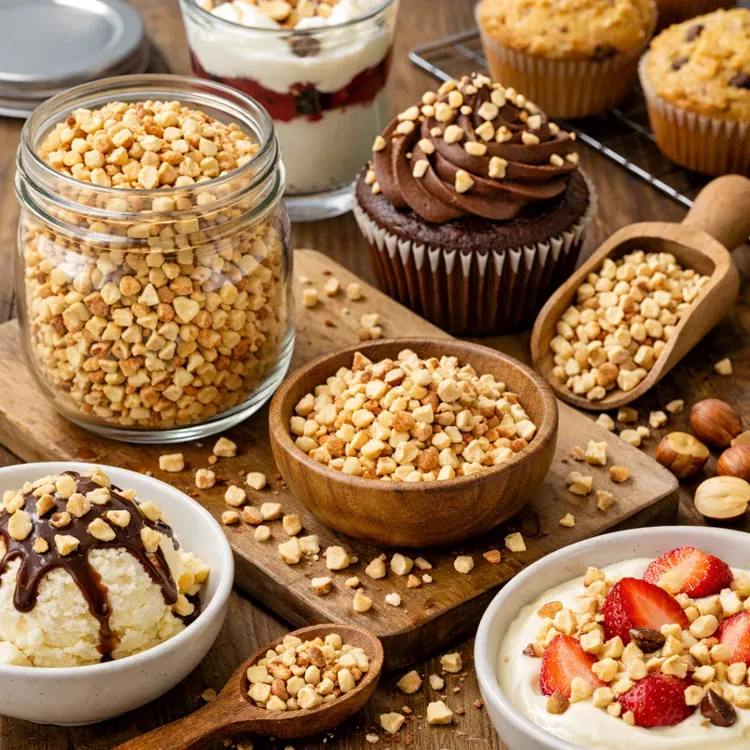
Diced hazelnuts are a high-impact retail ingredient because they add instant crunch, roasted-nut aroma and a premium visual cue with minimal preparation. Consumers use them as an “open-and-sprinkle” topping on yogurt, oatmeal, smoothie bowls, ice cream, cakes, cupcakes, pastries, pancakes, and home baking mixes. In cafés and foodservice, the same product is used for topping desserts, beverages, and plated pastries.

For retail programs, the drivers are slightly different than industrial inclusions. Here the focus is on consumer experience: pieces should pour easily, look attractive, taste fresh, and remain crunchy after opening. That means the key variables are cut uniformity, low fines (dust), freshness / oxidation control, and packaging that protects aroma on shelf.

We support brands and packers by aligning the hazelnut format and processing level to your retail positioning: natural or blanched kernels as the starting material, controlled dicing to defined sieve bands, optional roasting for stronger flavor, and packaging options that fit your shelf-life and price point.

Retail-ready specifications Lot traceability Dust-controlled cuts Bulk & private label options
Recommended formats

Common starting points for retail topping SKUs. We align cut-size bands, roast profile, and packaging to the consumer use case and your filling/packing line.

  • Natural kernels (calibrated) — best starting material for consistent diced output
  • Blanched kernels — lighter color, cleaner visual, milder profile
  • Diced / chopped hazelnuts — ready-to-pack pieces with defined size bands
  • Sliced hazelnuts — premium look for bakery topping jars
  • Roasted diced — stronger aroma; requires higher-barrier packaging

Technical considerations

Variables that determine how the product pours, looks, and tastes over shelf life — plus what typically causes complaints in retail.

  • Cut-size uniformity: sieve bands aligned to “fine / medium / coarse” retail positioning
  • Fines (dust) control: limits for powder and small fragments to reduce “bottom-of-jar dust”
  • Roast profile: light/medium/dark to match flavor target and color expectations
  • Crunch preservation: moisture management to reduce softening and clumping
  • Oxidation protection: high-barrier packs, headspace control, and optional MAP/vacuum
  • Pack performance: flow in jars/pouches, minimal bridging, and clean label appearance
  • Allergen labeling: clear declarations and documentation support for retail markets

Packaging approach

Packaging is the main lever for retail shelf life. We can supply bulk-packed diced hazelnuts to your co-packer, or align retail-ready packaging specs for private label programs.

For roasted diced hazelnuts, oxygen barrier and temperature control are critical. Where needed, we support vacuum or MAP options and recommend storage/handling practices to preserve aroma and reduce rancidity risk.

See retail & private label details →

Choosing cut size for retail (and why it matters)

Retail toppings behave differently depending on cut size. Smaller pieces offer more even coverage and better “spoonability,” while larger pieces deliver a bolder crunch and stronger premium visual. The best choice depends on the consumer use case and the pack format.

Retail positioningTypical useWhat to specify
Fine dice Yogurt, oatmeal, smoothie bowls; even coverage Sieve band, tight fines limit, anti-clumping guidance
Medium dice Ice cream, baking, mixed toppings; balanced crunch Sieve band, dust limit, roast profile option
Coarse dice Premium jars, bakery topping, plated desserts Breakage tolerance, visual sorting, higher barrier packaging
Sliced Bakery decoration and premium retail presentation Slice integrity, breakage limit, roast level (optional)

If you tell us your target pack (jar, pouch, shaker), serving use case, and shelf-life target, we’ll recommend a cut-size band and fines limit that performs well on shelf and after opening.

What drives shelf stability in retail toppings

Retail toppings have two “shelf-life moments”: before opening and after opening. Before opening, oxygen transmission and storage temperature are the biggest factors. After opening, moisture pickup and repeated exposure to air can soften the product and dull aroma.

1) Oxidation control

Roasted hazelnuts are especially aroma-rich, but also more sensitive to oxygen because roasting develops flavor compounds and increases perceived staling if exposed to air for extended periods. High-barrier packaging, careful headspace control, and optional MAP/vacuum significantly improve aroma retention for long shelf-life retail programs.

2) Moisture management & crunch retention

Crunch is a key consumer expectation. Managing moisture (both product moisture at pack-out and moisture ingress over shelf life) helps prevent softening, clumping, and “stale” texture. For humid climates or long distribution chains, packaging barrier and storage guidance become even more important.

3) Dust and “bottom-of-pack” perception

Excess fines are a common retail complaint: the top of the jar looks premium, but the bottom becomes powdery. Setting a defined fines limit and using controlled cutting/screening improves the consumer experience and reduces returns.

Oxygen barrier focus Low fines / dust limits Crunch preservation Retail pack fit

Typical specification markers

Below is a practical checklist used by procurement, QA, and retail brand teams for diced hazelnut toppings. We align each item to your destination market, retailer requirements, and whether the product is natural, blanched, or roasted.

ParameterHow we align it
Cut size (sieve band)Defined “fine/medium/coarse” bands; consistent appearance and dosing
Fines / dust limitControlled screening to reduce powder and improve pour/visual quality
MoistureControlled to protect crunch, reduce clumping, and support shelf stability
Defect sortingScreened and optically sorted where required; aligned to defect tolerances
Roast profile / colorAligned to flavor and visual target; optional batch checkpoints
Micro profileAligned to customer specifications and destination requirements (retail/RTE)
AflatoxinManaged through risk-based sourcing and partner controls
PackagingHigh-barrier liners; optional vacuum/MAP; retail pack compatibility guidance

Final values depend on cut size, roast level, and customer requirements. We share lot documentation with each shipment and can support private label briefs with specification alignment and repeatability.

Common retail uses

Yogurt, oatmeal & bowls

Fine and medium diced hazelnuts provide quick texture without overwhelming the base. Low fines improve appearance and reduce “dusty” mouthfeel. Packaging barrier matters for crunch in humid kitchens.

Best fit: fine/medium dice, natural or lightly roasted.

Ice cream & dessert topping

Medium dice is a common choice for balanced crunch and good visual coverage. Roasted options deliver strong aroma, but require higher oxygen protection to keep flavor fresh on shelf.

Best fit: medium dice, roasted (premium) or natural (classic).

Home baking

Coarse dice and sliced hazelnuts create a premium bakery look on cakes, cookies and pastries. Consistent size reduces scorching and improves repeatability for home bakers.

Best fit: coarse dice or sliced, blanched for lighter appearance.

FAQ

Which hazelnut format is most common for diced hazelnuts for retail toppings?

Most retail topping programs start with calibrated natural kernels and then specify the cut size band, fines (dust) limit, roast profile, and packaging level needed for shelf-life targets. This approach keeps output consistent and helps avoid “bottom-of-jar dust” issues.

What cut sizes are typical for retail toppings?

Retail programs commonly use fine (even coverage), medium (balanced crunch), and coarse (premium visual) dice. We align sieve bands and fines limits to your pack type (jar, pouch, shaker) and intended consumer use.

How do you protect shelf life for roasted diced hazelnuts?

The main risk is oxidation. We focus on high-barrier packaging, headspace control, and optional vacuum/MAP. We also share handling guidance to minimize exposure to oxygen, heat and light across warehousing and distribution.

Can you match a target particle size or cut?

Yes. We can supply controlled cuts (diced, chopped or sliced) and align tolerance bands to your requirements, including defined sieve specs and fines limits for clean retail presentation.

Do you support long-term supply programs?

Yes. We structure annual and multi-shipment programs with consistent specifications, batch documentation and forecast-based planning, supporting stable retail performance and smoother replenishment cycles.

Next step

Send your target retail SKU (pack type and pack size), cut size preference, roast preference, expected shelf life, annual volume, and destination. We will propose suitable formats, packaging options, and a shipment plan with the right QA markers for repeatability.

  • Pack type: jar, stand-up pouch, shaker
  • Cut size: fine / medium / coarse (or your sieve band)
  • Roast: natural / light / medium / dark
  • Shelf life target: unopened + expected “after opening” use period
  • Destination: country + distribution channel
Review products