Where it fits
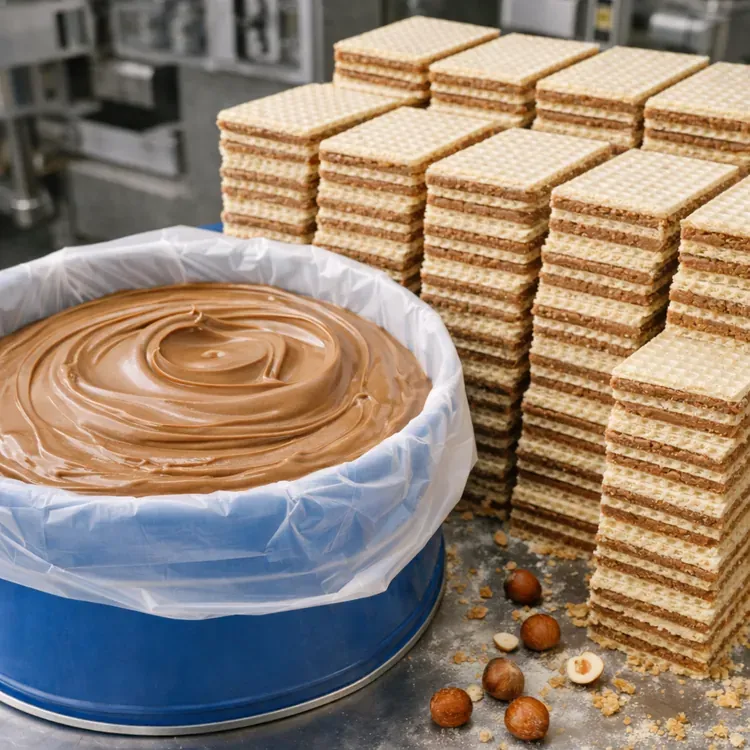
Wafer products are sensitive to filling behavior: the cream must spread evenly at high speed, hold a stable layer thickness,
and avoid defects such as uneven distribution, oiling-out, or texture changes over shelf life. Hazelnuts are selected for their
clean fat profile, natural sweetness, and strong aroma development (especially with controlled roasting). In this application,
the main drivers are flavor consistency, rheology control (fineness/viscosity), and
shelf stability.
We support manufacturers by aligning hazelnut inputs to your process: paste/puree for the core flavor, kernels for controlled roast
or in-house refining, and optional flour/meal components for texture positioning. Most wafer lines benefit from a paste specification
that is consistent lot-to-lot so the plant can run a fixed working temperature and keep spread weight stable.
Stable viscosity window
Fineness control
Export-ready documentation
Lot traceability
Program supply
How hazelnut input affects wafer cream performance
Small differences in roast direction or paste fineness can show up as big line differences: pump load, spreader behavior,
depositor stability, and even how the wafer stack sets during cooling.
- Roast profile: impacts aroma intensity, color, and perceived sweetness in the cream.
- Fineness: affects mouthfeel and can influence nozzle/spreader cleanliness and wear.
- Fat phase compatibility: important for stability, set behavior, and managing bloom or oil separation risk.
- Moisture control: supports wafer crispness and reduces the risk of softening over time.