Applications Library • Dairy

Hazelnut crunch for dessert cups

A detailed, procurement-ready guide to hazelnut crunch inclusions for dessert cups — including recommended hazelnut formats, cut and fines control for consistent dosing, crunch retention in dairy systems, and packaging approaches that protect aroma and texture.

Back to applications

Common uses: layered dessert cups, yogurts with inclusions, mousse and cream cups, tiramisu-style cups, “crunch layer” bases, and premium dessert toppings where texture contrast is a key differentiator.

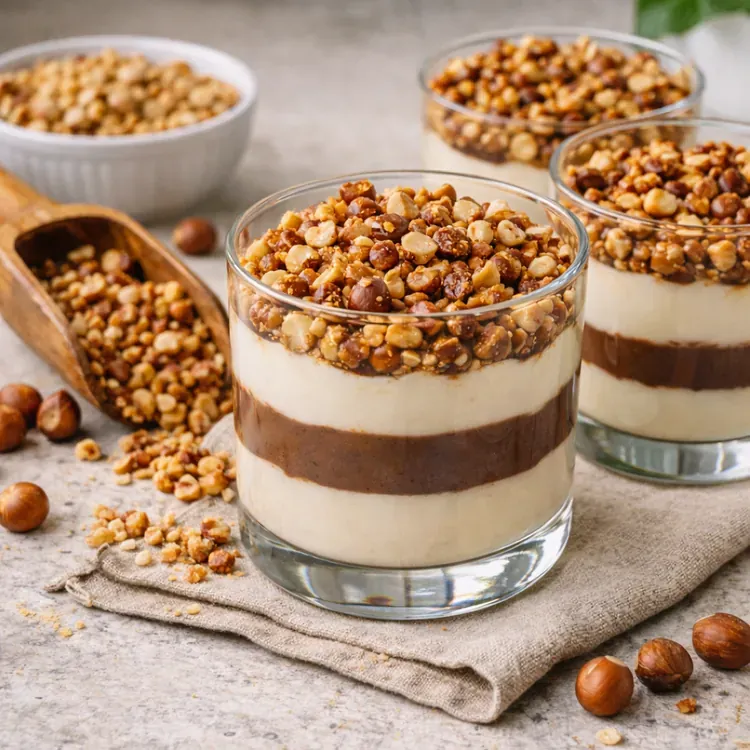
Hazelnut crunch for dessert cups illustration

Where it fits

Hazelnut crunch is used to create a clear texture contrast in dairy desserts: creamy layers (mousse, yogurt, custard, whipped creams) gain a premium “bite” when paired with roasted nut pieces. The best crunch inclusions deliver clean roasted aroma, controlled particle size for predictable dosing, and stable texture over the product’s shelf life.

In dessert cups, the most common technical challenge is that crunchy inclusions can soften over time. Moisture migration from dairy layers into the inclusion is the usual driver, and the risk increases with longer shelf life, temperature cycling, and finer particles (higher surface area). Procurement and QA teams typically focus on three practical levers: particle design (cut, fines), barrier strategy (coated/caramelized crunch), and packaging/handling to protect aroma and minimize oxidation.

We support manufacturers by aligning the hazelnut format to your build: diced or chopped roasted hazelnuts for straightforward crunch, coated crunch pieces for improved moisture resistance, and optional paste/puree formats when a nut-flavor layer is used as a binder or separator.

Controlled cuts Fines management Roast alignment Crunch retention support Lot traceability

What “good” looks like for dessert cup crunch

Great crunch inclusions are designed to behave consistently in depositing, mixing, and on shelf — not just to taste good on day one. The goal is a stable eating experience from first production through end-of-life.

  • Consistent cut: calibrated size so cups look uniform and dosing is predictable.
  • Low fines: reduced dust improves visual appeal and slows moisture uptake.
  • Roast consistency: stable aroma and color across lots.
  • Crunch retention: format chosen for the moisture load of the dessert system.
  • Protected aroma: oxygen barrier packaging to reduce flavor fade.
Recommended formats

Typical starting points for pilots and scale-up. We align roast level, cut tolerance, and packaging to your depositor and shelf-life goals.

  • Roasted diced / chopped hazelnuts — classic crunch; easiest to dose and label.
  • Sliced hazelnuts — visual impact for top layers; best where gentle mixing is used.
  • Coated hazelnut crunch pieces — improved moisture resistance for longer shelf life.
  • Caramelized/praline-style pieces — strong flavor and crunch; supports “premium” positioning.
  • Hazelnut paste / puree — used as a nut-flavor layer or binder (not the primary “crunch” itself).

Technical considerations

The variables that most strongly affect crunch, throughput, and consistency in dessert cup production.

  • Moisture migration: dairy systems soften inclusions; consider coated formats for high-moisture layers.
  • Fat migration: fat-based layers can change texture and flavor release; align format to the build.
  • Particle size & fines: smaller particles soften faster; manage fines for better retention and cleaner cups.
  • Roast profile: roast intensity impacts aroma, color, and perceived sweetness.
  • Mechanical stress: mixing and pumping can break fragile inclusions; define cut strength and handling.
  • Allergen control: segregation and documentation aligned to your HACCP and labeling requirements.

Packaging approach

Crunch is sensitive to oxygen (flavor) and, depending on format, humidity exposure (texture). Packaging choices should protect both.

For roasted cuts and crunch pieces, high-barrier liners and good sealing protect aroma and reduce oxidation risk. Where moisture sensitivity is critical, keeping packaging sealed until use and controlling storage conditions helps preserve texture.

See bulk supply details →

Crunch retention in dairy dessert cups

Dessert cups create a challenging environment for inclusions because moisture moves over time. Even when inclusions start “dry and crisp,” they can soften as water migrates from yogurt, cream, or custard layers into the nut pieces. The risk depends on your cup design (layer thickness, contact area, storage temperature) and the inclusion properties (cut size, fines content, protective coating).

A practical way to design for crunch retention is to match the inclusion format to the product’s moisture exposure. For short shelf-life or “top-layer” use, roasted chopped/diced hazelnuts are often sufficient. For longer shelf-life cups or inclusions mixed through moist dairy matrices, many manufacturers switch to coated or caramelized crunch pieces that slow moisture uptake.

Practical levers used by R&D and operations

  • Choose the right cut: larger calibrated pieces generally hold crunch longer than fine particles.
  • Limit fines: fines absorb moisture fast and can create “dusty” visuals; define a fines limit.
  • Use barriers when needed: coated/caramelized crunch for longer shelf life and high-moisture systems.
  • Placement matters: a fat-based layer can act as a separator; direct contact with wet layers increases softening.
  • Process gently: avoid over-mixing that fractures inclusions and increases surface area.

We don’t replace your formulation work — we help ensure the hazelnut ingredient inputs remain consistent (cut, roast, packaging, documentation) so your product performance is repeatable across lots and seasons.

Typical specification markers

Below is a practical checklist used by procurement and QA teams for hazelnut crunch inclusions. We align each item to your cup design, depositor/dosing method, and target shelf life.

ParameterHow we align it
FormatDiced/chopped/sliced; coated crunch; caramelized/praline-style pieces; optional paste layer inputs
Cut size & toleranceDefined particle bands for uniform visual and predictable dosing
Fines (dust) controlSet limits to reduce “dusty” appearance and help crunch retention
Roast profileAligned to flavor target, color, and aroma intensity
MoistureControlled to reduce variability and support stable texture
Defect sortingScreened and optically sorted where required
Micro profileAligned to customer specifications and destination requirements
AflatoxinManaged through risk-based sourcing and partner controls
PackagingHigh-barrier liners, vacuum/MAP where appropriate, export cartons and palletization
TraceabilityLot coding, COA flow, and documentation pack for QA release

Final values depend on product form and customer requirements. We share lot documentation with each shipment and can align spec sheets to your internal QA templates.

Dosing & line performance

In dessert cups, inclusion performance is often operational: how cleanly the inclusion feeds, how accurately it doses, and how it looks in the final cup.

  • Flowability: calibrated cuts reduce bridging and inconsistent dosing.
  • Uniform appearance: consistent cut improves visual premium cues.
  • Reduced waste: controlled fines can reduce line dust and cleanup.

Flavor design options

Hazelnut crunch can be neutral-to-roasty depending on roast and format. Choosing the right profile helps match your brand positioning.

  • Clean nutty: lighter roast, balanced aroma.
  • Deep roasted: stronger aroma that pairs with chocolate/coffee.
  • Praline-style: caramelized notes for “premium dessert” positioning.

Shelf-life protection

Crunch and aroma degrade for different reasons. Crunch is moisture-driven; aroma is oxidation-driven. Packaging and handling help both.

  • Oxygen barrier packaging protects roasted aroma.
  • Sealed storage reduces humidity exposure where relevant.
  • Forecast-based supply helps keep ingredients fresh and consistent.

FAQ

Which hazelnut format is most common for hazelnut crunch for dessert cups?

Most programs start with roasted diced or chopped hazelnuts because they deliver clean crunch and are easy to dose. If you need longer crunch retention in moist dairy layers, coated crunch pieces or caramelized/praline-style inclusions are often used to create a moisture barrier.

How do you keep hazelnut crunch from going soft in dairy desserts?

Softening is usually caused by moisture migration. You can improve retention by choosing a calibrated cut with fewer fines, using coated/caramelized crunch pieces for high-moisture systems, placing inclusions strategically (often separated by fat-based layers), and controlling storage/handling to avoid unnecessary humidity exposure.

Can you match a target particle size or cut?

Yes. We can supply calibrated kernels and controlled cuts (sliced, diced or chopped) and align tolerance bands, fines limits, and roast profile to your process. This helps ensure consistent dosing and a uniform look across production runs.

Do you support long-term supply programs?

Yes. We structure annual and multi-shipment programs with consistent specifications, batch documentation and forecast-based planning. This is especially useful for dessert brands that need stable taste and appearance across seasonal volume swings.

Next step

Send your dessert cup type (yogurt, mousse, custard, cream), inclusion placement (top layer, mixed-in, crunch layer), target shelf life, and destination. We will propose suitable crunch formats, cut and fines targets, roast profile alignment, packaging, and a shipment plan.

Review products