Applications Library • Savory

Hazelnut flour for breading & coatings

A procurement-ready guide to using hazelnut flour/meal in breading and coatings — including cut selection (fine to coarse granules), roast and color direction, adhesion and pickup control, bake/fry performance and browning, shelf-life protection through packaging, and the specification markers QA teams use for repeatability.

Back to applications
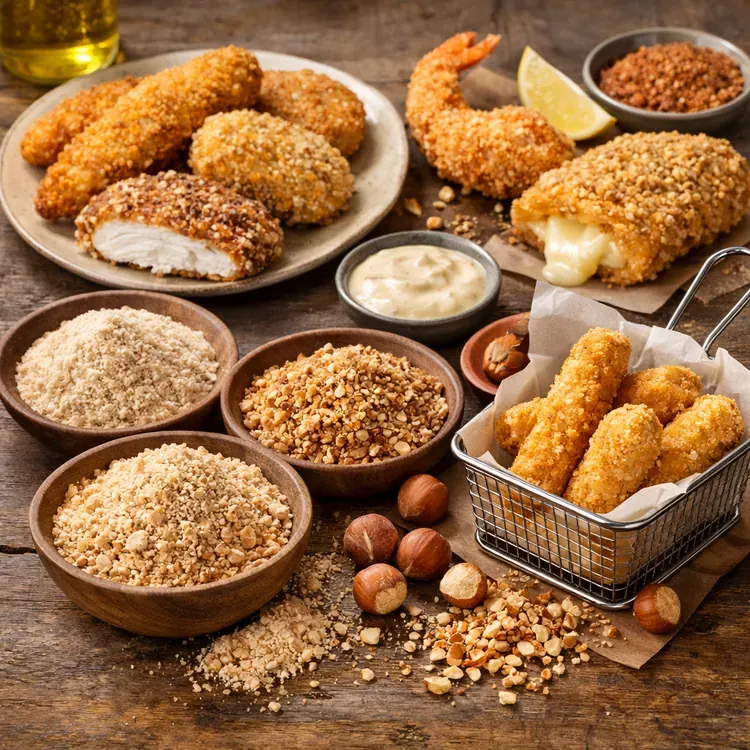
Hazelnut flour for breading & coatings illustration

Where it fits

Hazelnut flour and hazelnut meal are used in savory breading systems to add a premium “nut crust” identity, a warm roasted aroma, and a distinctive crunch when applied in coarser cuts. They can be used for coated poultry, seafood, cheese, vegetables, and plant-based products, as well as as a carrier in seasoning blends where hazelnut flavor is desired without visible nut pieces.

In this application, procurement priorities typically focus on cut consistency (adhesion and appearance), moisture stability (flow and clump control), and oxidation management (aroma preservation through shelf life). Because hazelnut ingredients contain natural oils, packaging and logistics decisions directly support product stability, especially for roasted cuts.

We support manufacturers by aligning the hazelnut format to your coating system: fine flour for uniform coverage and seasoning blends, medium meal for balanced texture, coarse granules for visible crunch, and kernels when customers mill/sieve in-house.

Export-ready documentation Lot traceability Sieve cut alignment Bulk programs
Recommended formats

Typical starting points for pilots and scale-up. Customers usually specify a cut (fine to coarse) plus a roast direction to match color and aroma targets.

  • Hazelnut flour (fine; uniform coverage and seasoning blends)
  • Hazelnut meal (medium; balanced texture and adhesion)
  • Coarse granules (crunchy “nut crust” appearance)
  • Roasted variants (strong aroma; deeper color)
  • Blanched variants (cleaner/lighter visual direction)

Technical considerations

The variables that most often influence pickup, line efficiency, and finished-eating quality.

  • Particle size distribution for predictable adhesion and appearance
  • Fines/dust control to reduce waste and “powdery” coatings
  • Moisture management to prevent clumps and stabilize flow in hoppers
  • Roast/color direction aligned to browning and flavor target
  • Oxidation protection to preserve aroma through shelf life
  • Allergen control and segregation planning

Packaging approach

Hazelnut flour and meal are aroma-sensitive due to natural oils and high surface area. Packaging typically prioritizes moisture barrier, oxygen protection, and clean handling for production environments.

For roasted flour/meal, oxygen-barrier liners and temperature-stable logistics help preserve “fresh roast” notes and reduce flavor flattening over time.

See bulk supply details →

How hazelnut flour is used in coating systems

Hazelnut ingredients can appear in multiple steps of a coating line. The right cut depends on whether hazelnut is acting as a primary crust component (visible crunch) or a flavor contributor (more uniform, less visible). Common use patterns include:

  • Dry breading blends: meal/granules mixed with crumbs, starches, spices, or functional ingredients
  • Top-coat “nut crust”: coarser granules applied as the final layer for visual identity and crunch
  • Seasoning carriers: finer flour used to distribute hazelnut flavor evenly in spice blends
  • Bake or fry applications: roast direction selected to control browning and aroma development
  • Hybrid systems: hazelnut meal blended with crumbs to balance adhesion, crunch, and cost targets

If you are validating a new coating, the fastest “procurement lever” is often the cut (fine/medium/coarse) because it changes texture and appearance without redesigning the whole formula.

Choosing the right cut: flour vs meal vs granules

In coatings, particle size influences pickup (how much coating adheres), coverage (uniformity), and texture (crisp vs crunchy). To reduce batch variability, customers typically define a fineness band and set limits for fines/dust and overs.

Cut / format Best for Typical watch-outs
Fine hazelnut flour Uniform coverage; seasoning blends; smoother crusts; consistent appearance Too many fines can increase dusting and affect line housekeeping; define dust limits and moisture stability
Medium hazelnut meal Balanced crunch with good adhesion; versatile in blended breading systems Segregation risk if blended with very coarse crumbs; align densities and mixing approach
Coarse granules Visible “nut crust” identity; high crunch perception; premium positioning Requires good binder/adhesion system; overs control helps prevent weak spots or uneven coverage
Blanched vs natural Blanched for a cleaner, lighter look; natural for a more rustic visual profile Confirm appearance expectations early (color direction can vary by roast and processing)
Roasted vs unroasted Roasted for stronger aroma and nut depth; unroasted for a softer flavor footprint Roasted ingredients are more aroma-sensitive; oxidation protection becomes more important

Process performance: what operations teams monitor

Coating systems are “process products” — consistency is driven as much by particle behavior as by flavor. Hazelnut flour and meal can improve premium positioning, but they also introduce variables that procurement and QA teams typically standardize.

In practical terms, teams usually monitor:

  • Adhesion and pickup (coating retention through handling and cooking)
  • Flow and dosing (how the blend behaves in hoppers and on breaders)
  • Browning behavior (bake/fry color development and uniformity)
  • Texture retention (crunch perception after cooking and holding)
  • Aroma stability (fresh roast notes maintained through shelf life)

Many customers stabilize results by defining cut distribution and moisture targets, then selecting packaging that limits oxygen and humidity pickup. For roasted hazelnut cuts, protecting aroma is often the difference between a “fresh nut” experience and a flattened profile over time.

Adhesion & pickup control

Pickup depends on cut, dust level, and the customer’s binder/batter system. A stable distribution helps maintain yield and appearance.

  • Define overs and fines/dust limits
  • Align cut to your breading step (base vs top coat)
  • Reduce segregation in blended crumbs

Bake/fry performance & browning

Roast direction and particle size influence color development. Matching roast/color targets supports consistent finished appearance.

  • Roast intensity aligned to your cooking profile
  • Control color drift via consistent lots
  • Use cut selection to tune crunch perception

Shelf-life & aroma protection

Hazelnut ingredients contain natural oils; higher surface area (flour/meal) increases sensitivity to oxygen and heat. Packaging choices protect quality.

  • Oxygen-barrier liners and sealed cartons/bags
  • Moisture barrier to reduce clumping
  • Storage and logistics recommendations for stability

Typical specification markers

Below is a practical checklist used by procurement and QA teams. We align each item to your destination market, customer requirements, and processing level. For breading/coatings, additional emphasis is usually placed on cut distribution, moisture, and packaging barrier performance because they directly affect line flow and shelf stability.

ParameterHow we align it
Fineness / distributionAgreed sieve cut and tolerance; limits for fines/dust and overs
MoistureControlled to your target range to reduce clumping and stabilize flow
Roast / color directionUnroasted vs roasted; natural vs blanched aligned to finished appearance
Oxidation managementPackaging and handling approach designed to preserve aroma through shelf life
Defect sorting / foreign matterScreened and optically sorted where required; process controls for consistency
Micro profileAligned to customer specifications and destination requirements
AflatoxinManaged through risk-based sourcing and partner controls
PackagingBarrier liners, sealed bags/cartons; vacuum/MAP options as required
TraceabilityLot coding, COA linkage, and documentation per shipment

Final values depend on product form and customer requirements. We share lot documentation with each shipment and can align with your internal QA templates.

FAQ

Which hazelnut format is most common for breading & coatings?

Hazelnut meal/flour is the most common starting point for breading and coatings because it can be blended with crumbs, flours, starches, and seasonings. Customers usually specify a cut (fine, medium, or coarse granules) and a roast direction (unroasted, lightly roasted, or roasted) depending on color, aroma, and process.

What cut works best for crunchy coatings?

For a visibly crunchy “nut crust,” customers often choose a coarser hazelnut meal or granule cut, sometimes blended with crumbs for structure. Finer flour is used when a smoother, more uniform coating is needed or when hazelnut is added as a flavor carrier in a seasoning system.

How do you protect roasted hazelnut flour from rancidity during shelf life?

Roasted hazelnut ingredients are more aroma-sensitive because of natural oils and higher surface area. Oxygen-barrier packaging, sealed liners, and temperature-stable logistics help preserve fresh roast notes. Moisture control also reduces clumping and supports stable handling on the production line.

Can you match a target particle size or sieve cut?

Yes. We can align fineness and distribution (including limits for fines/dust and overs) to support predictable adhesion, pickup, and uniform appearance. If you have a benchmark sample or sieve target, we can map the closest match.

Next step

Send your target application (baked or fried), coating style (uniform flour blend vs crunchy granule crust), cut preference (fine/medium/coarse or sieve target), roast direction (unroasted vs roasted), expected annual volume, and destination. We will propose the suitable hazelnut format, packaging options, and a shipment plan aligned to your coating line and shelf-life goals.

Review products