Applications Library • Nutrition

Hazelnut flour for meal replacement powders

A detailed, procurement-ready guide to using hazelnut meal and flour in nutrition and meal replacement powders — including format selection, particle size and dispersibility strategy, oxidation and moisture controls, allergen documentation, and export packaging designed to preserve flavor and shelf life.

Back to applications
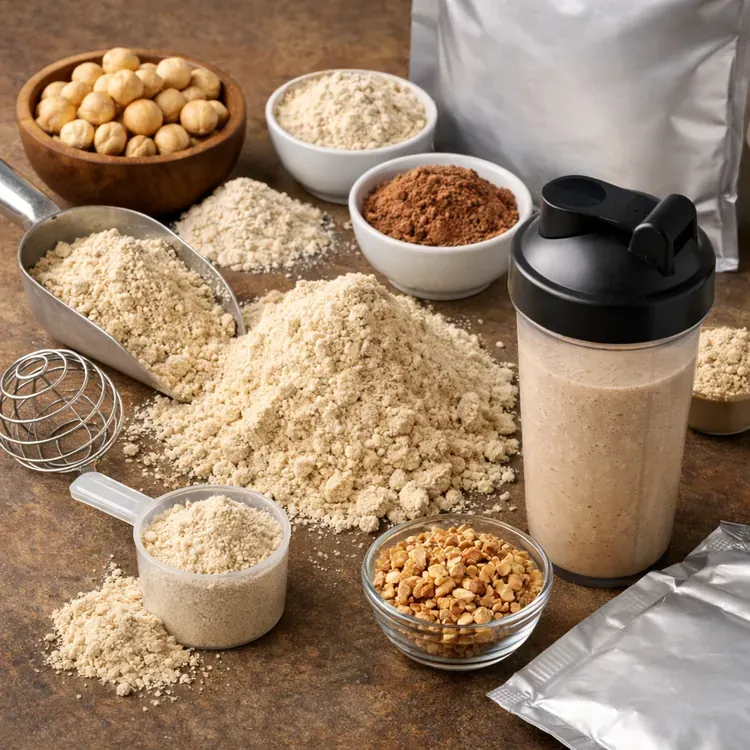
Hazelnut flour for meal replacement powders illustration

Where it fits

Meal replacement powders are designed to deliver a balanced, consistent serving experience: stable flavor, predictable mixing, and repeatable nutrition from scoop to scoop. Hazelnut ingredients are chosen here for their naturally rich mouthfeel, clean nutty sweetness, and the way they can support a “premium” sensory profile without relying on heavy flavor masking.

In practice, hazelnut meal/flour can contribute to creamier texture and satiety perception in shake-style powders, and it pairs well with common flavors such as chocolate, vanilla, coffee, and caramel. When used thoughtfully, it can help brands reduce “chalkiness” from proteins and fibers and deliver a smoother finish.

From a procurement perspective, the main drivers are flavor consistency, powder performance (flow, dosing, and dispersibility), and shelf stability. Because meal replacement powders often sit in warehouses and on shelves for extended periods, oxidation control and moisture protection are typically more critical than in faster-turn bakery applications.

We support manufacturers by aligning hazelnut format and processing level to your product concept: blanched kernels for light-color profiles, roasted ingredients for aroma-forward SKUs, and hazelnut meal/flour for homogeneous mixes that require consistent scoop-to-scoop distribution.

Export-ready documentation Lot traceability Particle control Bulk & retail options

For meal replacement powders, we recommend specifying not only “flour,” but also particle distribution, fines limits, and the packaging barrier level. These are the parameters most likely to impact customer experience and shelf life.
Recommended formats

Typical starting points for pilots and scale-up. We adapt roast level, grind distribution, and packaging to your mixing method, sensory target, and shelf-life requirements.

  • Hazelnut meal / flour — homogeneous base for scoop consistency
  • Blanched kernels — supports light color targets and reduced skin flecks
  • Roasted kernels — aroma-forward blends and premium sensory profiles
  • Diced / sliced / chopped — optional inclusions where texture is desired
  • Hazelnut paste — for manufacturers producing agglomerated or specialty powder systems

Powder performance priorities

Meal replacement powders need stable handling on the filling line and a pleasant mixing experience for consumers.

  • Flowability — stable hopper discharge and consistent filling weights
  • Dispersibility — mixes smoothly in water/milk with minimal clumps
  • Dust control — reduces losses and improves line cleanliness
  • Scoop-to-scoop uniformity — particle control and blend compatibility
  • Storage stability — reduced caking during distribution

Packaging approach

We can supply lined cartons, vacuum or MAP options, and palletization suited to sea, road, or air freight.

For milled and roasted formats, oxygen protection and temperature discipline are key to preserving aroma and limiting oxidative notes over time.

  • High-barrier liners to reduce oxygen and moisture ingress
  • Headspace control for aroma retention
  • Clean pallet patterns for warehouse efficiency
See bulk supply details →

What makes meal replacement powders different

Compared with bakery mixes, meal replacement powders are more sensitive to mixing behavior and consumer preparation. People shake or stir these powders quickly and expect a smooth drink with consistent flavor from the first sip to the last.

  • Dispersibility matters: overly fine particles can increase dusting and clumping; overly coarse particles can settle quickly.
  • Compatibility with proteins and fibers: hazelnut flour is often used alongside protein concentrates/isolates and soluble/insoluble fibers. Stable blending requires defined particle tolerance bands.
  • Oxidation exposure time is longer: nutrition powders may be stored for months, so aroma protection becomes a primary specification driver.
  • Color and sensory targets: blanched and roast selection help you hit “clean vanilla” vs. “toasted nut” profiles without excessive flavor masking.

If your powder will be packed into sachets/sticks, particle control is even more important because small pack formats are less forgiving to segregation.

Particle size & dispersibility

Define particle distribution to balance dispersibility, dusting, and settling behavior in the final shake.

  • Fine flour: smoother texture; higher dust/clump risk
  • Medium meal: better flow; reduced dust; can feel “nutty”
  • Fines limit: improves clump control and filling accuracy
  • Overs limit: reduces visible settling and gritty perception

Oxidation & flavor protection

Hazelnut ingredients are naturally aromatic and can be oxidation-sensitive, especially when roasted or finely milled.

  • Barrier packaging to limit oxygen ingress
  • Controlled headspace to preserve aroma
  • Temperature discipline during storage and transport
  • FIFO programs aligned to your pack dates

Allergen & documentation readiness

Nutrition brands often require a complete QA file for retailers and contract manufacturing audits.

  • Allergen statement and cross-contact controls
  • Lot traceability and shipment documentation package
  • COA flow per lot and per shipment
  • Change control for crop and processing variability

Typical specification markers

Below is a practical checklist used by procurement and QA teams for hazelnut meal/flour used in nutrition powders. We align each item to your destination market, customer requirements, and processing level (raw, blanched, roasted, milled).

ParameterHow we align it
Particle sizeTarget range and tolerance bands aligned to your method (sieve / air-jet / laser)
Fines (dust)Defined limit to reduce dusting, improve dispersibility, and reduce caking
MoistureControlled to your target range and protected by liner/film selection
Flowability / cakingManaged through processing controls and packaging barrier selection
Defect sortingScreened and optically sorted where required
Micro profileAligned to customer specifications and destination requirements
AflatoxinManaged through risk-based sourcing, testing plans, and partner controls
Allergen documentationClear allergen statement and cross-contact controls for audits
Roast/color markersRoast level and color targets defined for sensory consistency
PackagingBarrier liners / vacuum / MAP options and export cartons as required
TraceabilityLot coding and documentation package (COA flow) per shipment

Final values depend on your finished formulation and destination requirements. We share lot documentation and agreed testing/verification points with each shipment.

Procurement checklist for nutrition powder programs

To shorten development cycles and protect commercial scale-up, many teams align on a simple “definition of done” for the hazelnut ingredient before finalizing packaging artwork and shelf-life claims.

1) Define the use case

Clarify how the consumer prepares the product and what “good” looks like in a glass.

  • Shake mix vs. spoonable mix
  • Preferred liquid (water, milk, plant-based)
  • Target sensory profile (clean vs. toasted)

2) Lock the powder spec

Agree on the parameters that control dispersibility and shelf stability.

  • Particle distribution & fines limits
  • Moisture targets and barrier packaging needs
  • QA limits (micro, aflatoxin, allergens)

3) Validate and scale

Confirm performance at pilot scale, then structure shipments with change control.

  • Pilot samples and blend trials
  • COA and retention sample workflow
  • Annual programs with forecast planning

If you share a target particle distribution, packaging format, and shelf-life goal, we can propose a suitable format and documentation set that fits your QA file and export requirements.

FAQ

Which hazelnut format is most common for meal replacement powders?

Most customers use hazelnut meal/flour as the base ingredient for a homogeneous blend, then add optional chopped/diced inclusions only when texture is a deliberate feature. For stable, repeatable consumer experience, specs typically focus on particle distribution, fines control, and oxygen/moisture protection.

Can you match a target particle size and dispersibility requirement?

Yes. We can align a target particle range (meal to fine flour) and tolerance bands, including limits for fines (dust) and overs. For shake-style powders, dispersibility and clumping behavior are usually verified using your mixing method and the liquids your customers use (water vs. milk/plant-based).

What are the main stability risks for hazelnut flour in nutrition powders?

The primary risks are oxidation (rancidity/aroma loss), moisture pickup (caking/clumping), and temperature exposure during storage or transit. Barrier packaging and headspace control are the most effective mitigations, especially for roasted or finely milled formats.

Do you support long-term supply programs for brands and contract manufacturers?

Yes. We structure annual and multi-shipment programs with stable specifications, batch documentation, and forecast-based planning. We also support change control so any crop or processing variability is communicated early and managed proactively.

What should we send to receive a spec proposal and quotation?

Please share your destination country, expected annual volume, intended use (shake vs. spoonable), target particle size, packaging preference, shelf-life target, and key QA limits (moisture, micro, aflatoxin, allergen statement). If you have a current spec sheet or reference label, sending it speeds up alignment.

Next step

Send your target product, quantity, and destination. We will propose suitable hazelnut formats, particle size targets, packaging, and a shipment plan aligned to your shelf-life and QA requirements.

Review products