Applications Library • Bakery

Hazelnut flour for paleo baking mixes

A detailed, procurement-ready guide to using hazelnut meal and flour in paleo baking mixes — with format recommendations, particle size strategy, oxidation and moisture controls, and export packaging options that preserve flavor and shelf life.

Back to applications
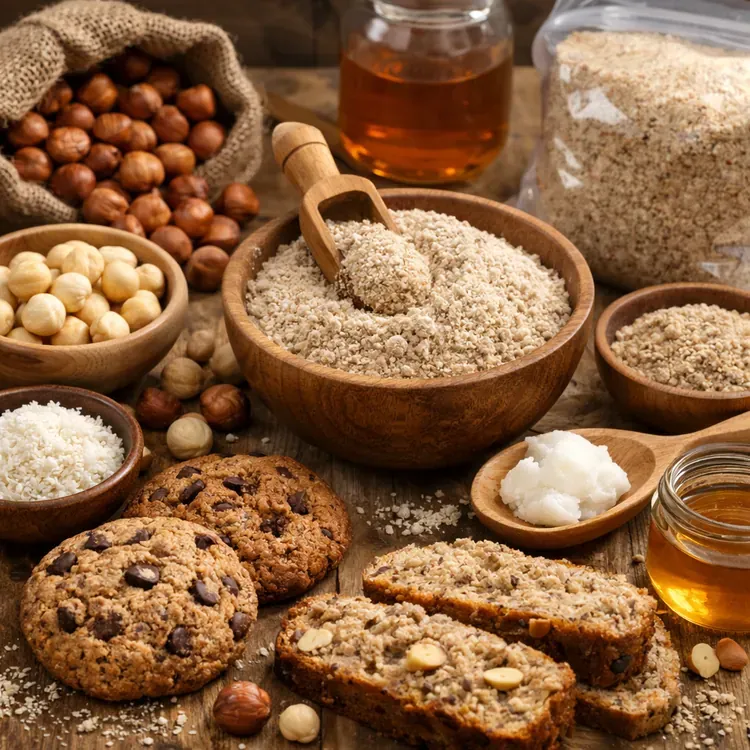
Hazelnut flour for paleo baking mixes illustration

Where it fits

Hazelnut flour is commonly used in paleo and gluten-free baking mixes to deliver natural sweetness, rich aroma, and a soft, moist crumb without relying on cereal flours. Its fat content provides tenderness and mouthfeel, while its nutty character helps premiumize “better-for-you” products such as pancakes, muffins, cookies, quick breads, and snack bars.

In commercial dry-mix production, the main success factors are flavor consistency, particle control, and shelf stability. These are procurement-critical because small shifts in roast, grind distribution, or moisture/oxygen exposure can change mix flow, dosing accuracy, and finished-product taste.

We support manufacturers by aligning the hazelnut ingredient format to your line and product goals: whole kernels for in-house roasting, blanched kernels for lighter color targets, controlled cuts for inclusions, and meal/flour or paste for homogeneous mixes and consistent flavor delivery.

Export-ready documentation Lot traceability Particle control Bulk & retail options

Tip for spec writers: define the ingredient by particle range and fat behavior (flowability / caking tendency) rather than a single label like “flour.” This reduces ambiguity across suppliers and labs.
Recommended formats

Typical starting points for pilots and scale-up. We adapt roast level, grind distribution, and packaging to your mixing, dosing, and shelf-life expectations.

  • Natural kernels (calibrated) — best for customers who roast and mill in-house
  • Blanched kernels — supports light color targets and reduced skin flecks
  • Hazelnut meal / flour — consistent flavor delivery for dry mixes
  • Roasted kernels — for inclusion lines and aroma-forward mixes
  • Diced / sliced / chopped — controlled inclusions with defined tolerances

Technical considerations

The variables that most often impact throughput, sensory profile, and stability in paleo mix manufacturing.

  • Particle size distribution — drives flowability, dusting, and hydration behavior
  • Fines (dust) control — improves dosing accuracy and reduces baghouse load
  • Oxidation protection — oxygen barrier packaging and headspace management to prevent rancidity
  • Moisture management — prevents caking, clumping, and aroma loss
  • Process heat exposure — influences color, aroma development, and oil release
  • Allergen & cross-contact controls — clear documentation and supplier programs

Packaging approach

We can supply lined cartons, vacuum or MAP options, and palletization suited to sea, road, or air freight.

For sensitive formats (fine flour/meal, roasted cuts, paste), oxygen protection and temperature management are key to preserving aroma and minimizing oxidative notes over time.

  • Barrier liners to limit oxygen and moisture ingress
  • Vacuum / MAP options where applicable for aroma retention
  • Export cartons with clean pallet patterns for warehouse efficiency
See bulk supply details →

How hazelnut flour behaves in paleo mixes

Unlike wheat flour, hazelnut flour is naturally higher in fat and lower in starch. In dry mixes, this changes both powder handling and batter/dough performance. Procurement and QA teams typically align on these behaviors early to avoid surprises at scale.

  • Hydration and mixing: finer particles hydrate faster but can increase batter viscosity and reduce perceived lift if not balanced with leavening and liquids.
  • Oil release: excess milling heat or overly fine grinds can increase free oil, impacting flow and shelf stability.
  • Flavor delivery: roasted notes increase with roast intensity, but aggressive roasting can reduce “clean” sweetness and raise bitter notes.
  • Color control: skins and roast level drive visible specking and crumb color; blanched formats are preferred for light-colored SKUs.

If you are benchmarking against almond flour: hazelnut flour typically has a more pronounced aroma and sweetness but can be more oxidation-sensitive depending on processing and storage conditions.

Particle size strategy

Define particle ranges to match your mixing and dosing equipment, then validate flow and dust behavior on your line.

  • Meal (coarser): improved flow, less dust; visible nut character
  • Fine flour: smoother crumb and uniformity; greater dust/caking risk
  • Controlled fines limit: reduces clumping and improves bag-to-bag consistency

Oxidation & shelf life

Rancidity risk is managed through packaging, headspace, and storage conditions — especially for milled and roasted formats.

  • Oxygen barrier liners / films
  • Headspace control for aroma retention
  • Temperature discipline during storage and transit
  • FIFO programs aligned to your pack dates

Inclusion control

For mixes that include pieces (chopped/diced/sliced), define size and breakage tolerance to protect dosing accuracy.

  • Cut tolerance bands matched to your depositor or auger
  • Dust screening to minimize fines
  • Roast matching so inclusions match base-flour aroma

Typical specification markers

Below is a practical checklist used by procurement and QA teams for hazelnut meal/flour in dry mixes. We align each item to your destination market, customer requirements, and processing level (raw, blanched, roasted, milled).

ParameterHow we align it
Particle sizeTarget range and tolerance bands aligned to your method (sieve / air-jet / laser)
Fines (dust)Defined limit to reduce dusting, improve dosing, and reduce caking
MoistureControlled to your target range and protected by liner/film selection
Free oil / flowabilityMonitored via process controls to reduce clumping during storage
Defect sortingScreened and optically sorted where required
Micro profileAligned to customer specifications and destination requirements
AflatoxinManaged through risk-based sourcing, testing plans, and partner controls
Allergen documentationClear allergen statement and cross-contact controls for your QA file
Roast/color markersRoast level and color targets defined for sensory and visual consistency
PackagingVacuum / MAP / barrier liners and export cartons as required
TraceabilityLot coding and documentation package (COA flow) per shipment

Final values depend on product form, destination requirements, and your internal specs. We share lot documentation and agreed testing/verification points with each shipment.

Process mapping for procurement & scale-up

For successful scale-up, procurement teams often map the hazelnut ingredient from origin to your mixer. This keeps commercial, QA, and operations aligned and reduces rework when volumes increase.

1) Define the application

Clarify the end use so we can recommend the most stable format and packaging.

  • Dry mix vs. ready-to-bake formulation
  • Target shelf life and storage conditions
  • Color and flavor profile targets

2) Lock the specification

Agree on the parameters that affect mixing, dosing, and sensory outcomes.

  • Particle distribution & fines limit
  • Moisture and packaging barrier needs
  • QA limits (micro, aflatoxin, allergens)

3) Validate & scale

Confirm performance at pilot scale, then scale shipment programs with change control.

  • Pilot samples and line trials
  • COA and retention sample workflow
  • Annual programs with forecast-based planning

If you share your current ingredient spec or a competitor label, we can propose an equivalent spec structure and the most reliable format to hit your sensory and processing targets.

FAQ

Which hazelnut format is most common for hazelnut flour for paleo baking mixes?

Most customers start with natural calibrated kernels and then choose milling (meal vs. flour), roast (if used), and oxygen-protective packaging to match mixing performance and shelf-life targets. For customers who want the most consistent batch-to-batch results, pre-milled hazelnut meal/flour with defined particle tolerances is often preferred.

Can you match a target particle size for hazelnut meal or flour?

Yes. We can align a target particle range and tolerance bands. To avoid lab-to-lab differences, we confirm your preferred test method (sieve stack, air-jet, or laser). We also recommend defining a fines (dust) limit and an overs limit to keep flow and dosing consistent.

What are the main stability risks for hazelnut flour in dry mixes?

The primary risks are oxidation (rancidity and flavor dulling), moisture pickup (caking/clumping), and process heat exposure (color changes and increased free oil). Strong oxygen barriers, controlled headspace, and moisture protection are the most effective mitigations for long shelf-life programs.

How do you support light-colored mixes and “clean” flavor profiles?

For light color targets, blanched formats reduce skin flecks and help produce a brighter crumb. For “clean” flavor, we focus on controlled processing and packaging that preserves natural sweetness while limiting oxidative notes over time.

Do you support long-term supply programs?

Yes. We structure annual and multi-shipment programs with consistent specifications, batch documentation, and forecast-based planning. We also use change-control practices so any crop or processing variability is communicated early and managed proactively.

What information should we send for a quotation or specification proposal?

Please share your destination country, expected annual volume, preferred product form (meal/flour/paste), target particle size, packaging preference, intended shelf life, and any key QA limits (micro, aflatoxin, allergen, moisture). If you have a current spec sheet, sending it speeds up alignment.

Next step

Send your target product, quantity, and destination. We will propose suitable hazelnut formats, particle size targets, packaging, and a shipment plan aligned to your shelf-life and QA requirements.

Review products