Applications Library • Retail

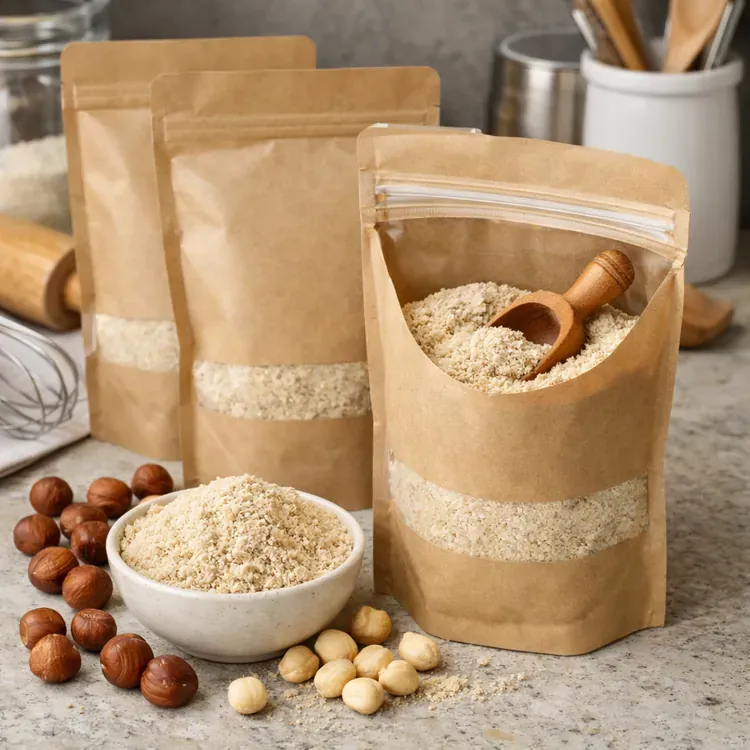
Hazelnut flour in retail pouches

A detailed, procurement-ready guide to hazelnut flour for retail and private label — covering flour grades and fineness, fat-content options, freshness and oxidation control, moisture/clumping management, packaging specs for pouches, and export documentation.

Back to applications

Common retail use cases: gluten-free baking blends, cookies and cakes, breading/coatings, smoothie add-ins, breakfast bowls, energy bites, and as a premium “nut-forward” ingredient for home recipes.

Hazelnut flour in retail pouches illustration

Where it fits

Hazelnut flour (sometimes labeled as hazelnut meal or hazelnut powder) is valued for its natural sweetness, aroma (especially when roasted), and rich texture in baking and pantry applications. In retail formats, the product needs to perform reliably for consumers: it should scoop and pour well, blend easily, and deliver consistent results from pouch to pouch.

The main drivers in this application are flavor consistency, particle control, and shelf stability. Retail distribution adds extra pressure on packaging performance: high-barrier pouches help protect aroma and slow oxidation, while good moisture control reduces clumping and improves flowability.

We support retail and private label programs by aligning the hazelnut input (roasted or natural kernels) and the milling approach to your target: fine flour for smooth batters and blends, medium meal for more texture, or coarser grades for artisan-style results. For long shelf-life targets, we prioritize oxygen protection and consistent lot documentation for retail QA release.

Retail-ready packaging Fineness grades Moisture & clump control Oxidation protection Lot traceability

Why hazelnut flour behaves differently than grain flour

Hazelnut flour contains natural oils, so it is more aroma-sensitive and more prone to oxidation than typical grain flours. This means the “freshness system” (processing + packaging + storage) matters as much as the flour itself.

  • Higher natural fat: impacts flowability and can increase clumping if moisture is high.
  • Aroma-sensitive: roasted notes can fade faster without oxygen barrier packaging.
  • Fineness matters: too coarse can feel gritty; too fine can dust more and pack down in pouches.
Recommended formats

Typical starting points for retail programs. We align roast level, flour grade, and packaging to your positioning and shelf-life targets.

  • Hazelnut meal / flour — retail-ready, milled to a defined fineness grade.
  • Roasted kernels — used when customers control milling or want a custom roast profile.
  • Controlled coarse meal — for texture-forward and artisan baking applications.

Technical considerations

The variables that most often impact consumer experience, filling performance, and shelf stability in retail pouches.

  • Oxidation management: protect aroma and slow rancidity with oxygen barrier packaging.
  • Moisture & clumping: moisture control reduces caking and improves pourability.
  • Particle size consistency: defined grades support recipe repeatability and reduce “gritty” perception.
  • Dust behavior: important for pouch filling, sealing cleanliness, and consumer handling.
  • Foreign matter control: screening/metal detection aligned to retail QA expectations.
  • Traceability & COA flow: consistent documentation supports retail onboarding and audits.

Packaging approach

Retail pouches are part of the quality system. The best results come from matching pouch structure to the oxidation/moisture risk of the flour.

For hazelnut flour, prioritize high oxygen barrier and good sealing performance. Zipper reclose features improve consumer convenience, while case/pallet specs help maintain pouch integrity during distribution.

See retail & private label details →

Retail grades and how to choose

Retail buyers often use “flour” as a broad label, but performance depends on grade. Defining a clear grade reduces complaints (dusty, clumpy, gritty) and improves recipe repeatability for consumers.

Fine flour

Best for smooth batters, blends, and “flour-like” behavior in baking mixes.

  • Smoother mouthfeel, less visible grain.
  • Can be dustier; pouch filling cleanliness matters.
  • Often chosen for premium, refined positioning.

Medium meal

Balanced option for everyday retail: good flavor release and texture without excessive grit.

  • Versatile across cookies, cakes, coatings.
  • Good flowability for pouch filling.
  • Common choice for mainstream retail.

Coarse meal

For texture-forward recipes and artisan positioning where visible nut character is desired.

  • More “nutty bite” and visible texture.
  • Lower dust; can feel gritty in smooth batters.
  • Popular for toppings and rustic baking.

If your retail line includes multiple SKUs, we can align each SKU to a defined grade so consumers experience consistent performance across batches.

Typical specification markers

Below is a practical checklist used by procurement and QA teams for retail pouch programs. We align each item to your target market, retailer expectations, and your chosen flour grade.

ParameterHow we align it
Flour grade / finenessDefined grade (fine / medium / coarse) with tolerance bands
Roast profileNatural or roasted options aligned to flavor and color targets
Fat contentAligned to your positioning (standard meal/flour; optional lower-fat approaches where applicable)
MoistureControlled to reduce clumping and support flowability
Oxidation protectionPackaging and handling aligned to protect aroma and stability
Foreign matterScreening and controls aligned to retail QA expectations
Micro profileAligned to customer specifications and destination requirements
AflatoxinManaged through risk-based sourcing and partner controls
PackagingHigh-barrier pouch films, zipper options, case pack and pallet specs as required
TraceabilityLot coding, COA flow, and documentation pack for retail onboarding

Final values depend on product grade and customer requirements. We share lot documentation with each shipment and can align spec sheets to your internal QA templates.

Retail packaging checklist

Pouch packaging is the main control point for shelf stability in retail. A good specification protects aroma, reduces clumping, and helps keep the pouch attractive through distribution.

Packaging elementWhat to define
Pouch structureHigh oxygen + moisture barrier film suited to nut flour stability needs
ClosureZipper/reclose option for repeat-use convenience and reduced moisture pickup
Fill weightAligned to retailer planograms and consumer usage (common pantry sizes)
Headspace / sealingSealing integrity specs; define cleanliness expectations to avoid seal contamination by fine dust
Case packUnits per case, case labeling, barcode placement, and shipping protection
Pallet configurationStable stacking, corner protection, and stretch wrap standards for long-haul shipment
Storage guidance“Cool, dry place” guidance and best practices for maintaining freshness after opening

For longer distribution chains, oxygen protection and moisture control are typically the two most important pouch performance requirements.

FAQ

Which hazelnut format is most common for hazelnut flour in retail pouches?

Most retail pouch programs use hazelnut meal/flour produced from selected kernels (often roasted for aroma). The final specification usually focuses on fineness (particle size), fat-content option, and oxidation protection through high-barrier pouches that preserve aroma and shelf stability.

What specifications matter most for retail flour stability?

The most important levers are moisture control (to reduce clumping), oxidation management (to protect aroma and prevent rancidity), and consistent fineness (for consumer experience and recipe repeatability). Retail packaging with strong oxygen and moisture barriers is a key part of the stability strategy.

Can you match a target particle size or flour grade?

Yes. We can align a target grade (fine flour, medium meal, or coarse meal) and define tolerance bands. For retail, we also align flowability and dust behavior to support clean pouch filling and easier consumer handling.

Do you support long-term supply programs?

Yes. We structure annual and multi-shipment programs with consistent specifications, batch documentation, and forecast-based planning. This supports stable flavor and performance across seasons and reduces retail supply disruption risk.

Do you support private label retail pouch programs?

Yes. We support retail and private label programs with consistent specifications, documentation packs, and packaging options such as zipper pouches, high-barrier films, and case/pallet configurations suited to your distribution model.

Next step

Send your target grade (fine/medium/coarse), roast preference (natural or roasted), target fill weight, pouch style (with/without zipper), and destination market. We will propose a retail-ready specification, packaging approach, and a shipment plan with export documentation.

Review products