Applications Library • Nutrition

Hazelnut inclusions for breakfast cereals

A practical, procurement-ready overview of how hazelnut formats are used in breakfast cereals — including recommended inclusion forms, roast and particle control, crunch retention, oxidative stability, and packaging approaches for consistent scale-up.

Back to applications

This page is written for procurement, R&D and QA teams sourcing hazelnut ingredients for cereals, muesli and granola. If you share your cereal type (baked/extruded/clustered), inclusion rate, and destination market, we can recommend a best-fit format and documentation set.

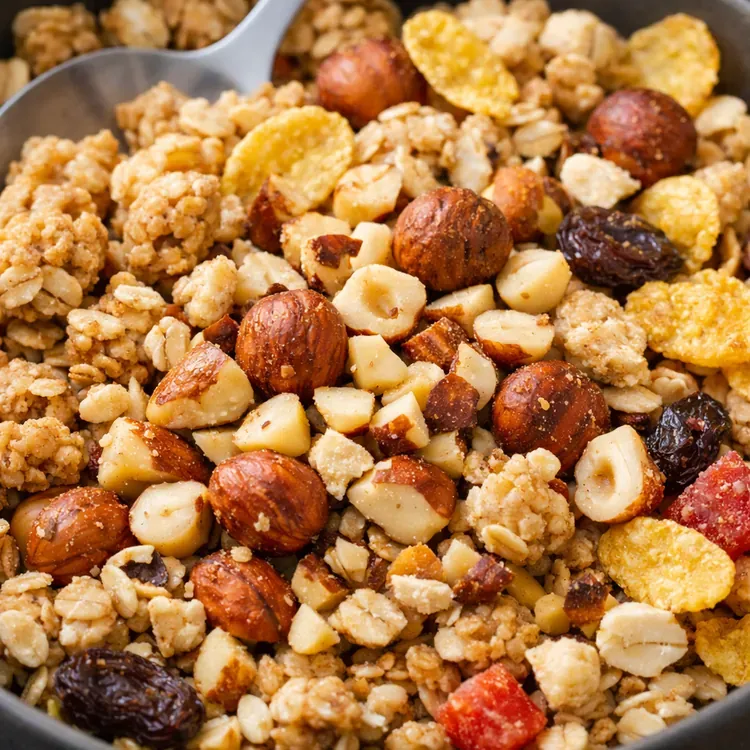
Hazelnut inclusions for breakfast cereals illustration

Where it fits

Hazelnuts are selected for cereals because they deliver premium texture, clean nut aroma, and a recognizable visual cue that consumers associate with quality. In cereal blends, hazelnuts can play multiple roles: visible inclusions in flakes or muesli, roasted pieces in granola clusters, or as a flavor foundation in coatings and nut-based clusters.

In this application, the main drivers are flavor consistency, particle control, and shelf stability. Cereals are often stored for long periods and experience humidity swings during distribution—so inclusion design should protect crunch, maintain aroma, and minimize rancidity risk.

We support manufacturers by aligning hazelnut format and processing level to your line: whole kernels for in-house roasting, blanched options for light color targets, controlled cuts for accurate dosing and reduced segregation, and paste/flour for coated clusters or nut-flavored components.

Export-ready documentation Lot traceability Custom cuts Bulk & retail options

Recommended formats

Typical starting points for pilots and scale-up. Cereals are sensitive to segregation and moisture pickup—so inclusion size, fines control, and packaging matter as much as flavor.

  • Roasted chopped/diced hazelnuts – common inclusion for granola, clusters, and premium mixes; delivers aroma + crunch.
  • Blanched kernels or cuts – supports lighter visual targets and reduces skin specks in flakes/muesli blends.
  • Hazelnut paste / puree – used for nut-flavored clusters, fillings, or coatings; creates a richer base note.

Practical tip: in blended cereals, controlled cuts (with reduced fines) help prevent nut dust settling at the bottom of the bag and improve pack-to-pack uniformity.

Technical considerations

The most common variables that affect throughput, appearance, and shelf-life performance in cereal systems—especially when cereals are blended after baking or toasted with inclusions.

  • Segregation control: calibrated cut sizes and fines reduction improve distribution across the pack.
  • Crunch retention: moisture exposure is the primary enemy; cut selection and barrier packaging reduce risk.
  • Roast alignment: matched to your flavor target and any additional heat applied during toasting or baking.
  • Oxidation management: barrier packaging and headspace control protect roasted aroma and reduce rancidity risk.
  • Allergen control: allergen statement and line segregation planning to support your internal program.
  • Lot traceability: documented specs and COA flow for QA release and customer requirements.

If your cereal is toasted with inclusions, roast profile is often selected slightly lighter to account for in-process heat. For blends added post-process, roasted inclusions can be optimized for maximum aroma at packing.

Packaging approach

We can supply lined cartons, vacuum or MAP options and palletization suited to sea, road or air freight. Packaging selection is typically driven by oxidation sensitivity and how long inclusions may be stored before use.

  • Roasted inclusions: oxygen-barrier liners (and optional vacuum/MAP) to preserve aroma.
  • Kernels & standard cuts: lined cartons or bags-in-cartons; optimized for receiving and handling.
  • Paste/puree: sealed pails or bag-in-box solutions aligned to shelf-life and handling requirements.

For sensitive formats (roasted cuts, paste), oxygen protection and temperature management are key to preserving aroma and reducing oxidation exposure during transit and storage.

See bulk supply details →

Selection guide for cereal types

“Breakfast cereal” covers many formats: granola clusters, toasted muesli, extruded shapes, flakes, and mixed bags with dried fruit. Hazelnut format selection is usually based on (1) how the cereal is processed (post-bake blending vs. toasted together), (2) the desired visual identity, and (3) the shelf-life target.

Cereal type Best-fit hazelnut formats Why it works
Granola / clusters Roasted chopped/diced; optional paste for clusters Roasted cuts deliver aroma and crunch; paste can be used in cluster components for nut depth.
Muesli / mixed cereals Blanched cuts or roasted cuts (controlled fines) Controlled cuts reduce segregation and bottom-of-bag dust; blanching supports lighter appearance.
Extruded / flakes Small diced or inclusions designed for blend stability Smaller controlled particles reduce breakage and maintain consistency during handling and packing.
Coated cereals / filled pieces Paste/puree; fine meal/flour Paste provides a stable flavor base for coatings and fillings; meal can adjust body and texture.
Premium “nut-forward” blends Roasted kernels or large chopped pieces Maximizes visual nut identity; packaging and oxidation control become more important due to higher nut load.

Selection is usually finalized with a pilot that checks: (1) inclusion distribution after mixing, (2) breakage and fines generation, (3) sensory at pack and at shelf-life checkpoints, and (4) packaging performance under humidity exposure.

How hazelnut inclusions perform in cereals

Hazelnuts bring aroma and crunch, but cereal systems introduce two common stressors: humidity (which can soften inclusions) and time (which increases oxidation exposure). Managing these stressors is the difference between a premium cereal at launch and a product that stays premium throughout its shelf life.

  • Moisture pickup: inclusions with high surface area (very small pieces and fines) can absorb humidity faster, reducing crunch.
  • Oxidation & rancidity: roasted aroma is sensitive to oxygen; barrier packaging and temperature control help preserve flavor.
  • Breakage during handling: overly brittle cuts or oversized pieces may fracture in blending/packing, creating fines and inconsistent distribution.
  • Visual consistency: blanching reduces skin specks and supports light-colored cereal targets.
  • Segregation: differences in density and particle size between cereal base and inclusions can lead to uneven distribution without controlled cuts.

Practical tip: if you see “nut dust” at the bottom of the bag after transit simulation, tighten the particle distribution (reduce fines) and review handling points where breakage might occur.

Typical specification markers

Below is a practical checklist used by procurement and QA teams for breakfast cereal applications. We align each item to your destination market, customer requirements, and processing level. For cereals, teams often add focus on cut tolerance and oxidation controls because cereal shelf life can be long and distribution conditions vary.

ParameterHow we align itWhy it matters in cereals
MoistureControlled to your target rangeSupports crunch retention and reduces clumping risk during storage.
Cut size / toleranceCalibrated cuts and screened fractionsReduces segregation and improves pack-to-pack inclusion consistency.
Roast profileAligned to flavor target and process temperatureDelivers stable aroma and avoids over-roasted or bitter notes after toasting.
Defect sortingScreened and optically sorted where requiredImproves appearance and reduces visual defects in premium cereals.
Micro profileAligned to customer specifications and destination requirementsSupports QA release and customer audit readiness.
AflatoxinManaged through risk-based sourcing and partner controlsCritical compliance marker for many import markets.
PackagingVacuum / MAP / liners and export cartons as requiredHelps preserve aroma, reduce oxygen exposure, and protect against humidity.

Final values depend on product form and customer requirements. We share lot documentation with each shipment and can standardize specifications for recurring cereal programs.

FAQ

Which hazelnut format is most common for breakfast cereal inclusions?

Most cereal manufacturers use roasted chopped/diced hazelnuts as the primary inclusion because it delivers visible nut identity and crunch. Hazelnut paste/puree is typically used when the cereal includes nut-flavored clusters, fillings, or coatings. Final selection depends on cereal type (granola vs. flakes), whether inclusions see additional heat, and the shelf-life target.

How do you keep hazelnut inclusions crunchy in cereal?

Crunch retention is driven by moisture control and fines management. Calibrated cuts reduce small dust that picks up humidity faster, while oxygen- and humidity-protective packaging helps preserve roasted aroma and texture. For toasted cereals, roast profile alignment and temperature management help prevent texture and flavor degradation.

Can you match a target particle size or cut tolerance?

Yes. We supply controlled cuts (sliced, diced, chopped) and can align tolerance bands to your process. Consistent particle distribution helps reduce segregation during blending and improves pack-to-pack uniformity.

Do you support long-term supply programs?

Yes. We structure annual and multi-shipment programs with consistent specifications, batch documentation (COA), and forecast-based planning. This supports repeatability, stable sensory performance, and production continuity.

Next step

Send your cereal type, target inclusion level, quantity and destination. We will propose suitable hazelnut formats, packaging, and a shipment plan aligned to your process and shelf-life target.

  • For blends: controlled cut size to reduce segregation and improve uniformity.
  • For toasted products: roast alignment to account for process temperature.
  • For long shelf life: oxidation and humidity protection through packaging selection.
Review products