Applications Library • Beverages

Hazelnut inclusions for protein shakes

A practical, procurement-ready overview of how hazelnut formats are used in protein shakes — including recommended product forms, dispersibility and mouthfeel considerations, oxidative stability controls, and packaging approaches for consistent scale-up.

Back to applications

This page is written for procurement, R&D and QA teams working on powdered mixes and ready-to-drink (RTD) protein beverages. Share your format (powder vs. RTD), process (shear/homogenization), and shelf-life target, and we will recommend the most suitable hazelnut ingredient form and documentation set.

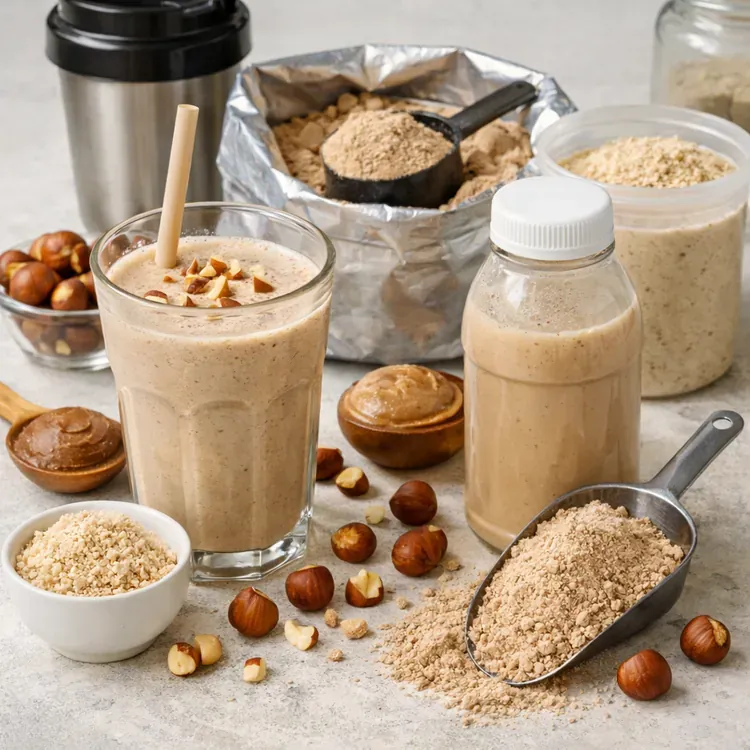
Hazelnut inclusions for protein shakes illustration

Where it fits

Hazelnut ingredients are used in protein shakes to deliver a natural nut profile, creaminess, and a premium “indulgent” cue—often paired with cocoa, coffee, vanilla, caramel, or dairy-alternative bases. Compared with flavor-only systems, real hazelnut provides authentic aroma and fat-driven body, but it also introduces additional variables that must be managed in beverage matrices.

In this application, the main drivers are flavor consistency, dispersibility/particle control, and shelf stability. Protein beverages—especially RTD—are sensitive to grittiness, separation, oxidation, and interaction effects between proteins, fats, and stabilizers. Selecting the right hazelnut format (meal/flour vs. paste vs. controlled inclusions) helps reduce these risks while meeting sensory targets.

We support manufacturers by aligning the hazelnut format and processing level to your system: finely milled meal/flour for smooth dispersion, blanched options for lighter color, controlled particle distributions for mouthfeel management, and paste/puree for richer, more indulgent profiles when your process can support proper emulsification.

Export-ready documentation Lot traceability Particle control Bulk & retail options

Recommended formats

Typical starting points for pilots and scale-up. For beverages, particle distribution and freshness are critical—both impact grittiness and sensory stability over time.

  • Hazelnut meal / flour – fast dispersion for dry blends and batch mixing; chosen to minimize grittiness.
  • Hazelnut paste / puree – richer taste and creamier mouthfeel; best for systems with high-shear mixing or homogenization.
  • Blanched kernels (for processing) – used when customers mill in-house and need lighter color and reduced skin specks.

If your product is a ready-to-drink shake, prioritize consistent particle distribution and oxidation protection. For powdered mixes, flowability and moisture control are typically the first screening criteria.

Technical considerations

Beverage systems add extra constraints: dispersion speed, suspension behavior, and interaction with proteins. Below are the most common variables teams control to keep texture and flavor stable.

  • Dispersibility & grittiness: particle size distribution and fines control are key to smooth mouthfeel.
  • Suspension stability: tighter particle control reduces sedimentation; process (shear/homogenization) and stabilizers often complete the system.
  • Fat phase behavior: paste/puree can improve creaminess but needs emulsification control to prevent oiling-off.
  • Oxidation & aroma loss: oxygen exposure can cause rancid notes; barrier packaging and temperature protection preserve profile.
  • Moisture management: important for powder flowability and shelf stability; prevents caking in meal/flour formats.
  • Allergen control: allergen statement and segregation planning to support your internal program and label accuracy.
  • Traceability & COA flow: consistent documentation supports QA release and customer audits.

Practical tip: if your shake uses high-protein levels (whey, casein, plant proteins), validate mouthfeel early. Protein systems can amplify perceived grittiness—so the same ingredient can feel different at different protein loads.

Packaging approach

We can supply lined cartons, vacuum or MAP options and palletization suited to sea, road or air freight. Packaging selection is typically driven by oxidation sensitivity and how long the ingredient will be stored before use.

  • Meal / flour: barrier bags and liners to protect against humidity and oxygen; designed for flowability retention.
  • Paste / puree: sealed pails or bag-in-box solutions with oxygen protection and handling practicality.
  • Kernels (for milling): lined cartons/bags-in-cartons; optional oxygen-barrier liners where required.

For sensitive formats (roasted materials, paste), oxygen protection and temperature management are key to preserving aroma. We also align pallet patterns and documentation to support efficient receiving and lot-level traceability.

See bulk supply details →

Use cases: powdered mixes vs. RTD protein shakes

“Protein shake” can mean a shelf-stable RTD beverage, a refrigerated drink, or a powdered mix. Hazelnut format choice changes depending on your process and how the product is consumed.

Product type Recommended hazelnut formats What to optimize
Powdered protein mix Fine meal/flour; optional paste for specialty blends Flowability, low moisture, rapid wetting, minimal caking and consistent flavor release.
RTD shelf-stable Paste/puree or controlled fine milling Emulsification, separation control, oxidation protection, and stable sensory over long storage.
Refrigerated RTD Meal/flour or paste depending on texture target Smooth mouthfeel, low sedimentation, clean nut aroma, and consistent color.
High-protein “thick” shake Paste/puree + fine meal Creaminess without oiling-off; manage grittiness and maintain stable viscosity.

If you share your process (mixing shear, homogenization pressure, heat treatment, and packaging), we can recommend the best-fit format and a practical specification set for procurement and QA.

What to control for consistent mouthfeel and flavor

Beverage consumers notice texture immediately. In protein shakes, “good” often means smooth, creamy, and clean-tasting without a lingering gritty finish. Hazelnut ingredients influence mouthfeel through both particle presence and fat-phase behavior.

  • Smoothness: achieved through fine milling and consistent particle distribution; reduces perceived sandiness.
  • Creaminess: enhanced by hazelnut fats (especially paste), but requires emulsification control in RTD systems.
  • Flavor lift: roast intensity drives aroma; for beverage applications, many teams prefer balanced roast to avoid bitterness.
  • Color control: blanched materials support lighter beverages and reduce visible skin specks.
  • Shelf-life stability: oxygen barrier packaging and temperature control protect aroma and reduce rancid-note development.

When pilots look great on day 0 but decline later, oxidation and separation are the usual suspects. Aligning packaging to ingredient sensitivity is often the easiest “high impact” improvement.

Typical specification markers

Below is a practical checklist used by procurement and QA teams for protein shake applications. We align each item to your destination market, customer requirements, and processing level. For beverage systems, teams often add tighter controls around particle distribution and sensory stability.

ParameterHow we align itWhy it matters in shakes
MoistureControlled to your target rangeProtects powder flowability; reduces caking risk in meal/flour.
Particle size distributionAligned to dispersion and mouthfeel targetsReduces grittiness and helps stabilize suspension behavior.
Defect sortingScreened and optically sorted where requiredImproves sensory consistency and reduces visual defects.
Micro profileAligned to customer specifications and destination requirementsSupports QA release and customer audit readiness.
AflatoxinManaged through risk-based sourcing and partner controlsCritical compliance marker for many import markets.
Oxidation control (where specified)Barrier packaging, handling guidance, freshness planningHelps prevent rancid notes and aroma fade over shelf life.
PackagingVacuum / MAP / liners and export cartons as requiredReduces oxygen/humidity exposure during transit and storage.

Final values depend on product form and customer requirements. We share lot documentation with each shipment. For repeat programs, we can standardize cut/particle definitions and packaging so each delivery behaves consistently on your line.

FAQ

Which hazelnut format is most common for protein shakes?

For protein shake applications, most customers start with finely milled hazelnut meal/flour for fast dispersion and a smooth mouthfeel. For a richer, more indulgent profile, some formulations use hazelnut paste (puree) as a flavor base—especially in RTD systems with high-shear mixing or homogenization.

How do you keep hazelnut ingredients from separating or floating in ready-to-drink shakes?

Separation risk is managed by aligning particle size and fat phase behavior to your processing method. RTD systems typically rely on appropriate shear/homogenization (and often stabilizers/emulsifiers) to keep particles suspended and fats emulsified. From the ingredient side, consistent milling and oxygen-protective packaging help maintain sensory stability over shelf life.

Can you match a target particle size or cut tolerance?

Yes. We can align particle size distributions for meal/flour and provide calibrated cuts where needed. In beverage systems, tighter control reduces grittiness, improves suspension stability, and supports repeatable dosing during batching.

Do you support long-term supply programs?

Yes. We structure annual and multi-shipment programs with consistent specifications, batch documentation (COA), and forecast-based planning. This helps maintain stable sensory outcomes and reduces reformulation risk tied to ingredient variability.

Next step

Send your product type (powder or RTD), target flavor profile (light vs. roasted), quantity and destination. We will propose suitable formats, packaging and a shipment plan aligned to your process and shelf-life target.

  • For powder mixes: moisture and flowability targets + particle distribution guidance.
  • For RTD: format recommendation (meal vs. paste) + packaging and freshness controls.
  • For repeat supply: standardized specification and COA flow for each lot.
Review products