Applications Library • Nutrition

Hazelnut ingredients for breakfast bars

A practical, procurement-ready overview of how hazelnut formats are used in this application — including recommended product forms, technical considerations, shelf-life controls and packaging approaches for consistent scale-up.

Back to applications

This page is written for procurement, R&D and QA teams. If you share your target bar type, inclusion level and destination market, we can recommend suitable formats and documentation flow.

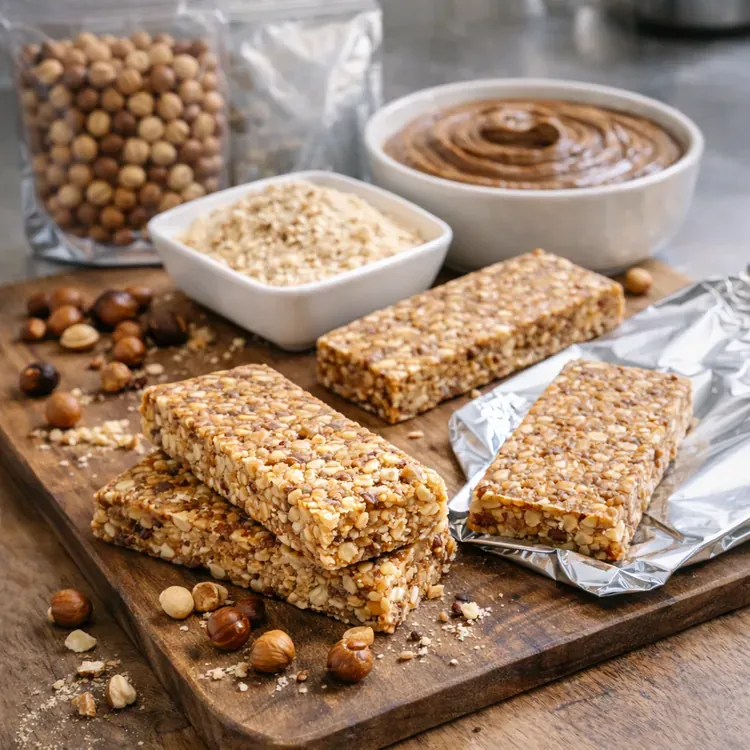
Hazelnut ingredients for breakfast bars illustration

Where it fits

Hazelnuts are used in breakfast bars for clean, recognizable taste, natural fat-driven richness, and a premium texture cue that works across nut-and-grain, protein-forward, and fruit-based bar styles. Unlike powders or flavors, real hazelnut ingredients contribute both aroma and mouthfeel—so controlling format, roast, and freshness has an outsized impact on repeatability.

In bar systems, the main performance drivers are flavor consistency, particle control, and shelf stability. Hazelnut ingredients are commonly used in three roles:

  • Primary flavor base (paste/puree, sometimes combined with cocoa or dairy alternatives).
  • Texture inclusion (chopped/diced/sliced kernels, often roasted for stronger aroma).
  • Functional solids (meal/flour to adjust bite, bind, or improve perceived indulgence).

We support manufacturers by aligning the hazelnut format and processing level to your line: whole kernels for in-house roasting, blanched for light color targets, controlled cuts for dosing, and paste/flour for homogeneous mixes. The goal is simple: predictable sensory results with a documentation set that procurement and QA can rely on shipment to shipment.

Export-ready documentation Lot traceability Custom cuts Bulk & retail options

Recommended formats

Typical starting points for pilots and scale-up. We adapt roast level, cut tolerance and packaging to your process, target sensory, and shelf-life expectations.

  • Hazelnut paste / puree – stable flavor base and excellent mix uniformity; used in nut-forward and protein bars.
  • Hazelnut meal / flour – adds nut body and bite; useful for solids build, reduced stickiness, and texture balance.
  • Diced / sliced / chopped – inclusion for visual identity and crunch; cut size chosen to support dosing accuracy and bar integrity.

Practical tip: if your formulation is sensitive to oil migration or “greasy” surface appearance, start by validating paste viscosity and inclusion size against your binder system (syrups, fibers, nut butters, proteins).

Technical considerations

The most common variables that impact throughput, flavor and stability. These items are the usual “make-or-break” points between a great pilot and a reliable commercial run.

  • Lot control & documentation: traceable lots with documented specs and COA flow to support QA release and customer audits.
  • Roast alignment: matched to your flavor target and any heat your product sees during mixing, baking, or enrobing.
  • Particle & dust control: consistent cuts reduce segregation and help maintain bar geometry and clean cut edges.
  • Oxidation management: oxygen barrier packaging, headspace control, and temperature protection to preserve aroma.
  • Allergen control: allergen statement, segregation planning, and cleaning validation support for your internal program.

If you are targeting extended shelf life or export distribution, prioritize oxidation protection for roasted cuts and high-surface-area formats (meal/flour). These formats deliver fast aroma—but are more sensitive without packaging controls.

Packaging approach

We can supply lined cartons, vacuum or MAP options and palletization suited to sea, road or air freight. Packaging selection is usually driven by sensitivity to oxygen, aroma retention, and handling requirements on your line.

  • Kernels & cuts: lined cartons or bags in cartons; optional oxygen-barrier liners for roasted inclusions.
  • Paste / puree: food-grade pails or bag-in-box; oxygen-barrier and sealing specifications aligned to shelf life.
  • Meal / flour: barrier bags with attention to humidity protection and clumping risk.

For sensitive formats (roasted cuts, paste), oxygen protection and temperature management are key to preserving aroma. Where applicable, we plan pallet patterns, container loading, and documentation to reduce handling risk and support traceability.

See bulk supply details →

Format selection guide for bar types

Breakfast bars vary widely: some are chewy and syrup-bound, others are high-protein and dense, and some are baked or enrobed. The table below is a practical starting point to select formats that minimize production issues (segregation, crumbling, oil migration) while delivering the sensory you want.

Bar style Best-fit hazelnut formats Why it works
Nut & grain (chewy) Chopped/diced + optional paste Inclusions provide visible premium cue; paste can strengthen nut flavor without increasing inclusion level.
High-protein (dense) Paste/puree + fine meal Homogeneous mixing reduces “hot spots”; meal helps texture balance and reduces tackiness in some systems.
Fruit-forward Lightly roasted diced/sliced Controlled cut keeps crunch while roast adds aroma that complements dried fruit without overpowering.
Baked / toasted bars Blanched kernels/cuts (for light color) or pre-roasted cuts Roast selection accounts for in-process heat to avoid over-development and bitterness.
Enrobed / chocolate-coated Roasted cuts + paste/puree Roasted aroma pairs with cocoa; packaging and freshness are especially important to protect flavor under long shelf life.

Selection is typically finalized with a quick pilot that measures: (1) dosing accuracy, (2) bar cut quality, (3) sensory at day 0 and at accelerated shelf-life checkpoints, and (4) packaging performance.

How hazelnuts behave inside breakfast bars

Hazelnuts are fat-rich and aromatic, which is exactly why they perform so well in bars. The same properties can also create challenges if the format and packaging are not matched to the matrix. Below are the most common “real-world” considerations R&D and QA teams evaluate.

  • Oil migration & surface greasing: more likely with very fine meal/flour and high paste inclusion. Typically managed by balancing binder type, solids, and selecting the right paste viscosity.
  • Texture drift over time: moisture migration can soften inclusions or create tough bite. Cut size, roast level, and bar water activity all influence retention.
  • Segregation during mixing: inconsistent cut or excessive fines can lead to uneven distribution and bar-to-bar variability. Controlled cuts reduce this risk.
  • Flavor fade: aroma compounds are sensitive to oxygen and heat exposure. Oxygen barrier packaging and sensible temperature control protect flavor.
  • Color targets: blanching supports light-colored bars; roast profile management prevents dark specks and helps achieve repeatable appearance.

If you share your process steps (mix time, temperature, any baking, and packaging method), we can recommend a format that reduces risk while hitting your sensory target.

Typical specification markers

Below is a practical checklist used by procurement and QA teams for breakfast bar applications. We align each item to your destination market, customer requirements, and processing level (natural/blanched/roasted; kernel/cut/meal/paste). Where your customer has a specific method requirement, we can align testing and reporting format accordingly.

ParameterHow we align itWhy it matters in bars
MoistureControlled to your target rangeSupports texture stability and reduces clumping risk in meal/flour.
Particle size / cut toleranceCalibrated cuts and screened fractionsImproves dosing accuracy, distribution, and reduces segregation.
Roast profileAligned to flavor target and process temperatureControls aroma development and minimizes bitter/over-roasted notes.
Defect sortingScreened and optically sorted where requiredSupports sensory consistency and reduces visual defects.
Micro profileAligned to customer specifications and destination requirementsSupports QA release and customer audit readiness.
AflatoxinManaged through risk-based sourcing and partner controlsCritical compliance marker for many import markets.
Oxidation indicators (where specified)Aligned to customer requirements for sensitive formatsHelps manage rancidity risk during extended shelf life.
Allergen statementDocumentation aligned to your needsSupports label accuracy and internal allergen control programs.
Foreign matter controlsProcess controls and packaging integrityReduces incident risk and supports customer standards.
PackagingVacuum / MAP / liners and export cartons as requiredProtects aroma and reduces oxygen exposure in transit/storage.

Final values depend on product form and customer requirements. We share lot documentation with each shipment and can align document sets for recurring programs (COA, traceability records, and shipment paperwork).

Implementation checklist for procurement & QA

This is a simple workflow many teams use to move from initial inquiry to stable, repeatable supply. It helps prevent common issues such as sensory drift, cut inconsistency, and shelf-life surprises after scale-up.

1) Define your target

Share the bar type, target inclusion rate, and sensory goal (clean/nutty/roasted). Include any constraints: “no visible dark specks”, “no crunch loss”, “low dust”.

If you have a benchmark sample, photos and a short sensory description help align faster.

2) Align format & spec

Select format(s), roast level, particle tolerance, and packaging. Confirm which QA parameters are critical for your market and customer requirements.

  • Cut tolerance band
  • Roast target
  • Packaging barrier level

3) Plan supply continuity

For repeat programs, define forecast windows, shipment cadence, and documentation flow. This reduces variability and supports stable commercial production.

Many customers prefer multi-shipment programs with consistent specs and pre-agreed packaging.

FAQ

Which hazelnut format is most common for breakfast bars?

Most customers start with hazelnut paste (puree) for consistent flavor delivery and homogeneous mixing. For texture and visual identity, calibrated chopped/diced hazelnuts are commonly used as inclusions. The “best” choice depends on your bar style (chewy vs. dense), target bite, and shelf-life goals.

How do you choose roast level for breakfast bar inclusions?

Roast level is selected to match your finished flavor target and any heat your product sees during manufacturing. Lighter roasts preserve a clean, sweet nut profile and lighter color. Deeper roasts increase aroma intensity and toasted notes. For bars with warm mixing, baking, or enrobing, we align roast so the nut does not over-develop in your process.

Can you match a target particle size or cut tolerance?

Yes. We supply controlled cuts (sliced, diced, chopped) and can align tolerance bands to your process. This supports consistent dosing, reduces segregation, and helps maintain bar geometry and clean cut edges. If you share your depositor or sheeter constraints, we can recommend a cut that runs smoothly on your equipment.

What are the key stability risks in breakfast bars with hazelnuts?

The main risks are lipid oxidation (rancidity), aroma loss, and texture change from moisture migration. Risk is higher for roasted cuts and high-surface-area formats (meal/flour). Typical controls include oxygen-barrier packaging, headspace management (vacuum/MAP where appropriate), temperature control, and freshness-based lot planning.

What packaging options are typical for sensitive hazelnut formats?

For roasted cuts and paste, customers typically specify oxygen-barrier liners plus vacuum or MAP options. For kernels and standard cuts, lined cartons or bags-in-cartons are common. Palletization and container loading are planned to reduce handling risk and support traceability. Packaging is selected based on shelf life target, destination climate, and transit time.

Do you support long-term supply programs for bars?

Yes. We structure annual and multi-shipment programs with consistent specifications, batch documentation (COA), and forecast-based planning. Programs are designed to support stable sensory outcomes and reliable production scheduling across months of distribution.

Next step

Send your target bar type, quantity and destination. We will propose suitable hazelnut formats, specification markers, packaging options and a shipment plan aligned to your shelf-life goal and production process.

  • Best for pilots: recommended starting format + cut tolerance and roast target.
  • Best for scale-up: packaging and documentation flow for repeat shipments.
  • Best for shelf life: oxidation controls and transit/storage considerations.
Review products