Applications Library • Nutrition

Hazelnut ingredients for energy bites

A procurement-ready guide to using hazelnut ingredients in energy bites, snack balls, and protein bites—covering the best formats (paste, kernels, meal/flour, controlled cuts), texture and binding strategy, oxidation and shelf-stability, and packaging approaches that keep flavor clean through distribution.

Back to applications
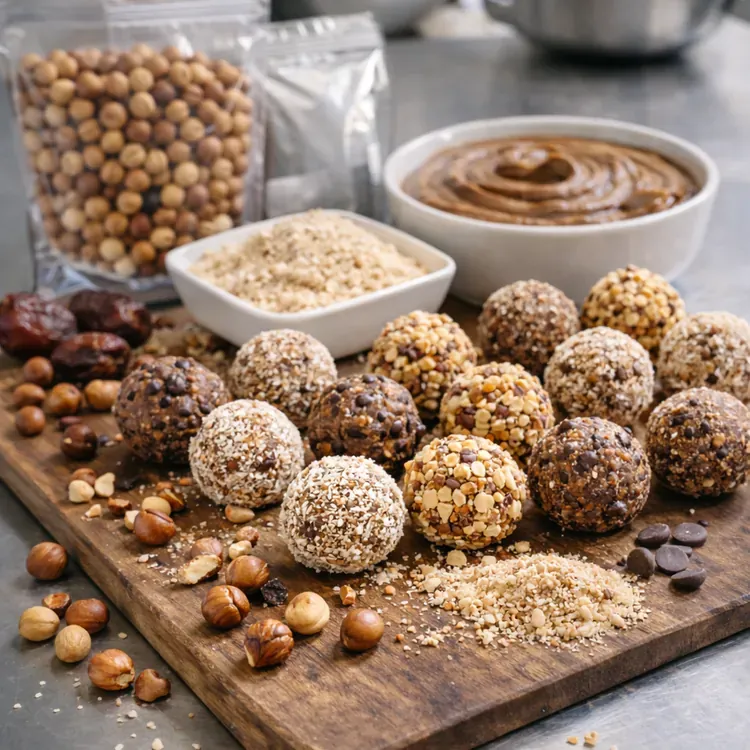
Hazelnut ingredients for energy bites illustration

Where it fits

Energy bites are compact, high-value snacks built around a simple idea: combine a binder (date paste, syrups, honey, nut butter), a body phase (oats, protein powders, fibers), and a flavor/fat phase that delivers taste and satiety. Hazelnuts add a clean, naturally sweet nut profile that pairs well with cocoa, coffee, vanilla, fruit inclusions, and “protein” flavor systems.

From a manufacturing perspective, the key drivers are texture consistency (no crumbling or stickiness), controlled particle size for shaping and portioning, and shelf stability (protecting nut fats from oxidation). We support manufacturers by aligning hazelnut format, roast profile, fineness, and packaging to your line—whether you form by extrusion, enrobing, panning, hand-rolling, or high-speed portioning.

  • Flavor: roasted aroma and natural sweetness without heavy masking.
  • Texture: crunchy chops or smooth paste depending on bite style.
  • Process: consistent fineness for stable mixing and forming.
  • Stability: oxygen and temperature management to keep fats fresh.
Consistent roast profiles Controlled cuts Traceable lots Bulk & retail options
Recommended formats

Typical starting points for pilots and scale-up. We align roast level, fineness and packaging to your equipment and texture targets.

  • Hazelnut paste / puree — smooth base flavor, helps bind and soften “protein” notes
  • Roasted kernels — for in-house chopping, inclusions, and signature crunch
  • Diced / chopped hazelnuts — controlled bite texture and consistent dosing
  • Hazelnut meal / flour — adds body, reduces stickiness, supports clean portioning
  • Blanched kernels — lighter color targets; roast control in-house

Technical considerations

The variables that most often affect bite texture, machinability and shelf performance.

  • Binder balance (syrups/dates/nut pastes) to avoid crumbling or tacky surfaces
  • Particle size & dust control for consistent forming and weight control
  • Free-oil management to reduce greasy feel and prevent oil seepage in packs
  • Oxidation control to protect hazelnut aroma and keep flavor clean over shelf life
  • Moisture & texture drift (softening or drying) depending on base ingredients
  • Allergen control and line segregation planning

Packaging approach

We can supply lined cartons, vacuum or MAP options and palletization suited to sea, road or air freight.

For energy bites, fats and aroma compounds are sensitive to oxygen and heat. Barrier packaging and sensible storage temperatures preserve flavor and reduce rancidity risk.

  • Barrier liners for kernels and meal/flour to limit oxygen pickup
  • Protected paste packaging to reduce headspace and surface oxidation
  • Stable palletization to limit crushing and fines generation in transit
See bulk supply details →

Building a stable energy-bite formula with hazelnuts

Hazelnuts can play three roles in energy bites: a flavor-fat base (paste), a texture inclusion (chops/kernels), and a structural dry (meal/flour). The strongest results come from choosing the right combination for your target bite: chewy, crunchy, protein-forward, or dessert-style.

Role 1: Flavor + fat phase

Hazelnut paste/puree delivers the most consistent flavor. It also helps smooth “chalky” notes from proteins and fibers when used at the right level.

  • Fast dispersion and clean dosing
  • Supports mouthfeel and richness
  • Fineness consistency matters for texture

Role 2: Texture inclusions

Controlled chops and diced hazelnuts add crunch and visual appeal. Consistent cut size improves weight control and reduces line stoppages.

  • Choose cut size based on bite diameter and forming method
  • Limit excess fines to reduce dusting and dry mouthfeel
  • Roast profile drives aroma and perceived sweetness

Role 3: Structure and handling

Hazelnut meal/flour can “tighten” sticky systems, improve machinability, and support cleaner portioning—especially in date-heavy or syrup-heavy recipes.

  • Helps reduce tackiness in warm environments
  • Adds nut body without visible chunks
  • Granulation should match your texture target

Process checkpoints that reduce defects

Energy bites are sensitive to temperature and mixing order. A small shift can change texture from “perfectly chewy” to “crumbly” or “oily.” The checkpoints below help maintain consistent results from pilot to scale.

CheckpointWhy it mattersWhat to align
Ingredient temperature Controls viscosity, stickiness, and oil release Keep paste/binders within a controlled range for repeatable mixing
Order of addition Impacts dispersion and texture uniformity Blend paste/binders first, then add dry body; fold inclusions last
Particle control Improves forming and weight control Choose consistent chops; minimize dust/fines for cleaner handling
Oil management Prevents greasy bite and pack staining Balance paste with dry solids; avoid overworking warm mixes
Holding time Texture drift can occur before forming Define max hold time; keep covered to reduce drying/oxidation
Packaging speed Limits oxidation and moisture exchange Pack promptly; use barrier films and tight seals for shelf stability

If you tell us your forming method (extruded logs, rolled balls, pressed bites, enrobed bites) and target shelf life, we can recommend formats and spec markers that reduce rework.

Typical specification markers

Below is a practical checklist used by procurement and QA teams for energy-bite inputs. We align each item to your destination market, your recipe style (date-based, syrup-based, protein-forward), and your packaging format (flow-wrap, tubs, pouches).

ParameterHow we align it
Roast levelLight/medium/dark targets matched to flavor profile and bitterness tolerance
Cut size / granulationControlled chops/dice and flour granulation aligned to texture and forming
Paste texture / finenessAligned to smoothness target and consistent dispersion
MoistureControlled to reduce clumping and help maintain stable handling
Defect sortingScreened and optically sorted where required
Micro profileAligned to customer specifications and destination requirements
AflatoxinManaged through risk-based sourcing and partner controls
PackagingBarrier liners / vacuum / MAP and export cartons as required
TraceabilityLot documentation and COA flow with each shipment

Final values depend on product form and customer requirements. We share lot documentation with each shipment.

FAQ

Which hazelnut format is most common for hazelnut ingredients for energy bites?

Most energy-bite formulas start with hazelnut paste/puree as the primary flavor and fat phase, then add roasted kernels or controlled chops for texture. Meal/flour is common when you want more body and lower visible particulates, especially in protein-forward recipes.

How do you prevent oily separation or a greasy bite?

Manage the balance between free oil and binders. Using a consistent paste texture, matching fineness, and controlling temperature during mixing reduces oiling-off. Barrier packaging helps protect fats from oxidation, which can amplify off-notes and perceived oiliness over shelf life.

Can you match a target particle size or cut?

Yes. We can supply calibrated kernels and controlled cuts (sliced, diced or chopped) and align tolerance bands to your process. For meal/flour and paste, we can align granulation/fineness to your texture target and depositor performance.

Do you support long-term supply programs?

Yes. We structure annual and multi-shipment programs with consistent specifications, batch documentation and forecast-based planning.

Next step

Send your target bite style (chewy, crunchy, protein-forward, dessert-style), batch size, and destination. We will propose suitable formats (paste/kernels/chops/flour), roast and fineness targets, packaging, and a shipment plan aligned to your shelf-life goals.

  • Forming method: rolled balls, extruded logs, pressed bites, enrobed bites
  • Texture target: smooth vs. crunchy inclusions; sticky vs. clean-handling
  • Flavor profile: light roast vs. deep roast; cocoa/coffee pairing
  • Packaging: flow-wrap, tubs, pouches; barrier requirements
  • Destination: country and delivery cadence
Review products