Applications Library • Education

Hazelnut ingredients for pastry schools

A procurement-ready guide for pastry schools and training kitchens that use hazelnuts across multiple modules—from praliné and gianduja to biscuits, creams, plated desserts, and garnish. Learn which formats work best for teaching, how to keep results consistent across classes, and how packaging, storage, and QA markers protect freshness and reduce waste.

Back to applications
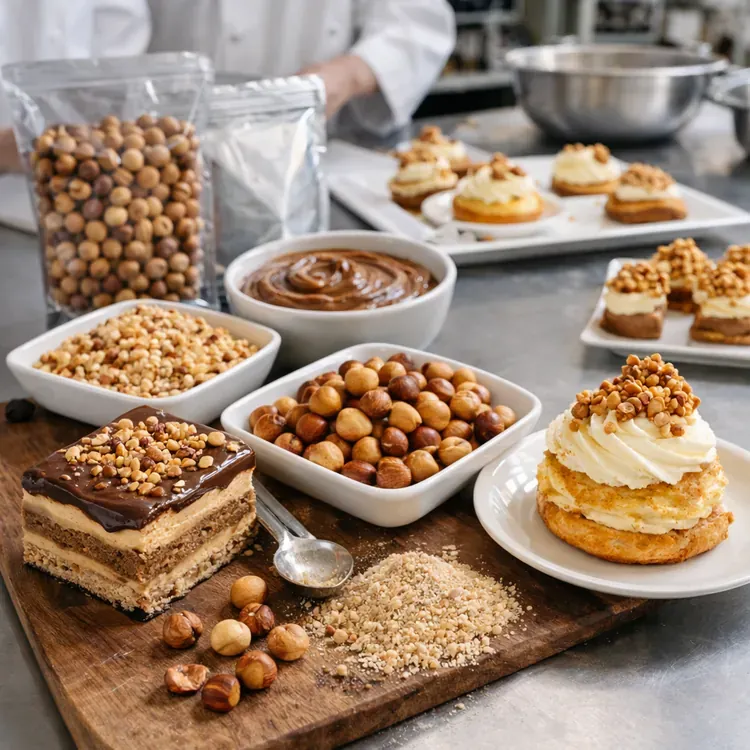
Hazelnut ingredients for pastry schools illustration

Where it fits

Pastry schools need ingredients that are both teachable and repeatable. Unlike a single-product factory line, training kitchens run many small batches with different instructors, student skill levels, and equipment setups. Hazelnut ingredients are used to teach key pastry fundamentals: nut roasting, paste emulsions, praliné and gianduja, nut-enriched batters, crumb textures, and finishing techniques.

The main drivers for education programs are flavor consistency, predictable performance, and freshness management. Schools often benefit from a “core pantry” of formats: kernels (natural/blanched) for roasting and garnish, paste/puree for creams and fillings, and meal/flour for batters and streusels. When these formats share aligned specs (roast, fineness, moisture), instructors get consistent results across cohorts.

  • Teaching-friendly formats: versatile across multiple recipes and modules.
  • Low-waste storage: packaging that stays fresh across repeated open/close cycles.
  • Traceability for instruction: lots and COAs support QA lessons and allergen planning.
  • Scalable purchasing: semester-based forecasting and multi-shipment programs.
Curriculum versatility Lot traceability Roast & fineness alignment Bulk & education pack options
Recommended formats

A practical “starter set” most pastry schools rely on. We can expand or simplify based on your curriculum and storage capacity.

  • Natural or blanched kernels (calibrated) — roasting, garnish, inclusions
  • Hazelnut paste / puree — praliné-style creams, fillings, ice cream bases
  • Hazelnut meal / flour — biscuits, dacquoise-style bases, streusel, batters
  • Diced / chopped — finishing, texture, brittles, crunchy layers

Technical considerations

Variables that most often affect teaching outcomes, demo reliability, and student batch consistency.

  • Roast profile alignment for aroma and color consistency between classes
  • Particle / fineness control (paste and flour) for smooth creams and stable emulsions
  • Oxidation protection to preserve flavor across open-pack usage
  • Moisture management to protect crunch and keep garnishes crisp
  • Allergen control and storage/labeling planning for teaching kitchens
  • Traceable lots + COA flow for QA education and documentation requirements

Packaging approach

Schools typically need packaging that stays fresh through repeated opening, portioning, and shared storage. We can propose formats that reduce waste and protect aroma.

For paste and roasted items, oxygen exposure is the main risk. Barrier liners, tight seals, and temperature-aware storage help preserve aroma and reduce off-notes.

  • Bulk export cartons for high-volume programs and central commissaries
  • Case-friendly sizes for storerooms and class distribution
  • Protected paste packaging to reduce oil separation and oxidation
See bulk supply details →

How pastry schools use hazelnut ingredients

Hazelnuts show up across classic and modern pastry modules. Aligning formats (kernels, paste, flour, diced) helps instructors teach technique while keeping outputs repeatable.

Praliné, gianduja & creams

Paste/puree is the workhorse for smooth textures and consistent flavor. Instructors can teach emulsions, fat balance, and flavor building without relying on variable student grinding.

  • Praliné-style fillings and whipped ganaches
  • Gianduja-style spreads and molded bonbons
  • Ice cream/gelato bases and semifreddo

Biscuits, bases & batters

Meal/flour supports consistent structure and nut character in sponge, biscuits, and crunchy layers—ideal for scaling class batches and minimizing grinder bottlenecks.

  • Dacquoise-style bases, financiers, cakes
  • Streusel, sablé, and crunchy inserts
  • Nut-enriched batters and cookie applications

Garnish, texture & plated desserts

Calibrated kernels and diced formats give predictable crunch and clean visual presentation—useful for plated desserts, entremets, and laminated dough finishes.

  • Roasted garnish and finishing textures
  • Brittles, caramelized nuts, crunchy layers
  • Chocolate enrobing and inclusion training

Storage & handling in training kitchens

Training kitchens open ingredients frequently. The goal is to keep hazelnuts tasting fresh while preventing texture drift and cross-contact. A few simple controls make a big difference: cool/dry storage, airtight resealing, and separating raw/roasted and allergen zones.

FormatWhat to watchGood practice
Kernels (natural/blanched) Moisture pickup, odor absorption, breakage Keep sealed; portion for classes; store away from strong odors
Roasted kernels / diced Oxidation and aroma loss after opening Use oxygen-barrier packaging; reseal tightly; keep cool
Paste / puree Oil separation, oxidation at the surface Minimize headspace; clean utensils; cover surface; reseal immediately
Meal / flour Clumping, moisture pickup, flavor dulling Airtight storage; portion for practical exams; rotate stock

If you share your storage conditions and typical usage cadence (daily labs vs. weekend modules), we can recommend packaging and shipment frequency that keeps ingredients fresh without overstock.

Typical specification markers

Below is a practical checklist commonly used by pastry programs and central purchasing teams. We align each item to your curriculum (teaching objectives), your kitchen setup (storage and equipment), and your destination market requirements.

ParameterHow we align it
Kernel calibrationSieve bands aligned to teaching needs (roasting labs, garnish consistency)
Roast profileLight/medium/dark targets aligned to flavor and color goals in class recipes
Paste finenessAligned to your texture requirements (smooth creams, fillings, ice cream bases)
Meal/flour granulationControlled to support consistent batter structure and crunchy layers
MoistureControlled to protect crunch, reduce clumping, and improve repeatability
Breakage / finesLimits to reduce waste and keep presentations clean
Defect sortingScreened and optically sorted where required
Micro profileAligned to customer specifications and destination requirements
AflatoxinManaged through risk-based sourcing and partner controls
Allergen documentationClear labeling and documentation to support training kitchen controls
PackagingBarrier liners / sealed packs and export cartons as required

Final values depend on format and school requirements. We share lot documentation with each shipment and can align to your receiving checks and semester planning.

FAQ

Which hazelnut formats are most useful for pastry schools?

A versatile “core pantry” usually includes calibrated kernels (natural and/or blanched), hazelnut paste/puree for creams and fillings, and hazelnut meal/flour for batters and crunchy components. Many programs also add diced/chopped for finishing and texture.

How do you help schools keep outcomes consistent across classes?

We align specs that matter in teaching environments—roast level, fineness (paste/flour), moisture, and packaging. With traceable lots and consistent tolerance bands, instructors get predictable results even when multiple cohorts and stations are running at once.

Can you supply smaller pack sizes suitable for training kitchens?

Yes. We can propose packaging approaches that reduce waste and protect freshness through repeated opening, while still supporting export-ready bulk formats for high-volume programs.

Do you support long-term supply programs?

Yes. We structure annual and multi-shipment programs with consistent specifications, batch documentation and forecast-based planning—useful for semester scheduling and budget control.

Next step

Send your curriculum focus, expected student volume, and destination. We will propose a practical format set (kernels, paste, flour, diced), aligned specs (roast and fineness), and packaging options that keep your teaching kitchens consistent and low-waste.

  • Program type: daily labs, short courses, professional diploma, central commissary
  • Modules: praliné/gianduja, entremets, plated desserts, viennoiserie, confectionery
  • Volume: weekly usage or semester forecast
  • Storage: ambient/cool room + typical open-pack duration
  • Destination: country and delivery schedule
Review products