Applications Library • Savory

Hazelnut ingredients for pesto variants

A practical, procurement-ready guide to using hazelnuts in pesto — from classic “pine-nut style” replacements to roasted, regional variants — including format selection, texture and color control, shelf-life risks, and packaging approaches.

Back to applications
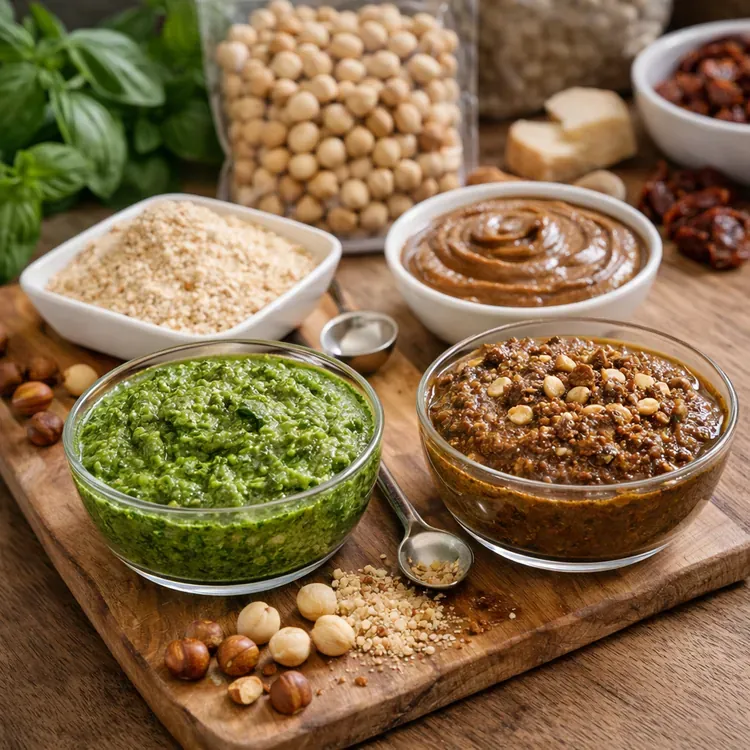
Hazelnut ingredients for pesto variants illustration

Where it fits

Pesto is an oil-rich, herb-forward sauce where nuts contribute creaminess, body, and a balanced nutty sweetness that rounds out garlic, cheese, and greens. Hazelnuts are used to create distinctive pesto variants and, in some recipes, to replace or complement pine nuts while offering a stable, scalable supply format.

In production, the core performance drivers are flavor consistency, particle control (mouthfeel and spreadability), and oxidation management (both nut oils and green pigments are sensitive). The right hazelnut format helps you control color, texture, and cost per batch without sacrificing taste.

Common pesto directions that use hazelnuts

  • Green pesto: basil/greens with hazelnuts for a smooth, slightly sweet finish
  • Roasted hazelnut pesto: deeper nut notes for premium, “toasted” flavor profiles
  • Red pesto variants: sun-dried tomato style where hazelnut body supports thicker texture
  • Dairy-free lines: hazelnut paste/meal to support creaminess when cheese is reduced or removed
Texture and flow control Color-target options Lot traceability Bulk & retail options

We align processing level (natural vs. blanched vs. roasted) and particle targets to your equipment (high-shear mixer, colloid mill, stone mill) and your desired “rustic” or “smooth” finish.

What pesto producers typically optimize

Pesto is sensitive to both oxidation and texture drift. Small changes in nut particle size, roast intensity, or fines content can change perceived freshness, color, and mouthfeel. These are the control points most often specified during development and scale-up:

Flavor and color outcomes

  • Green color protection: blanched kernels reduce brown flecks and help maintain a cleaner green appearance.
  • Nut intensity: roasted kernels/meal deliver stronger nut notes, useful for signature or premium pesto styles.
  • Bitterness balance: controlled roast avoids harsh notes that can amplify herbal bitterness.

Texture and processing

  • Particle size distribution: defines “rustic” vs. “smooth” pesto and impacts spreadability.
  • Fines control: too many fines can make pesto pasty or heavy; too few can make it thin or oily.
  • Oil release and emulsification: meal or paste can improve body and help stabilize oil/water phases.

Shelf stability

  • Oxidation management: nut oils and green pigments degrade with oxygen; barrier packaging and headspace control help.
  • Moisture and water activity: incoming nut moisture and storage conditions affect stability and texture over time.
  • Traceability and documentation: consistent lots with COA flow simplify QA approvals and customer audits.

If your pesto is sold chilled or ambient, we can propose packaging and handling options that match your distribution model and reduce oxidation risk during transit and storage.

Recommended formats

Typical starting points for pilots and scale-up. We align roast level, granulation, and packaging protection to your pesto style.

  • Natural kernels (calibrated) for flexible roasting and “fresh nut” profiles
  • Blanched kernels for cleaner color and reduced flecking in green pesto
  • Roasted kernels for toasted flavor variants and premium nut intensity
  • Hazelnut meal / flour to build body, support emulsification, and control mouthfeel
  • Hazelnut paste / puree for smooth pesto styles and stable texture in high-shear processing

Many producers use kernels for “rustic” pesto and meal/paste for “smooth” pesto. We can supply both under a matched specification so line changeovers are easier.

Technical considerations

The most common variables that influence throughput, taste, and stability in pesto production.

  • Oxidation protection through oxygen-barrier packaging and headspace control
  • Particle size and fines aligned to your equipment and target mouthfeel
  • Roast profile matched to herb/cheese systems and heat exposure during processing
  • Color targets supported via blanching and controlled defect levels
  • Lot traceability with documented specifications and COA flow

For green pesto, blanched kernels typically help maintain a cleaner visual profile; for roasted variants, roast intensity is the main sensory differentiator.

Packaging approach

We supply hazelnut ingredients for both bulk manufacturing and retail-oriented programs, with export-ready packing options.

Kernels & cuts: lined cartons with optional vacuum or MAP for oxidation control and aroma protection.

Meal/flour: moisture protection and controlled handling to maintain free-flowing behavior.

Paste/puree: barrier packaging (pails/drums as required) and temperature discipline to protect flavor and texture.

See bulk supply details →

Typical specification markers

Below is a practical checklist used by procurement and QA teams for hazelnuts used in pesto. We align each item to your pesto style (green, roasted, red), processing method, and destination market requirements.

ParameterHow we align it
FormatNatural, blanched, roasted, meal/flour, or paste depending on texture and color target
Calibration / sizeKernel sizing aligned to grinding method and batch repeatability
GranulationMeal/flour particle targets set for smoothness and emulsification performance
Fines / dustControlled to avoid pasty texture and support predictable oil release
Roast level & colorAligned to sensory profile (fresh vs toasted) and visual expectations
MoistureControlled to your target range to support stability and processing consistency
Defect sortingScreened and optically sorted where required
Micro profileAligned to customer specifications and destination requirements
AflatoxinManaged through risk-based sourcing and partner controls
PackagingHigh-barrier liners, vacuum/MAP options, and export cartons as required
DocumentationCOA flow, traceability, and allergen documentation for audits and approvals

Final values depend on product form and customer requirements. We share lot documentation with each shipment and can propose incoming QC checks focused on pesto-critical outcomes (granulation, fines, roast/color, and oxidation protection).

FAQ

Which hazelnut format is most common for hazelnut ingredients for pesto variants?

Most pesto manufacturers start with calibrated kernels (natural or blanched) and adjust roast level and particle size to match the desired flavor and texture. Blanched kernels are preferred when a cleaner, greener pesto color is needed; roasted kernels or meal are used when deeper nutty notes are part of the signature.

How do you keep pesto texture consistent from batch to batch?

Texture consistency depends on stable particle size distribution, controlled fines, and predictable oil release. We align calibration and cut targets to your processing method (stone mill, colloid mill, high-shear) and can supply kernels, meal, or paste that matches your mouthfeel and flow expectations.

Can you match a target particle size or cut?

Yes. We can supply calibrated kernels and controlled cuts (sliced, diced or chopped) and align tolerance bands to your process. We can also target specific meal/flour granulation to support emulsification and reduce gritty perception.

Do you support long-term supply programs?

Yes. We structure annual and multi-shipment programs with consistent specifications, batch documentation and forecast-based planning. This helps maintain flavor and color consistency through seasonal demand and promotional peaks.

Next step

Send your pesto style (green/roasted/red), target texture (rustic vs smooth), expected volumes, and destination markets. We will propose suitable hazelnut formats, granulation and fines targets, oxidation-protective packaging, and an export-ready shipment plan.

Review products