Applications Library • Retail

Hazelnut ingredients for tiramisu kits

A practical, procurement-ready overview of hazelnut formats used in tiramisu kits — with guidance on flavor targets, topping consistency, shelf-life risks, and packaging approaches for retail-ready components.

Back to applications
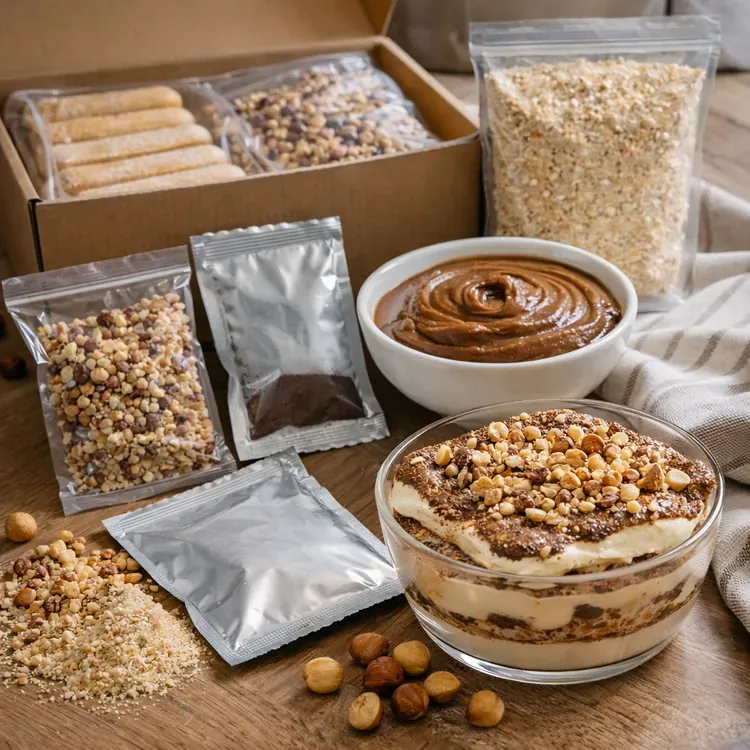
Hazelnut ingredients for tiramisu kits illustration

Where it fits

Tiramisu kits are designed to deliver a consistent “restaurant-style” dessert experience with minimal preparation. Hazelnut ingredients are commonly used to add premium aroma, nutty sweetness, and textural contrast alongside cocoa, coffee notes, and creamy layers.

In kit formats, the performance requirements are different from bulk bakery: portions are pre-measured, components must remain stable through distribution, and sensory expectations are high. The main drivers here are flavor consistency, controlled particle size (for toppings and inclusions), and shelf stability for long retail life.

How hazelnut components show up in kits

  • Topping sachets: chopped or sliced hazelnuts for a clean, premium finish
  • Flavor layer: hazelnut paste/praline blended into creams, fillings, or flavor bases
  • Dry mixes: hazelnut meal/flour used in crumble-style elements or to reinforce nut character
  • Aroma accent: hazelnut oil used selectively for flavor enhancement where appropriate
Retail-ready component supply Consistent roast & color Low fines for clean sachets Lot traceability

Kits often include multiple sachets (topping, mix, inclusions). Matching the hazelnut format to each sachet’s role helps prevent issues like dusting, uneven appearance, and aroma loss.

What tiramisu kit producers typically optimize

Because kits rely on visual cues and aroma at opening, small changes in roast level, particle size, or packaging can create noticeable differences for consumers. These are the most common control points used during product development and scale-up.

Consumer experience

  • Roasted aroma: roast intensity must complement coffee and cocoa without tasting burnt or flat.
  • Clean topping look: calibrated chops reduce dusting and keep the surface visually consistent.
  • Texture control: chopped kernels should remain crisp; meal/flour should remain free-flowing in mixes.
  • Balanced sweetness: hazelnut sweetness can soften bitterness from cocoa and coffee notes.

Stability and shelf life

  • Oxidation management: roasted nuts and paste are sensitive to oxygen; barrier packaging is key.
  • Moisture and clumping risk: dry components can pick up moisture, changing flow and appearance.
  • Fat migration: paste and oil formats may require careful formulation to maintain layer integrity and prevent greasiness.
  • Allergen labeling: kit packaging typically requires clear allergen statements and traceable batch documentation.

We help translate your sensory target into a practical incoming specification (calibration, fines, roast/color, packaging protection) and a documentation flow suitable for retail distribution.

Recommended formats

Typical starting points for pilot kits and retail scale-up. We adapt roast level, cut tolerances and packaging to your component design.

  • Roasted chopped hazelnuts (diced/sliced/chopped) for topping sachets and inclusions
  • Hazelnut paste / praline-style paste for creams, fillings and flavor bases
  • Hazelnut meal / flour for crumble elements, dry mixes, and flavor reinforcement
  • Hazelnut oil for selective aroma enhancement where formulation allows

If the kit’s “open-bag aroma” is a priority, paste/puree formats often deliver stronger character than oil alone, while chopped kernels deliver the most visible premium cue.

Technical considerations

The variables most likely to affect throughput, sensory consistency, and retail stability.

  • Fat migration considerations for layered products and cream mixes
  • Roast profile & color aligned with your flavor target and visual expectation
  • Oxidation protection through oxygen-barrier packaging and headspace control
  • Moisture management to protect crunch, avoid clumping, and maintain flowability
  • Particle size & dust control for clean sachets and consistent dosing

Topping sachets commonly specify a maximum fines percentage to prevent cocoa-like dusting on the kit surface after transit.

Packaging approach

We support both bulk supply for co-packers and component-friendly packaging for retail kit assembly.

For chopped/roasted formats: oxygen protection is key to preserve aroma. High-barrier liners, optional vacuum or MAP, and temperature discipline help maintain roasted notes.

For paste/puree: barrier packaging and consistent cool handling help protect flavor and reduce separation risks.

See bulk supply details →

Typical specification markers

Below is a practical checklist used by procurement and QA teams for tiramisu kit components. We align each item to your market requirements, kit format, and the role of the hazelnut ingredient (topping vs. mix vs. paste).

ParameterHow we align it
FormatChopped/sliced, paste/puree, meal/flour, or oil based on kit component
Cut size / calibrationDefined size ranges and tolerance bands for topping appearance and dosing
Fines / dustControlled limits to keep sachets clean and reduce transit dusting
Roast level & colorAligned to flavor target (coffee/cocoa pairing) and visual expectation
MoistureControlled to protect crunch (kernels) and flowability (meal/flour)
Oxidation protectionBarrier packaging options, headspace control, and handling guidance
Defect sortingScreened and optically sorted where required
Micro profileAligned to customer specifications and destination requirements
AflatoxinManaged through risk-based sourcing and partner controls
PackagingVacuum / MAP / high-barrier liners and export cartons as required
DocumentationCOA flow, traceability, and allergen documentation suited to retail programs

Final values depend on product form and customer requirements. We share lot documentation with each shipment and can propose incoming QC checkpoints tailored to your kit’s most sensitive failure modes (fines, roast/color, aroma stability).

FAQ

Which hazelnut format is most common for hazelnut ingredients for tiramisu kits?

Most tiramisu kits use roasted chopped hazelnuts as a topping and/or inclusion for texture and premium appearance. For stronger hazelnut character in creams or mixes, manufacturers often add hazelnut paste/praline, while hazelnut meal/flour can support dry mix functionality and flavor layering.

How do you protect hazelnut aroma in retail kits with long shelf life?

Aroma loss is mainly driven by oxygen exposure and temperature. High-barrier packaging (foil laminates or strong oxygen-barrier films), tight seals, controlled headspace, and consistent cool storage help preserve roasted notes and reduce oxidation over shelf life.

Can you match a target particle size or cut for topping sachets?

Yes. We can supply calibrated kernels and controlled cuts (sliced, diced or chopped) and align tolerance bands to your topping design. Controlling fines/dust helps keep packs clean and supports consistent visual appearance.

Do you support long-term supply programs for retail kit production?

Yes. We structure annual and multi-shipment programs with consistent specifications, batch documentation and forecast-based planning. This supports stable sensory performance across multiple production runs and seasonal promotions.

Next step

Send your kit concept (components and target sachet sizes), expected volumes, shelf-life target, and destination markets. We will propose suitable hazelnut formats, calibration and fines limits, packaging protection, and an export-ready shipment plan.

Review products