Applications Library • Confectionery

Hazelnut kernels for caramelized nut lines

A procurement-ready guide for producing caramelized hazelnuts at scale — how to choose kernel formats and calibration, manage coating consistency, protect crunch and aroma, and specify packaging and documentation for reliable production and export distribution.

Back to applications
Hazelnut kernels for caramelized nut lines illustration

Where it fits

Caramelized nut lines transform hazelnut kernels into finished confectionery components — crunchy coated nuts, dragée-style products, toppings, and inclusions for chocolate, bakery, ice cream, and snack mixes. In this application, the main drivers are coating uniformity, flavor consistency, and shelf stability (crunch, aroma, and appearance over time).

Because caramelization amplifies differences in size and surface condition, successful lines start with a stable incoming hazelnut specification. We support manufacturers by aligning kernel format (natural/blanched/roasted), calibration, and defect limits to your equipment (panning drums, tumblers, continuous coaters) and your target sensory profile.

What “good” looks like for caramelized hazelnuts

  • Uniform bite and coating thickness across the pack
  • Low stickiness and reduced clumping after cooling
  • Stable crunch with minimal moisture pickup over shelf life
  • Clean, consistent aroma without stale or rancid notes
  • Repeatable yield with low rework and fewer rejects
Calibration options Lot traceability Export-ready documentation Confectionery-focused specs

Production note: caramelization is unforgiving on fines and breakage. Keeping incoming “dust” low improves coating clarity, reduces burnt notes, and stabilizes fill weights.
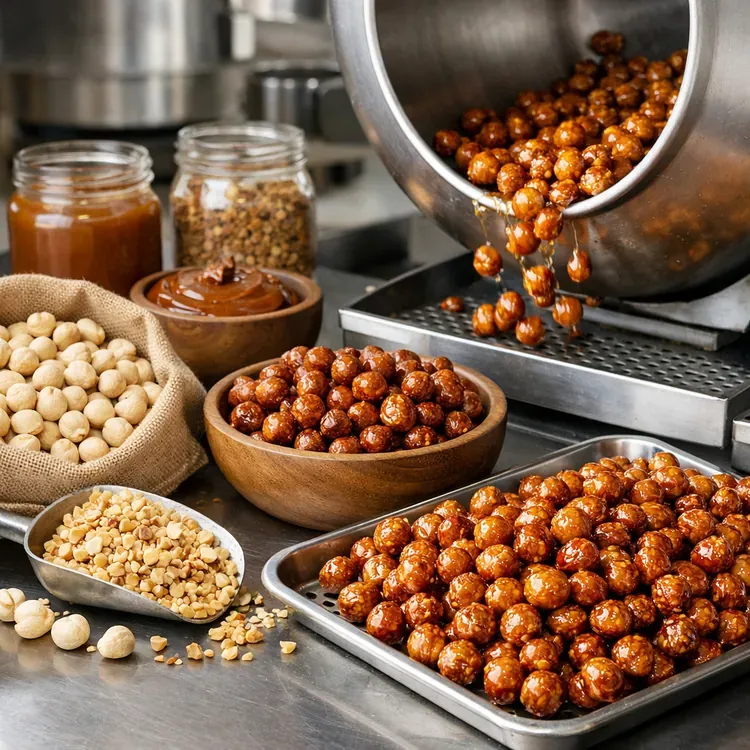
How caramelized nut lines use hazelnuts

Caramelized nuts are typically produced by applying a sugar system (dry sugar, syrup, or compound coatings) to tumbling kernels, then building color, crunch, and a stable finish through controlled heating and cooling. Small differences in kernel size and moisture can create large differences in finished appearance.

Typical process flow (high level)

  • Kernel preparation: sorting/calibration, optional blanching, and (often) pre-roasting for aroma and lower moisture variability
  • Coating build: syrup or dry sugar application with controlled agitation to build an even layer
  • Color and crunch development: thermal step to reach the target caramelization level without scorching
  • Cooling & separation: controlled cooling to reduce tackiness and limit clumping
  • Finish: optional glazing/powdering to improve shine, reduce stickiness, or support seasoning adhesion
  • Packaging: barrier protection to keep the finish crisp and aromatic

Where the hazelnut specification makes the biggest difference

  • Calibration controls tumble dynamics and helps your coating step run predictably.
  • Surface condition (blanched vs natural skin) influences adhesion, color, and final look.
  • Breakage/fines can “seed” over-caramelization and increase burnt flavor risk.
  • Moisture stability affects stickiness, clumping, and shelf-life crunch.

If you share your process type (panned, continuous, batch kettle) and target finish (matte, glazed, sugared, spiced), we can recommend the most suitable incoming kernel format and tolerance bands.

Recommended formats

Typical starting points for pilots and scale-up. We adapt calibration, roast level (if required), and packaging protection to your coating system and shelf-life expectations.

  • Whole kernels (calibrated) — the standard choice for uniform coated nuts
  • Blanched kernels — cleaner look and more uniform surface for premium finishes
  • Roasted kernels (optional) — faster aroma build; requires stronger oxygen control

For inclusions and toppings, we can also supply controlled cuts (chopped/diced) with dust limits aligned to your depositor and mixing behavior.

Technical considerations

The variables that most often impact throughput, coating consistency, and finished shelf stability.

  • Calibration & size distribution for predictable coating thickness and pack uniformity
  • Fines/breakage control to reduce burnt notes, dusting, and weight drift
  • Moisture management to protect crunch and reduce stickiness/clumping
  • Roast profile alignment when pre-roasting is used to build aroma and reduce variability
  • Oxidation protection (especially for roasted formats) via oxygen barrier packaging and headspace control
  • Surface/skin choice (natural vs blanched) to match visual targets and adhesion behavior

Many caramelized lines run best with stable “incoming variability.” Consistency across shipments is often more valuable than chasing a single perfect batch.

Packaging approach

Packaging designed to protect aroma and reduce quality drift during warehousing and export logistics.

We can supply lined cartons, vacuum or MAP options, and palletization suited to sea, road, or air freight. For caramelized applications, incoming kernel freshness matters because any oxidative notes can become more noticeable after heating.

Best practice: choose packaging with strong oxygen and moisture barrier properties, and maintain temperature discipline to reduce aroma loss and texture drift.

See bulk supply details →

Specification checklist for caramelized nut production

Below is a practical checklist used by procurement and QA teams for hazelnut kernels intended for caramelized nut lines. We align each item to your target finish, equipment type, and distribution model (local vs export).

ParameterHow we align it
Kernel formatNatural / blanched / roasted selected to match appearance, adhesion, and flavor objectives
CalibrationDefined size range to stabilize tumbling behavior and coating thickness
Breakage / finesLimits aligned to coating clarity, burn risk reduction, and pack appearance
MoistureControlled to your target range to support crunch, reduce tackiness, and limit clumping
Defect sortingScreened and optically sorted where required; tolerance bands aligned to your customer spec
Flavor profileAligned to your target (clean/natural vs deeper roasted notes); stable lot-to-lot consistency
Micro profileAligned to customer specifications and destination requirements
AflatoxinManaged through risk-based sourcing and partner controls
PackagingVacuum / MAP / high-barrier liners and export cartons as required
TraceabilityLot identification and documentation flow to support audits and rapid issue containment

Final values depend on product form and customer requirements. We share lot documentation with each shipment and can help you define an incoming QC plan that matches your caramelization process risks.

FAQ

Which hazelnut format is most common for hazelnut kernels for caramelized nut lines?

Most caramelized nut lines start with whole hazelnut kernels (calibrated) to achieve a uniform coating and consistent bite. Blanched kernels are common when a lighter, cleaner appearance is required, while roasted kernels are selected when you want pre-developed aroma and faster flavor build — paired with strong freshness protection.

What matters most for a consistent caramelized coating?

The biggest drivers are uniform kernel size, low fines/breakage, stable moisture, and clean surfaces. These factors improve tumble behavior in pans/drums, reduce over-caramelized pieces, and help you hit a predictable coated-nut weight and finish.

Can you match a target particle size or cut?

Yes. We can supply calibrated kernels and controlled cuts (sliced, diced or chopped) and align tolerance bands to your process. For caramelized lines, whole kernels are typically preferred for coating uniformity, but controlled cuts can be supplied for inclusions and topping applications.

Do you support long-term supply programs?

Yes. We structure annual and multi-shipment programs with consistent specifications, batch documentation and forecast-based planning to keep your caramelization line stable through seasonal peaks.

How do you protect crunch and shelf life after caramelization?

We focus on incoming moisture control, low-damage handling (to reduce broken pieces that absorb moisture), and packaging options that reduce oxygen and humidity exposure. For finished goods, the right barrier packaging and storage discipline are key to prevent tackiness, clumping, and flavor drift.

Next step

Send your process type (panning drum / continuous coater / batch), target finish (glazed, sugared, spiced), kernel preference (natural/blanched/roasted), monthly volume, and destination. We will propose a specification (calibration, defect limits, packaging protection) and a shipment plan aligned to your production calendar.

Review products