Applications Library • Industrial

Hazelnut kernels for export repacking

A procurement-ready guide for repackers and importers: selecting the right kernel format, defining calibration and defect targets, protecting freshness in transit, and building an export specification that repacks reliably across multiple SKUs and destinations.

Back to applications
Hazelnut kernels for export repacking illustration

Where it fits

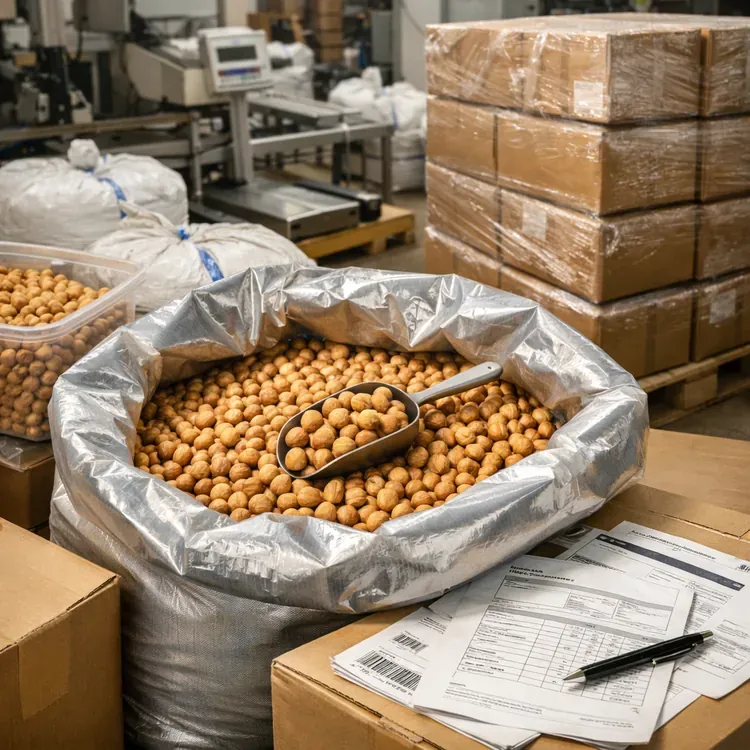
Export repacking is all about stability and repeatability. Hazelnut kernels are shipped in bulk, then repacked at destination into branded retail packs, foodservice packs, mixed assortments, or ingredient bags. In this model, the core drivers are consistent incoming quality, low variability (calibration, defects, breakage), and freshness protection through long logistics cycles.

Compared with direct retail packing at origin, repacking programs typically require tighter control of: fines and breakage (to avoid weight drift and dusty packs), moisture and oxidation (to protect crunch and prevent rancid notes), and traceable lots (to support destination QA and customer audits).

Common export repacking scenarios

  • Importer-to-repacker supply: bulk kernels are repacked into multiple SKUs and pack sizes.
  • Private label programs: one incoming spec supports many customer labels at destination.
  • Mixed nut lines: kernels are blended with other nuts/dried fruit; breakage and dust control become critical.
  • Seasonal peaks: holiday demand increases throughput; consistent calibration reduces rework.

We support repackers by aligning product form and processing level to your workflow: natural kernels for maximum flexibility, blanched kernels for a clean visual target, and roasted kernels when your model requires “open-and-pack” speed with immediate aroma.

Export-ready documentation Lot traceability Calibration options Repacking-friendly specs

Repacking tip: the easiest way to reduce destination waste is to define clear limits for fines, breakage, and visual defects—then keep them stable across shipments.
Recommended formats

Typical starting points for repackers. We adapt calibration, sorting intensity, and packaging protection to your destination QA and shelf-life expectations.

  • Natural kernels (often calibrated) — flexible for repacking, blending, or destination roasting
  • Blanched kernels — cleaner look for premium mixes and consistent appearance
  • Roasted kernels (optional) — fastest “open-and-pack” flow; needs stronger oxygen protection

If you run multiple SKUs, selecting one calibration for the majority of packs can simplify inventory and reduce line changeovers.

Technical considerations

The variables that most often impact repacking yield, pack appearance, and end-of-shelf-life performance.

  • Calibration & count distribution for consistent pack appearance and predictable fill weights
  • Fines & breakage control to reduce dusting, weight variability, and customer complaints
  • Moisture management to protect crunch and prevent texture drift during storage
  • Oxidation protection via packaging barrier, headspace control, and temperature discipline
  • Foreign matter controls aligned to destination retailer/importer requirements
  • Micro profile & food safety aligned to customer specs and destination expectations
  • Traceability & COA flow for incoming QC and rapid issue containment

If the repacking line includes metal detection, X-ray, or sieving, we can align incoming specs to reduce false rejects and rework.

Packaging approach

Bulk packaging designed for long transit, destination storage, and clean handling in repacking facilities.

Common approaches include lined cartons or high-barrier liners with options such as vacuum or MAP/nitrogen flush depending on format and shelf-life target. Palletization is optimized for sea/road/air freight and container loading to reduce crush and vibration damage.

For roasted kernels: oxygen control is critical. For blanched kernels: gentle handling and clean liners help protect appearance and reduce chipping.

See bulk supply details →

A repacker’s workflow: what the spec should protect

Export repacking adds extra handling steps—opening bulk packs, staging, sometimes re-sieving, then filling and sealing retail or foodservice packs. A good incoming specification should protect yield, appearance, and freshness across each step.

1) Incoming QC and staging

  • Lot identification should be easy to verify and match to documentation.
  • Calibration and defect limits reduce sorting time and repacking downtime.
  • Packaging integrity (liners/seals) protects against odor pickup and oxidation during storage.

2) Repacking efficiency and pack consistency

  • Low fines improves pack appearance (especially in clear windows) and reduces scale drift.
  • Stable kernel flow supports faster, more consistent dosing on filling equipment.
  • Controlled breakage reduces “crumb layer” at the bottom of packs.

3) End-of-shelf-life performance

  • Moisture and oxidation control preserve crunch and aroma over time.
  • Packaging compatibility with your retail pack (barrier films, nitrogen flushing) protects quality after repacking.
  • Temperature discipline through transit and warehousing reduces sensory drift.

If you share your repacking pack format (pillow pouch, doy pack, jars, tins) and target shelf life, we can recommend the best bulk protection strategy to arrive in optimal condition for repacking.

Destination and logistics considerations

Export repacking often involves longer lead times and multiple storage points. That increases the importance of selecting the right product form and bulk packaging protection.

Choosing natural vs roasted for repacking

  • Natural kernels offer maximum flexibility and typically handle long logistics well when properly protected.
  • Roasted kernels deliver immediate aroma for “pack-and-ship” programs, but require stronger oxygen control and tighter temperature management.

Handling and storage

  • Vibration and crush protection help reduce breakage and fines during transit.
  • Odor protection is important in mixed cargo environments; high-barrier liners reduce flavor pickup.
  • Warehouse stability improves when bulk packaging is matched to climate and storage duration.

If you ship in full containers, we can align pallet patterns and carton formats to improve container utilization while reducing product stress during transport.

Typical specification markers

Below is a practical checklist used by procurement and QA teams for hazelnut kernels intended for export repacking. We align each item to your destination market, repacking equipment needs, and target shelf life after repacking.

ParameterHow we align it
Kernel formatNatural / blanched / roasted aligned to repacking flow and shelf-life target
CalibrationDefined size range to support consistent pack appearance and dosing behavior
Breakage / finesLimits aligned to pack style (clear window, mixed assortments) and scale accuracy
MoistureControlled to your target range to protect crunch and reduce texture drift
Defect sortingScreened and optically sorted where required; tolerance bands aligned to your program
Foreign material controlsPartner controls and documented process steps aligned to importer/retailer expectations
Micro profileAligned to customer specifications and destination requirements
AflatoxinManaged through risk-based sourcing and partner controls
Packaging protectionVacuum / MAP / high-barrier liners and export cartons as required
Traceability & COA flowLot documentation provided per shipment to support incoming QC and audits

Final values depend on product form, destination, and customer requirements. We share lot documentation with each shipment and can help you set an incoming QC checklist that matches the agreed specification.

FAQ

Which hazelnut format is most common for hazelnut kernels for export repacking?

For export repacking, most buyers start with natural kernels (often calibrated) or blanched kernels for maximum flexibility at destination. Roasted kernels are selected when the repacker wants an “open-and-pack” flow with immediate aroma, but they require stronger oxygen protection through transit and storage.

Can you match a target particle size or cut?

Yes. We can supply calibrated kernels and controlled cuts (sliced, diced or chopped) and align tolerance bands to your repacking equipment, dosing targets, and presentation needs.

Do you support long-term supply programs?

Yes. We structure annual and multi-shipment programs with consistent specifications, batch documentation, and forecast-based planning—helpful for repackers managing multiple SKUs and seasonal demand.

What documentation is typically included for export repacking shipments?

Shipments are supported with lot identification and COA flow, plus export-ready documents such as packing lists, commercial invoices, and origin/traceability documentation as required by the destination and customer program.

Next step

Send your repacking model (pack formats, target shelf life, monthly/seasonal volume), preferred kernel format (natural/blanched/roasted), destination country, and any importer/retailer requirements. We will propose suitable specifications, bulk packaging protection, and a shipment plan aligned to your repacking calendar.

Review products