Applications Library • Retail

Hazelnut kernels for retail snack packs

A procurement-ready overview of hazelnut kernels used in retail snack packs — covering the formats brands and co-packers buy most, the specification markers that protect appearance and crunch, and packaging approaches that keep roasted aroma fresh on shelf.

Back to applications
Hazelnut kernels for retail snack packs illustration

Where it fits

Retail snack packs rely on a simple promise: clean taste, satisfying crunch, and an attractive appearance in a small format that stays fresh from packing day to the end of shelf life. Hazelnut kernels are chosen for their naturally rich aroma and pleasant bite, but retail performance depends on more than taste alone.

Compared with industrial ingredient use, snack packs have stricter expectations around visual uniformity (size and color), low breakage, minimal dust, and freshness retention after roasting. We support snack brands and co-packers by aligning the right kernel format, calibration, and protection methods so portioning runs smoothly and the consumer experience is consistent.

Typical retail snack-pack configurations

  • Single-serve kernels (whole kernels, plain or lightly salted) for convenience packs.
  • Mixed nut blends where hazelnuts must match the blend visually and dose consistently.
  • Premium assortments with tight defect limits and higher aesthetic standards.
  • Seasoned variants where roasting and post-roast handling must protect aroma and prevent oily or stale notes.
Portioning consistency Low breakage Freshness protection Export-ready documentation

Procurement tip: In snack packs, quality issues are highly visible. A small increase in breakage or color variability can quickly translate into higher customer complaints and returns.
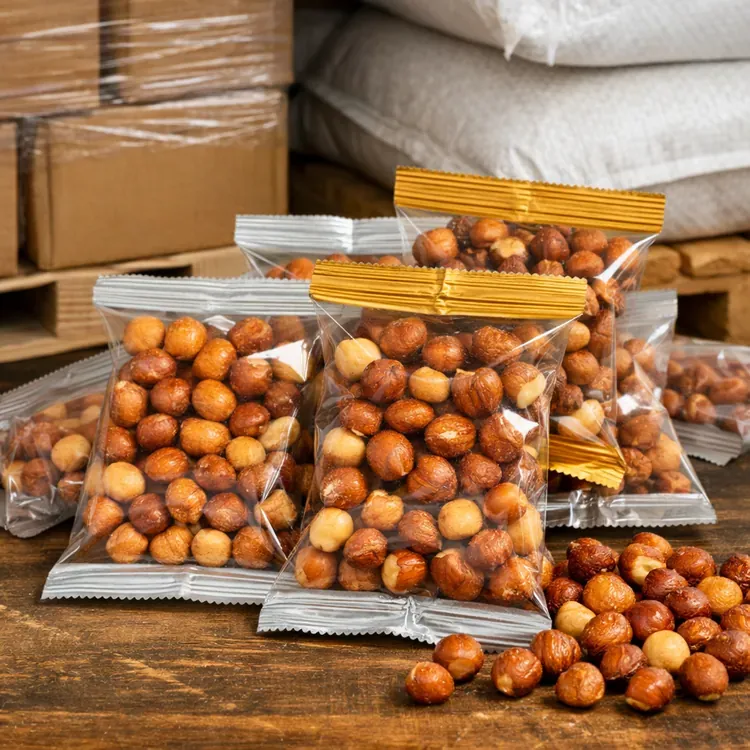
Recommended formats

Common starting points for retail snack packs. We adapt calibration, sorting, and packaging to match your portion size, pack style, and shelf-life target.

  • Roasted kernels (whole) — ready for packing and blending
  • Natural kernels (calibrated) — for in-house roasting before packing
  • Blanched kernels — when a lighter visual baseline is required
  • Controlled cuts — for blends requiring smaller pieces (process-dependent)

If you run multiple SKUs, we can align one core kernel specification and adjust roast/pack protection to keep a consistent family taste across the range.

Technical considerations

The most common variables that impact pack-line efficiency, consumer perception, and shelf stability.

  • Calibration (size range) to support accurate portioning and consistent “look” in the pack
  • Breakage & fines control to reduce dusting, improve pack appearance, and protect weight accuracy
  • Roast level alignment for your flavor target (plain, lightly roasted, darker profile)
  • Color consistency for premium SKUs and mixed nut blends
  • Freshness protection (oxygen exposure, light, and heat) to prevent rancidity and aroma fade
  • Defect sorting to protect consumer-visible quality and reduce complaints
  • Allergen control and segregation planning for multi-nut facilities and co-packers

Operational note: For roasted kernels, the “fresh” aroma is most vulnerable after roasting. Cooling discipline and oxygen control during packing are often more important than small tweaks to roasting time.

Packaging approach

We supply bulk formats suitable for co-packers and brands, including lined cartons, vacuum, or MAP options and palletization suited to sea, road, or air freight.

For roasted kernels: high oxygen barrier protection and controlled headspace help preserve aroma. For natural kernels: clean liners and odor protection help maintain a neutral baseline before roasting.

See bulk supply details →

Retail snack pack success factors

Snack packs are judged quickly: the consumer sees the nuts through the window (or imagines them), opens the pack, and expects a clean aroma and crisp bite. The right input specification reduces rework, supports consistent portioning, and protects brand reputation.

What improves pack-line performance

  • Uniform kernel flow with minimal fines for smoother dosing and fewer weight variations.
  • Consistent kernel size to reduce “short fills” perception and improve blend uniformity.
  • Lower breakage to avoid dusty packs and improve shelf presentation.

What protects shelf life

  • Oxidation management through packaging choices and headspace control, especially for roasted kernels.
  • Temperature discipline during storage and logistics to reduce aroma loss and rancidity risk.
  • Odor protection (nuts can pick up surrounding odors if packaging is weak or storage is poor).

If you share your target pack size (e.g., single-serve, family pack), expected shelf life, and whether you roast in-house, we can propose a specification and packaging protection level that matches your risk profile and route to market.

Typical specification markers

Below is a practical checklist used by procurement and QA teams for hazelnut kernels intended for retail snack packs. We align each item to your destination market, customer requirements, and whether you pack roasted kernels or roast in-house.

ParameterHow we align it
Kernel calibrationDefined size range to support portioning accuracy and consistent pack appearance
MoistureControlled to your target range; supports texture targets and roast consistency (if roasting)
Breakage / finesLimits aligned to dosing and pack presentation expectations
Defect sortingScreened and optically sorted where required; limits matched to retail grade
Color (where required)Aligned for premium packs and blend uniformity (especially for blanched/light targets)
Roast profile (if roasted)Aligned to your sensory target; documentation supports repeatability
Micro profileAligned to customer specifications and destination requirements
AflatoxinManaged through risk-based sourcing and partner controls
Packaging protectionVacuum / MAP / high-barrier liners and export cartons as required by shelf-life target
Traceability & COA flowLot documentation provided per shipment; supports audits and retail compliance

Final values depend on product form (natural vs roasted) and customer requirements. We share lot documentation with each shipment and can help align your incoming QC checks to the agreed retail specification.

FAQ

Which hazelnut format is most common for hazelnut kernels for retail snack packs?

Most snack-pack programs use whole kernels in a defined calibration (size range). Depending on your setup, this may be supplied as roasted kernels ready for packing, or as natural kernels for in-house roasting prior to packing.

What are the top quality drivers for retail snack packs?

Retail snack packs are driven by appearance and eating quality: consistent kernel size for portioning, low breakage and fines, clean sensory baseline, and freshness protection after roasting. Packaging choices that limit oxygen exposure are key for maintaining aroma and preventing rancidity.

Can you match a target particle size or cut?

Yes. We can supply calibrated kernels and controlled cuts (sliced, diced or chopped) and align tolerance bands to your process, including portioning and mixing performance.

Do you support long-term supply programs?

Yes. We structure annual and multi-shipment programs with consistent specifications, batch documentation, and forecast-based planning to support stable retail production and promotions.

Next step

Send your pack format (single-serve, stand-up pouch, jar), whether you roast in-house, your target kernel size, expected monthly volume, and destination. We will propose suitable kernel specs, freshness protection packaging, and a shipment plan aligned to your production calendar.

Review products