Applications Library • Industrial

Hazelnut kernels for roasting lines

A procurement-ready overview of hazelnut kernels for industrial roasting lines — including recommended input formats, specification markers that drive roast consistency, and packaging approaches that protect aroma after roasting.

Back to applications
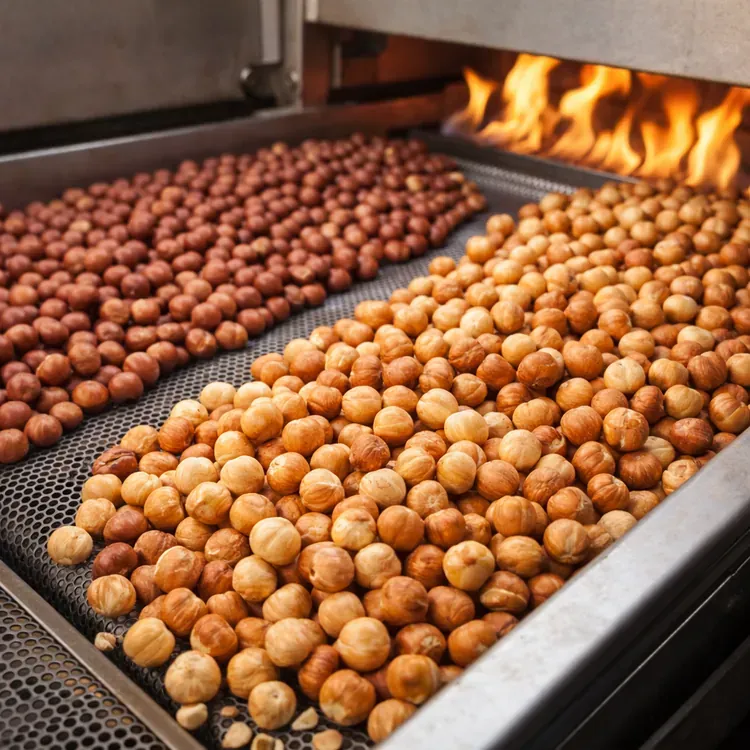
Hazelnut kernels for roasting lines illustration

Where it fits

Industrial roasting lines convert raw hazelnut kernels into a consistent roasted ingredient for chocolate, bakery, spreads, snacks, and inclusions. In this application, small differences in incoming kernel quality can create big differences in output: color variation, uneven roast, brittle texture, and aroma loss.

The main drivers for roasters are repeatable roast development, uniform heat transfer, low defect rates, and stable post-roast freshness. We support manufacturers by aligning the right kernel size, sorting level, and documentation flow so you can run continuous production with predictable results.

How roasting lines typically use hazelnut kernels

  • Roast-to-pack for snack products and retail assortments where appearance and crunch are critical.
  • Roast-to-process for downstream chopping, dicing, paste production, praline, or inclusions.
  • Roast-to-spec for OEM ingredient programs with defined color/sensory markers and strict tolerances.
Calibrated sizing Export-ready documentation Lot traceability Program supply planning

Operational note: Roasting is a critical control step for quality perception, but shelf life is often won (or lost) after roasting. Oxygen exposure, residual heat, and packaging decisions strongly influence how “fresh” the product tastes weeks later.

Recommended formats

Typical inputs used by industrial roasters. We adapt sizing, sorting, and packaging to match your roaster type, throughput, and target roast profile.

  • Natural kernels (calibrated) — primary input for most roasting lines
  • Natural kernels (higher sorting) — for premium, low-defect roasted output
  • Blanched kernels — when a lighter color baseline or skin-free input is required
  • Controlled pieces — for lines roasting smaller formats (process-dependent)

Hazelnut paste/puree and oil are typically downstream products made from roasted kernels rather than inputs to roasting lines. We can supply these when your process includes paste production or seasoning steps.

Technical considerations

The most common variables that impact throughput, roast uniformity, and aroma preservation.

  • Kernel size distribution affects heat transfer and roast evenness (critical for continuous systems).
  • Moisture range influences roast time, color development, and texture.
  • Defect and foreign matter limits reduce downtime, rework, and consumer-visible issues.
  • Incoming sensory baseline (clean, sweet, no stale notes) improves finished flavor consistency.
  • Skin behavior (if relevant) affects peel efficiency and final appearance.
  • Oxidation control matters most after roasting; plan cooling and packaging to protect aroma.
  • Allergen control and line segregation planning for multi-nut facilities.

Procurement tip: When qualifying a new lot, evaluate not only the raw kernel but also the roasted output (color, aroma intensity, and any off-notes). The roast is the real “performance test” for a roasting line input.

Packaging approach

We can supply lined cartons, vacuum or MAP options, and palletization suited to sea, road, or air freight. Packaging selection is aligned to your storage time, route, and risk tolerance.

For roasting inputs: barrier liners and clean palletization protect kernels from moisture pickup and odor contamination. For roasted output or pre-roasted programs: oxygen protection and temperature management are key to preserving aroma.

See bulk supply details →

Roasting line success factors

Roasters typically optimize time and temperature, airflow, and cooling to achieve a target sensory profile. The input kernel specification determines how easy it is to hit that target consistently across shifts, lots, and seasons.

What improves roast uniformity

  • Defined calibration (tight size range) to reduce over/under-roast within the same run.
  • Stable moisture so color development remains predictable at a fixed roast program.
  • Low breakage and fines to reduce scorching and dust accumulation in some systems.
  • Consistent defect limits to protect appearance and reduce sorting burdens post-roast.

What protects aroma after roasting

  • Cooling discipline to remove residual heat before packing (reduces continued oxidation).
  • Oxygen management through packaging choice (vacuum/MAP or high barrier options).
  • Storage conditions that avoid heat exposure and strong odors (nuts absorb odors easily).

If you share your roaster type (batch vs continuous), throughput, and target roast profile (light/medium/dark), we can propose sizing and sorting options that reduce variability and improve yields.

Typical specification markers

Below is a practical checklist used by procurement and QA teams for hazelnut kernels intended for roasting lines. We align each item to your destination market, customer requirements, and processing level.

ParameterHow we align it
Kernel calibrationDefined size range to improve heat transfer and roast consistency
MoistureControlled to your target range to stabilize roast program performance
Breakage / finesAligned to your handling system and roaster sensitivity
Defect sortingScreened and optically sorted where required; limits matched to output grade
Foreign matter controlsProcess controls and inspection standards aligned to industrial line requirements
Incoming sensoryClean baseline aligned to your flavor target; evaluated as part of qualification
Micro profileAligned to customer specifications and destination requirements
AflatoxinManaged through risk-based sourcing and partner controls
PackagingLiners, vacuum/MAP where needed, and export cartons matched to logistics lane
TraceabilityLot documentation and COA flow with each shipment for audit readiness

Final values depend on product form and customer requirements. We share lot documentation with each shipment and can align your incoming QC checks to the agreed roasting-input specification.

FAQ

Which hazelnut format is most common for hazelnut kernels for roasting lines?

Most industrial roasting lines start with natural hazelnut kernels in a defined size calibration. Consistent sizing improves heat transfer, reduces over/under-roast, and makes it easier to lock a repeatable roast profile.

What specifications matter most for roast consistency?

The most important drivers are kernel size distribution, moisture range, defect and foreign matter limits, and a consistent incoming sensory baseline. For roasted output, oxidation control after roasting and packaging selection are also critical.

Can you support blanch-ready or skin-sensitive roasting programs?

Yes. We can align kernel selection and sorting for programs where skin removal, color targets, and uniform roast development are important. If you require blanched kernels as an input, we can supply that format as well.

Do you support long-term supply programs?

Yes. We structure annual and multi-shipment programs with consistent specifications, batch documentation, and forecast-based planning so roasting lines can maintain stable inputs across production cycles.

Next step

Send your roaster type, target roast level (light/medium/dark), preferred kernel calibration, expected monthly volume, and destination. We will propose suitable kernel specs, packaging protection, and a shipment plan aligned to your production schedule.

Review products