Applications Library • Bakery

Hazelnut meal for macarons

A procurement-ready guide to using hazelnut meal (hazelnut flour) for macaron shells — including meal types (blanched vs natural, roasted vs unroasted), fineness and sieve control, how fat and moisture influence batter behavior, packaging and shelf-life protection, and the specification markers QA teams use for repeatability.

Back to applications
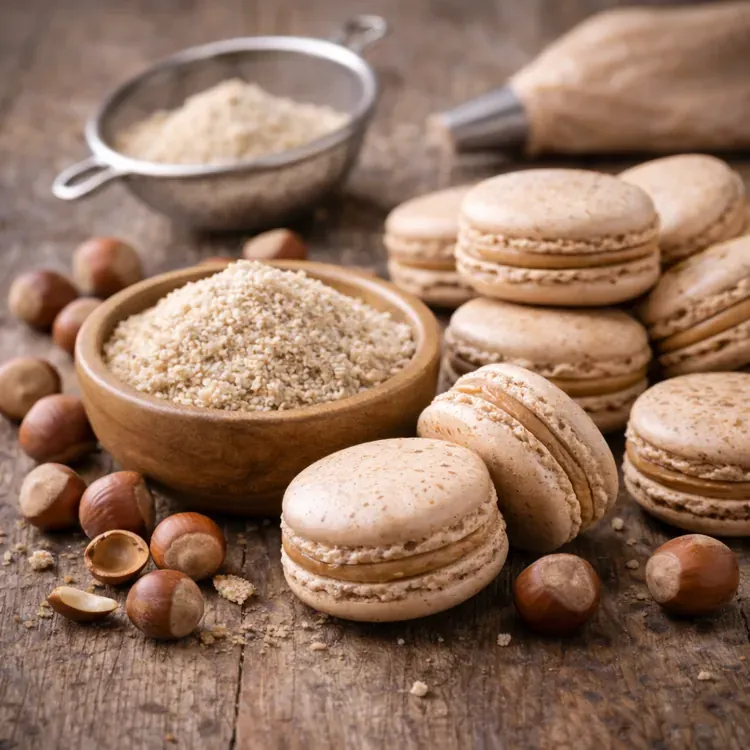
Hazelnut meal for macarons illustration

Where it fits

Macarons are one of the most ingredient-sensitive bakery products: small differences in fineness, moisture, or fat behavior can show up as changes in shell smoothness, feet development, and batch-to-batch spread during piping. Hazelnut meal is used as a premium alternative to almond meal, delivering a distinct nut profile and a slightly richer mouthfeel while still supporting the classic macaron structure.

In this application, procurement decisions usually prioritize particle control (for smooth shells), moisture stability (to reduce clumping and variability), and flavor consistency (especially for filled macarons where the shell must remain balanced). Many customers select blanched meal when appearance matters (lighter shells), and roasted meal when aroma and nut intensity are the main drivers.

We support bakeries and manufacturers by aligning the hazelnut format to your production method: defined meal/flour for direct blending, kernels for customers milling in-house, and optional roast direction for signature profiles. The goal is to keep performance stable while preserving fresh nut aroma through storage and distribution.

Export-ready documentation Lot traceability Fineness alignment Bulk programs
Recommended formats

Typical starting points for pilots and scale-up. Macarons usually prefer a defined, uniform meal that blends smoothly with icing sugar and supports consistent piping.

  • Hazelnut meal / flour (defined fineness; direct blend)
  • Blanched meal (lighter color and cleaner finish)
  • Roasted meal (stronger aroma and deeper nut profile)
  • Kernels (for customers milling/sieving in-house)

Technical considerations

The variables that most often influence shell smoothness, feet consistency, and batch repeatability.

  • Particle size distribution (limits for overs and fines/dust)
  • Moisture control to reduce clumping and stabilize drying time
  • Fat behavior and oxidation protection to preserve aroma
  • Allergen control and segregation planning
  • Traceable lots with documented specs and COA flow

Packaging approach

Hazelnut meal has high surface area, making it more aroma-sensitive than whole kernels. Packaging usually prioritizes moisture barrier and oxygen protection.

For roasted meal, oxygen protection and temperature stability help preserve “fresh roast” notes and reduce flavor flattening over time.

See bulk supply details →

Choosing the right hazelnut meal for macarons

“Hazelnut meal” can range from coarse, granular meal to fine flour-like material. For macarons, the best choice depends on the shell style you target, your sifting process, and how tightly you control batter flow. Procurement discussions typically start with three decisions: blanched vs natural, roasted vs unroasted, and fineness distribution (sieve control).

Option Why customers choose it Typical watch-outs
Blanched meal Lighter shell color; smoother appearance; clean finish in premium lines Confirm color direction and fineness; ensure moisture control to reduce clumping
Natural meal (unblanched) More rustic nut identity; cost-effective; distinct speckled shell look More visible color variation; may not suit very light pastel shells
Unroasted meal Neutral base that lets fillings dominate; easier to match delicate flavors Lower aroma intensity; rely on fillings for “hazelnut-forward” impact
Roasted meal Stronger aroma and nut depth; signature flavor for hazelnut-forward shells More oxidation sensitive; packaging and storage discipline are more critical
Fine meal (tight distribution) Smoother tops; consistent piping behavior; fewer rough shells Excess fines/dust can change batter flow; define limits for dust and clumping risk

If you already sieve your dry blend, we can align the incoming meal fineness to reduce waste and improve batch consistency.

Macaron performance: what the production line notices

Hazelnut meal affects more than flavor. In a macaron process, it influences how the batter behaves during macaronage, how it rests before baking, and how the shell sets in the oven. Because hazelnuts contain natural oils and can carry moisture, small shifts can show up quickly.

Macaron manufacturers most often monitor three “symptoms” that trace back to ingredient variability:

  • Shell smoothness (coarse particles can create rough tops)
  • Feet consistency (flow and drying behavior affect lift and structure)
  • Spread during piping (viscosity changes can alter diameter and yield)

In procurement terms, repeatability typically improves when you specify: a defined fineness band (with limits for overs and dust), stable moisture targets, and packaging/storage that prevents humidity pickup. For roasted meal, aroma preservation (oxygen and temperature control) keeps the sensory profile stable across the product’s shelf life.

Fineness, sifting & texture

A stable fineness profile helps deliver smooth shells and predictable piping. The goal is to limit coarse particles while keeping fines under control.

  • Define fineness band and tolerances
  • Set limits for overs and fines/dust
  • Align with your sieve and blending method

Moisture & clumping control

Hazelnut meal can pick up moisture, leading to clumps that reduce blending uniformity and change drying time. Barrier packaging and stable storage conditions help.

  • Moisture target aligned to your process
  • Barrier liners and sealed cartons/bags
  • Handling practices that reduce condensation risk

Aroma & oxidation protection

Meal has more surface area than kernels, so aroma can fade faster if exposed to oxygen and heat. This matters for roasted meal and premium sensory targets.

  • Oxygen barrier packaging
  • Defined storage recommendations
  • Logistics planning to reduce warm exposure

Typical specification markers

Below is a practical checklist used by procurement and QA teams. We align each item to your destination market, customer requirements, and processing level. For macarons, additional emphasis is typically placed on fineness and moisture because these directly influence shell repeatability.

ParameterHow we align it
Fineness / distributionAgreed particle size band and tolerance; limits for overs and fines/dust
MoistureControlled to your target range to reduce clumping and stabilize performance
Roast / color directionNatural vs blanched; roasted vs unroasted aligned to shell appearance and flavor target
Defect sortingScreened and optically sorted where required
Micro profileAligned to customer specifications and destination requirements
AflatoxinManaged through risk-based sourcing and partner controls
PackagingBarrier liners, sealed bags/cartons; vacuum/MAP options as required
TraceabilityLot coding, COA linkage, and documentation per shipment

Final values depend on customer requirements and product form. We share lot documentation with each shipment and can align with your internal QA templates.

FAQ

Which hazelnut format is most common for hazelnut meal for macarons?

For macaron shells, hazelnut meal (also called hazelnut flour) is the most common format because it blends uniformly with icing sugar and supports a smooth shell. Many customers choose blanched meal for a lighter appearance and cleaner finish. Roasted meal is used when a stronger nut aroma is desired.

Why is particle size so important in macaron production?

Macarons are sensitive to coarse particles and excess fines. Coarse particles can create rough shells and weak structure, while too many fines can change batter flow and drying behavior. A defined fineness band (with limits for overs and dust) helps produce smooth tops, consistent feet, and repeatable spread during piping.

How do fat and moisture levels affect macaron shells?

Hazelnut meal contains natural oils and can carry moisture. Higher fat or moisture can influence batter viscosity and stability, which may change drying time and shell rise. A consistent specification (moisture control, stable fat behavior, and good storage/packaging) helps keep results repeatable across lots.

Do you support long-term supply programs for bakeries and manufacturers?

Yes. We structure annual and multi-shipment programs with consistent specifications, batch documentation, and forecast-based planning—useful for macarons where performance is sensitive to small ingredient differences.

Next step

Send your target meal type (natural vs blanched), roast direction (unroasted vs roasted), fineness expectations (or your sieve target / benchmark sample), monthly or annual volume, and destination. We will propose the suitable hazelnut meal specification, packaging options, and a shipment plan aligned to your macaron process and shelf-life goals.

Review products