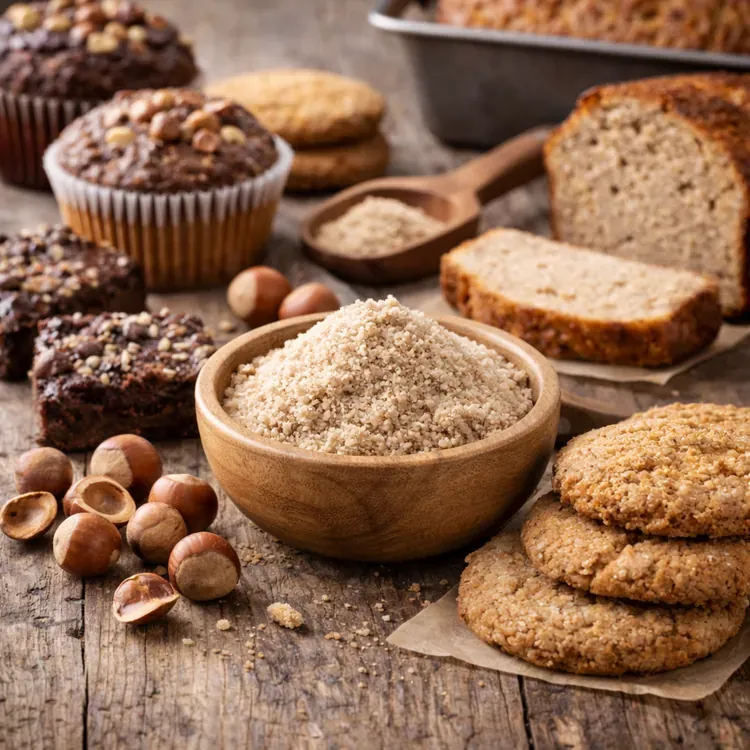
Where it fits
In keto and low-carb bakery, hazelnut meal (and finer hazelnut flour) is used as a functional base ingredient—
adding flavor, natural richness, and structure where wheat flour is reduced or removed. Compared with almond-based systems,
hazelnut brings a distinct nut aroma, a clean fat profile, and strong consumer recognition in premium baked goods.
For manufacturers, the main drivers are particle control (how the meal hydrates and binds),
sensory consistency (nutty intensity, roast notes, and aftertaste), and shelf stability
(oxidation management for fat-rich ingredients). We support production teams by matching the processing level to the product goal:
blanched meal for lighter color targets, roasted meal for stronger flavor cues, and controlled milling for repeatable dough and batter behavior.
Particle-size control
Blanched or roasted options
Oxidation-managed packaging
Lot traceability
What “meal” means in bakery terms
In practice, “hazelnut meal” can range from a coarse, slightly gritty grind (for rustic texture) to a fine flour-like powder
(for smoother crumb and more uniform mixing). Defining the grade early reduces scale-up surprises.
- Coarse meal: more visible nut particles; adds bite and a toasted profile in cookies and bars.
- Medium meal: versatile for muffins, loaf-style products, and soft cookies.
- Fine flour: smoother texture for cakes, sponge-style items, and delicate crumb targets.