Applications Library • Beverages

Hazelnut milk base for beverages

A detailed, procurement-ready guide to hazelnut milk bases — including which hazelnut formats work best (paste, kernels, oil), how to prevent separation and sedimentation, how roast profile affects flavor and color, and how packaging protects shelf-life for chilled, ambient, RTD, and barista-style beverage programs.

Back to applications

Best for: plant-based “hazelnut milk”, RTD coffee drinks, flavored dairy alternatives, culinary beverage bases, barista-style foaming products, and premium nut-forward beverages.

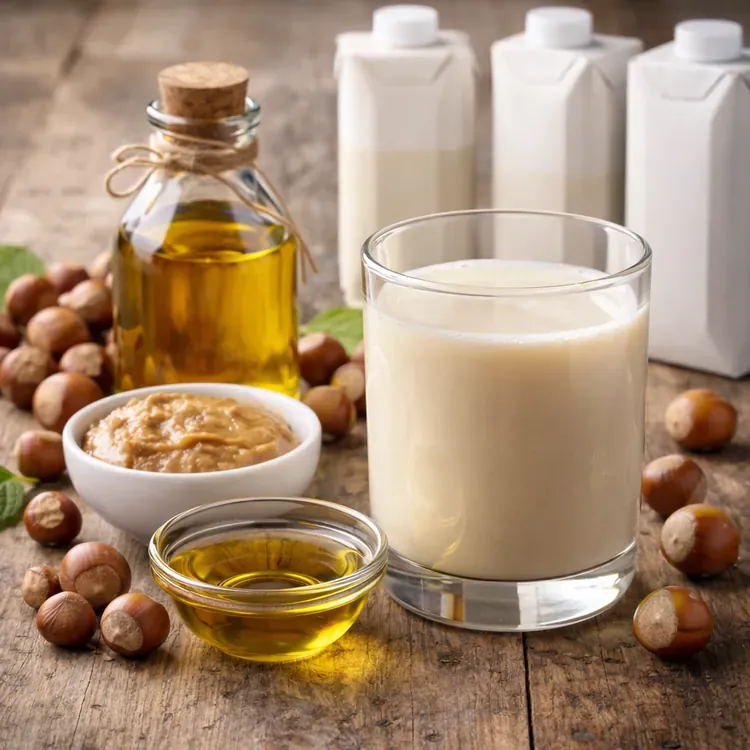
Hazelnut milk base for beverages illustration

Where it fits

Hazelnut milk bases sit between a flavor ingredient and a functional beverage component. The goal is not only a pleasant nut aroma, but also a stable, repeatable liquid that performs in processing and on shelf. Hazelnuts contribute natural fat for mouthfeel, nut solids for body, and roasted aromatics for a premium profile that pairs especially well with coffee, cocoa, vanilla, and caramel notes.

From a manufacturing perspective, the main drivers are flavor consistency, emulsion and particle stability, and oxidative shelf-life. Beverage products are sensitive to temperature cycling, oxygen exposure, and mechanical stress; these conditions can cause oil separation (creaming), sedimentation, or flavor fade if the base is not properly specified.

We support beverage manufacturers by aligning the hazelnut format and processing level to your line: roasted kernels for controlled in-house milling, hazelnut paste/puree for consistent nut solids and flavor, hazelnut oil for fat-phase tuning and mouthfeel, and flour/meal for body-building in certain formulations. Programs can be built for pilot batches through ongoing commercial supply.

Export-ready documentation Lot traceability Roast & grind targets Oxygen-protective packaging Beverage consistency

What “good” looks like in a hazelnut milk base

A strong hazelnut milk base is designed to be processed: it homogenizes well, stays stable on shelf, and protects aroma through distribution. “Good” is measured in fewer rejects, consistent sensory, and predictable behavior in heat treatment.

  • Clean, repeatable flavor: roast target aligned to your brand profile.
  • Stable emulsion: reduced creaming/oiling-off during storage.
  • Low sedimentation: particle size controlled to minimize settling.
  • Heat-process fit: compatible with HTST or UHT without excessive separation.
  • Protected shelf-life: packaging strategy reduces oxidation and flavor fade.
Recommended formats

Typical starting points for trials and scale-up. We align roast profile, grind fineness, and packaging to your process and shelf-life goals.

  • Hazelnut paste / puree (roasted) — most common base; provides nut solids + flavor for emulsions.
  • Roasted kernels — for in-house wet milling; strong flavor control when process is established.
  • Blanched kernels — for lighter color targets and “clean” nut profile (less roasted color contribution).
  • Hazelnut oil — for fat tuning, mouthfeel, and flavor lift (typically paired with paste/solids).
  • Meal / flour (fine) — used selectively for body-building; requires careful sediment control.

Technical considerations

The most common variables that impact stability, sensory, and process throughput in beverage manufacturing.

  • Emulsion stability: manage creaming and oil separation via fine particle control + homogenization.
  • Sedimentation: grind fineness and solids load influence settling; define particle targets for your product.
  • Oxidation risk: nut fats are aroma-sensitive; oxygen exposure drives flavor fade and rancidity notes.
  • Heat treatment fit: HTST/UHT can stress emulsions; control formulation and ingredient consistency.
  • Flavor & color: roast level impacts aroma intensity and beverage color; align to brand positioning.
  • Allergen control: labeling, segregation planning, and documentation consistency.

Packaging approach

For beverage bases, packaging is about protecting aroma, preventing oxidation, and supporting hygienic handling.

For paste/puree and oil, oxygen barrier and temperature management are key to preserving aroma. Packaging choices often include lined cartons, pails/drums, or aseptic-capable handling strategies depending on your process and storage plan.

See bulk supply details →

Stability: preventing separation, creaming, and sediment

Most hazelnut beverage challenges are physical stability issues: oil wants to rise and nut solids want to settle. A stable product balances ingredient form (paste vs kernels vs oil), grind fineness, and processing (hydration, mixing energy, homogenization). The aim is to keep droplet and particle sizes small enough that the beverage stays uniform throughout its intended shelf life.

In practice, many brands use a nut paste/puree base to provide both fat and solids in a format that homogenizes well. Oil can be used to tune mouthfeel, but oil alone does not provide the nut solids that define body and “milky” texture. For lighter-colored products, blanched inputs may be preferred; for premium “roasted hazelnut” profiles, roasted paste is often the anchor.

Common beverage issues (and how specs help)

  • Oil layer on top: define paste quality, fine grind expectations, and packaging/storage to reduce oxidation and separation.
  • Gritty mouthfeel: tighten grind fineness and screen control for kernels/paste inputs.
  • Settling over time: align solids level, particle distribution, and process energy.
  • Flavor fade: strengthen oxygen barrier packaging; control roast target and storage temperature.
  • UHT instability: align ingredient consistency and choose formats that tolerate heat and shear.

Note: beverage stabilization systems vary by brand and market positioning. We focus on supplying consistent inputs (roast, grind, packaging) so your formulation performs predictably.

Typical specification markers

Below is a practical checklist used by procurement and QA teams for hazelnut milk base ingredients. We align each item to your destination market, your processing method (wet milling vs paste dosing), and your heat treatment (chilled/HTST/UHT).

ParameterHow we align it
Product formPaste/puree, kernels (roasted/blanched), oil, meal/flour — matched to your process and target profile
Roast profileAligned to sensory intensity and color target; defined roast level for repeatable taste
Grind / particleAligned to mouthfeel and stability goals; reduced grit and controlled particle distribution
MoistureControlled to protect stability and reduce variability during processing
Micro profileAligned to beverage requirements and destination regulations
AflatoxinManaged through risk-based sourcing and partner controls
Oxidation protectionHigh-barrier packaging and storage guidance to preserve aroma and reduce flavor fade
PackagingLiners, pails/drums, export cartons; options aligned to hygienic handling and transport
TraceabilityLot coding and documentation pack aligned to your QA release workflow

Final values depend on product form and customer requirements. We share lot documentation with each shipment and align release procedures to your QA workflow.

Application notes: RTD & flavored beverages

RTD products demand high stability because they face long distribution and temperature cycling. Specs should prioritize oxidation protection and fine particle control.

  • Flavor balance: roast target aligned to cocoa/coffee/vanilla flavor systems.
  • Stability focus: minimize creaming and sediment with consistent paste inputs.
  • Packaging discipline: oxygen barrier is a major driver of shelf-life perception.

Application notes: barista-style

Barista performance is about behavior at steaming temperatures and sensory compatibility with espresso. Consistent roast and controlled fat phase matter.

  • Consistency: stable taste and mouthfeel across batches.
  • Heat behavior: ingredients aligned to prevent separation under heat and shear.
  • Clean finish: avoid harsh oxidation notes through protective packaging.

Packaging & logistics for beverage inputs

Beverage programs often run on tight schedules. Reliable supply is about consistency + documentation + practical handling at receiving.

  • Packaging chosen for your unloading method and hygienic handling.
  • Lot traceability and COA flow reduce receiving delays.
  • Forecast-based planning supports stable production calendars.

FAQ

Which hazelnut format is most common for hazelnut milk base for beverages?

Most beverage producers start with roasted hazelnut paste (or a fine puree) because it provides nut solids and flavor in a format that typically homogenizes well. Hazelnut oil can be used to tune fat level and mouthfeel, but paste/puree usually anchors the “milk base” because it drives body, taste, and stability.

Can you match a target particle size or process requirement?

Yes. We can align roast profile and grind expectations for paste/puree, and provide calibrated kernels for controlled wet milling. Defining particle targets is essential for smooth mouthfeel and reduced sedimentation.

How do you reduce oxidation and protect flavor?

Oxidation protection is achieved through oxygen barrier packaging, headspace control where applicable, and temperature-aware storage and shipping. For aroma-sensitive formats like roasted paste and oil, these controls are key to preserving the intended flavor through shelf life.

Do you support long-term supply programs?

Yes. We structure annual and multi-shipment programs with consistent specifications, batch documentation and forecast-based planning. Share your target volumes and process (RTD, UHT, barista, chilled) and we’ll propose suitable formats, packaging, and a delivery plan.

Next step

Share your beverage type (RTD, barista, flavored, chilled/ambient), target nut percentage, processing method (wet milling vs paste dosing), and destination market. We will propose suitable hazelnut formats, roast/grind alignment, packaging, and a shipment plan designed for stable production and shelf-life performance.

Review products