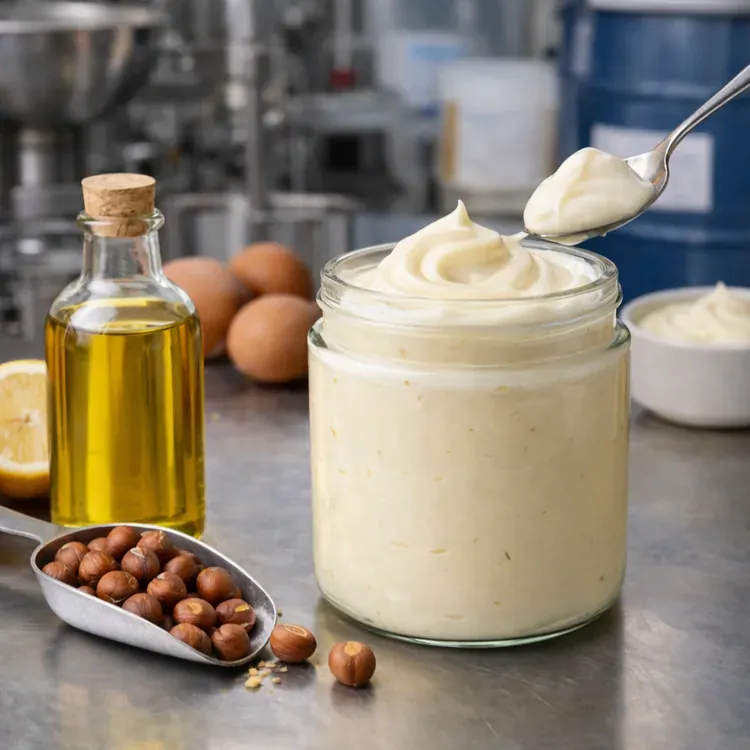
How hazelnut oil behaves in mayonnaise
Mayonnaise is a stable oil-in-water emulsion. The “feel” is largely determined by droplet size distribution, the emulsifier system,
and how the oil phase interacts with acidity and shear during processing. Hazelnut oil can bring a softer, rounder aromatic top-note
compared to neutral oils — but it also requires attention to oxidation and sensory freshness.
Emulsion structure & texture
Hazelnut oil typically performs well in standard mayonnaise emulsification systems (egg yolk, lecithin, mustard, or plant-based emulsifiers),
but the final viscosity and perception of creaminess depend on your total oil %, process shear, and stabilizer approach.
For premium products, small changes in processing temperature and shear rate can shift the “spoonable” texture and gloss.
Flavor delivery
Cold-pressed hazelnut oil tends to contribute more aromatic character. In practice, brands often validate:
(1) the nut aroma intensity in the finished sauce, (2) how it reads alongside vinegar/lemon acidity,
and (3) whether the profile remains consistent through the intended shelf-life.
Tip for trials: evaluate samples at day 0 and after accelerated storage (per your QA protocol). Sensory drift is often the first signal
that packaging or oxygen control needs to be tightened.