Applications Library • Industrial

Hazelnut oil for roasted aroma retention

Hazelnut oil is used in industrial food production as a flavor-carrying fat phase that can help protect and extend roasted nut character. It supports mouthfeel, smoothness, and aroma delivery—especially in confectionery, bakery fillings, spreads, dairy-style creams, and nut-based inclusions. This guide focuses on procurement and process reality: choosing the right oil type, controlling oxidation, protecting aroma through packaging and logistics, and specifying the quality markers that matter for consistent, shelf-stable results.

Back to applications
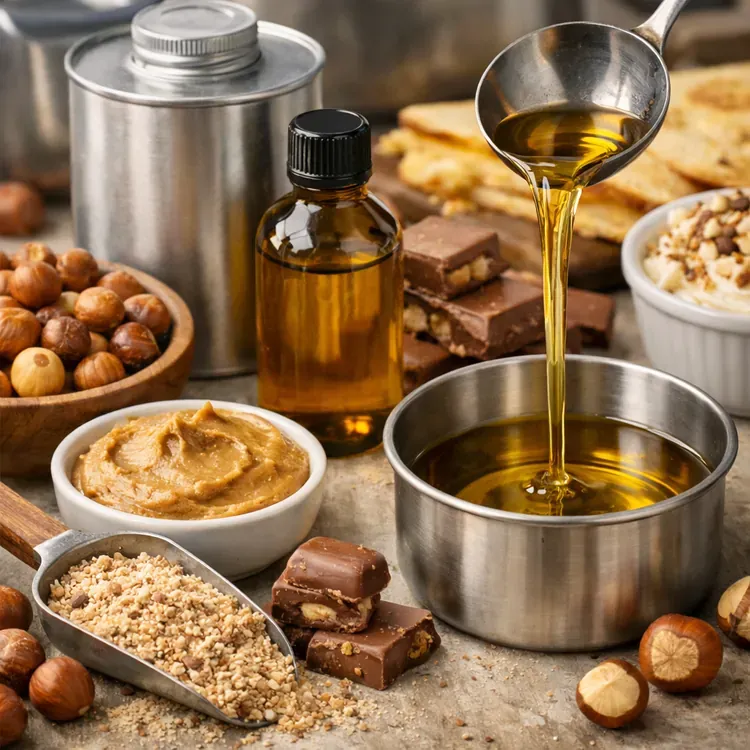
Hazelnut oil for roasted aroma retention illustration

Where it fits

Roasted nut aroma is powerful—but it is also fragile. The compounds that create “fresh roasted” notes can diminish over time due to oxygen exposure, warm storage, and repeated handling. Hazelnut oil is used as a practical tool to support aroma delivery and retention because it forms a stable fat phase that can help carry and distribute flavor in low-water systems.

In many recipes, hazelnut oil is not the only hazelnut input. Manufacturers often combine it with roasted kernels or roasted paste to build the primary nut intensity, then use oil to fine-tune viscosity, mouthfeel, and aromatic lift. The right choice depends on your objective: maximum roasted character (aromatic oil + roasted paste) or formulation flexibility (neutral oil + controlled roasted paste).

Procurement tip: aroma retention is rarely “one parameter.” It’s a system made of oil quality, oxygen protection, storage temperature, and realistic handling on the factory floor. A good spec aligns these elements, not just the oil type.

Export-ready documentation Lot traceability Food-grade programs Bulk & retail options
Why roasted aroma fades

Oxidation

Oxygen exposure can change the sensory profile over time—reducing “fresh roasted” perception and introducing flatter, stale notes. Oxidation risk rises with warm storage, high headspace, long storage horizons, and repeated opening/closing.

  • Oxygen barrier packaging reduces risk
  • Low headspace and controlled handling matter
  • Cool, stable storage improves results

Volatile loss

Roasted aromas include volatile compounds that can dissipate over time—especially if the packaging allows gas exchange or if the oil is held in partially filled tanks/drums. Minimizing headspace and limiting exposure events helps preserve impact.

  • Use sealed, well-filled containers
  • Reduce transfers between vessels
  • Align pack size to consumption rate

Process stress

High temperatures, long hold times, and repeated heating/cooling cycles can reduce roasted impact. This is why many manufacturers control when the oil is added (early vs late) and how it is stored at the plant.

  • Temperature management is a key lever
  • Shorter holds help preserve aroma
  • Right oil choice depends on process window

Recommended formats

Typical starting points for pilots and scale-up. We align oil type, sensory profile, and packaging to your shelf-life target and operating conditions.

  • Hazelnut oil (neutral/refined): flexible base for formulations where you want controlled flavor from paste or other ingredients.
  • Hazelnut oil (aromatic/roasted style): used when the goal is maximum roasted lift and nut-forward perception.
  • Roasted hazelnut paste / puree (supporting input): commonly paired with oil to deliver primary nut intensity.
  • Hazelnut meal / flour (optional): used when texture/solids are required, not primarily for aroma retention.

If your product is fully fat-based (spreads, praline systems, cream fillings), oil selection and oxygen protection are usually more important than particle control.

Technical considerations

The most common variables that impact roasted aroma retention, sensory consistency, and practical handling in production.

  • Oxidation control: packaging, headspace management, and storage temperature influence shelf stability.
  • Sensory profile alignment: neutral vs aromatic oil choice depends on your recipe and flavor target.
  • Clarity & filtration: helps prevent sediment issues and supports clean processing in pumps/lines.
  • Allergen control: planning for segregation and documentation across your supply chain.
  • Traceable lots & COA flow: supports QA release and consistent production across plants.

Oil programs work best when you also define handling rules at the plant (opening frequency, partial drum management, and storage practices).

Packaging approach

Aroma retention is strongly tied to how the oil is packaged and transported. The objective is to reduce oxygen exposure and protect the oil from heat during storage and transit.

  • Oxygen-barrier packaging: helps slow oxidation and reduce aroma fade.
  • Sealed drums / tins / IBC options: chosen based on usage rate and handling preference.
  • Headspace control: well-filled packs reduce oxygen-driven degradation.
  • Route-aligned logistics: palletization and temperature considerations for sea/road/air freight.

For long routes or warm climates, temperature management and reduced headspace are often the most effective practical upgrades.

See bulk supply details →

Implementation checklist

If the goal is consistent roasted aroma over shelf life, the oil specification should connect to the way the oil is actually stored and used. Below is a practical checklist used by QA and production teams to reduce variability and aroma loss.

  • Define the sensory target: neutral support oil vs nut-forward aromatic oil.
  • Define the usage pattern: continuous use vs intermittent (affects pack size and headspace exposure).
  • Set handling rules: how to manage partially used containers and transfers between tanks.
  • Specify oxidation markers: align acceptance thresholds with your shelf-life requirement.
  • Align packaging to logistics: route length, seasonality, and storage temperature expectations.

Share your product type (spread, filling, bakery, confectionery), target shelf life, and storage temperature assumptions, and we can recommend a fit-for-purpose supply program.

Typical specification markers

Below is a practical checklist used by procurement and QA teams. Oil programs typically focus on sensory consistency and oxidation control, supported by documentation and traceability. Final values depend on destination requirements and your internal specifications.

ParameterHow we align it
Sensory profileAligned to neutral or roasted-aromatic target with agreed reference and description.
Oxidation markersAligned to customer thresholds for shelf-life performance (with COA flow).
Clarity / filtrationAligned to processing needs to reduce sediment and handling issues.
TraceabilityLot-level documentation and batch linkage for consistent repeat supply.
Allergen controlDocumented controls and segregation planning where required.
Aflatoxin (where applicable)Managed through risk-based sourcing and partner controls (relevant to nut inputs and programs).
PackagingBarrier packaging, sealed packs, and route-aligned palletization as required.

Final values depend on customer requirements and product form. We share lot documentation with each shipment and can support scheduled supply programs.

FAQ

Which hazelnut format is most common for roasted aroma retention programs?

Most programs use hazelnut oil as the functional carrier (for aroma delivery and mouthfeel), combined with a roasted hazelnut paste or roasted kernel input for primary flavor. The exact balance depends on your process temperature, shelf-life target, and whether you need a neutral oil or an aromatic oil.

What causes roasted aroma to fade during storage?

Roasted aroma typically fades due to oxidation and volatile loss. Oxygen exposure, warm storage, repeated opening, and high headspace can accelerate decline. Oxygen-barrier packaging, headspace protection, and stable storage temperature are the most effective levers.

Do you offer different types of hazelnut oil?

Yes. Customers commonly choose between a more neutral refined/deodorized profile for formulation flexibility, or a more aromatic roasted-style oil when the goal is maximum nut character. We align the option to your sensory target and processing conditions.

Do you support long-term supply programs?

Yes. We structure annual and multi-shipment programs with consistent specifications, batch documentation and forecast-based planning.

Next step

Send your target product, annual volume, and destination. We will propose the best-fit hazelnut oil option (neutral vs aromatic), packaging, and a shipment plan aligned to roasted aroma retention and handling reality.

  • Application: spread, filling, bakery, confectionery, dairy-style cream
  • Process: typical heating range and hold time
  • Target: neutral carrier vs maximum roasted lift
  • Logistics: pack format preference and shipment cadence
Review products