Applications Library • Bakery

Hazelnut paste for bakery swirl fillings

Swirl fillings need to do more than taste good: they must run cleanly through pumps and depositors, hold a clear pattern during proofing and baking, and stay attractive on the shelf without oiling-off, drying, or losing aroma. Hazelnut paste is widely used to build a rich nut profile in cocoa and dairy-style bakery swirls—especially in rolls, babka-style products, laminated pastries, and filled cakes. This page outlines the formats used, the processing variables that matter, and the packaging approaches that protect roasted hazelnut character in real distribution conditions.

Back to applications
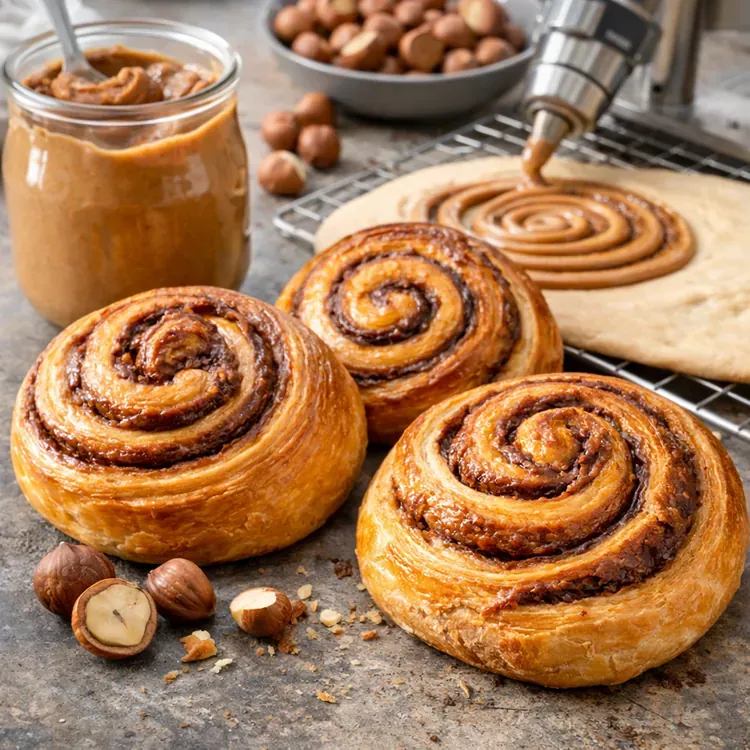
Hazelnut paste for bakery swirl fillings illustration

Where it fits

Hazelnuts are selected for swirl fillings because they bring a naturally sweet, roasted aroma and a smooth fat phase that pairs well with cocoa and bakery flavors. In this application, the main drivers are swirl definition, process consistency, and shelf stability—not just flavor. A good hazelnut input helps reduce day-to-day viscosity drift, minimizes separation after baking, and keeps the finished swirl glossy and clean on the cut surface.

We support manufacturers by aligning the hazelnut format and processing level to your line: whole kernels for controlled roasting, blanched options for lighter color targets, controlled cuts for consistent feeding, and paste/flour for homogeneous dosing. For swirl applications, many plants prefer paste because it simplifies batching and keeps batch-to-batch performance more predictable—especially when depositing at warm temperatures or running continuous lines.

Procurement tip: “works in bakery” often means the same filling must behave in multiple steps (mixing → pumping → depositing → proofing → baking → slicing). Share your process temperature and depositor type and we can recommend the most suitable format and tolerance bands.

Export-ready documentation Lot traceability Process-aligned specs Bulk & retail options
What “good swirl performance” looks like

Swirl definition

The filling should keep a distinct line or ribbon through sheeting and baking—without bleeding into dough, flattening out, or disappearing. Stable viscosity at processing temperature is usually the most important factor, followed by controlled particle profile.

  • Stable viscosity at depositor temperature
  • Controlled particle / low “gritty” perception
  • Consistent roast band for repeatable color

Line-friendly processing

Swirl systems often run continuously. Small variations can create big downtime: clogged nozzles, inconsistent weights, or temperature-sensitive flow. The right hazelnut format helps keep pumping and dosing consistent.

  • Reduced clogging risk with defined solids
  • Predictable flow under shear (mixing/pumping)
  • Lower rework from weight variation

Shelf stability

After baking, the swirl must stay appealing. Typical issues are oiling-off, aroma fade, and texture changes over time. Oxidation protection and stable fat-phase behavior help keep quality consistent through distribution.

  • Reduced oil separation and greasy appearance
  • Better aroma retention over shelf life
  • Documented lots for repeatable production

Recommended formats

Typical starting points for pilots and scale-up. We adapt roast level, calibration, and packaging to your process and target sensory profile.

  • Hazelnut paste / puree (roasted): primary choice for consistent flavor and predictable dosing.
  • Roasted kernels: preferred when you roast/grind in-house and want direct aroma control.
  • Natural kernels (calibrated): supports consistent roasting when blanching is not required.
  • Blanched kernels: helpful for lighter swirl color targets and cleaner nut profile.
  • Hazelnut oil (optional): used for viscosity tuning or flavor rounding in some systems.

If your line is sensitive to viscosity drift or nozzle performance, paste-based programs are usually the most repeatable route.

Technical considerations

The most common variables that impact bake performance, swirl definition, and shelf stability.

  • Viscosity at operating temperature: influences pumping, dosing, and swirl sharpness.
  • Particle control: reduces nozzle clogging and supports smooth appearance on cut surfaces.
  • Fat-phase stability: helps reduce oiling-off after baking and during storage.
  • Oxidation protection: preserves roasted aroma and reduces flavor fade over time.
  • Moisture / water activity strategy: important for bakery shelf life and texture stability.
  • Traceable lots & COA flow: supports QA release and consistent results across plants.

Bakery swirls are often heat- and time-sensitive. A well-defined roast and packaging plan is one of the most reliable ways to keep aroma consistent across seasons.

Packaging approach

Swirl fillings depend on fresh roasted aroma. Oxygen, heat exposure, and long storage can reduce quality—especially for paste and roasted formats.

  • Oxygen-barrier liners: reduce oxidation and help preserve aroma.
  • Vacuum or MAP options: useful for longer storage horizons or warmer routes.
  • Lined cartons / drums: practical for kernels and paste programs depending on volume.
  • Route-aligned palletization: suited to sea, road, or air freight.

For sensitive formats (roasted kernels, paste), oxygen protection and temperature management are key to preserving aroma and keeping swirl performance consistent.

See bulk supply details →

How swirl fillings typically behave in bakery lines

Swirl fillings usually experience multiple stress points: mechanical shear during mixing and pumping, temperature changes during proofing, and thermal exposure in baking. Hazelnut inputs affect both sensory quality and how the system behaves under these stresses.

  • Mixing & emulsification: consistent hazelnut paste supports homogeneous distribution and helps reduce “oil pockets.”
  • Pumping & depositing: controlled particle behavior reduces clogging and helps keep weight consistency.
  • Proofing: stable viscosity helps the swirl keep its ribbon rather than spreading into dough.
  • Baking: oxidation protection and roast consistency help maintain aroma while controlling color development.
  • Cooling & slicing: a stable fat phase supports clean slices and reduces greasy smear on packaging.

If you tell us your depositor type (gear pump, piston, gravity) and your operating temperature window, we can suggest the most line-friendly format and documentation set.

Typical specification markers

Below is a practical checklist used by procurement and QA teams. For bakery swirl fillings, specifications typically link sensory targets (roast, aroma, color) to operational requirements (flow, particle behavior, oxidation protection, and documentation flow).

ParameterHow we align it
MoistureControlled to your target range to support consistency and stability.
Defect sortingScreened and optically sorted where required; aligned to your quality expectations.
Roast profileAligned to your flavor target; roast band documented for repeatability.
Particle / grind behaviorCalibrated kernels and controlled cuts; paste programs aligned to process tolerances.
Micro profileAligned to customer specifications and destination requirements.
AflatoxinManaged through risk-based sourcing and partner controls.
Oxidation protectionOxygen-barrier packaging and headspace control for roasted formats.
PackagingVacuum / MAP / liners and export cartons as required; route-aligned palletization.

Final values depend on product form and customer requirements. We share lot documentation with each shipment and can support scheduled supply programs.

FAQ

Which hazelnut format is most common for bakery swirl fillings?

Most customers start with roasted hazelnut paste (or roasted kernels for in-house grinding) to build a strong, consistent nut profile. Hazelnut oil may be used as a secondary component for viscosity tuning, but paste is typically the primary flavor base for swirl fillings.

What is the key requirement for a bakery swirl filling?

The filling must hold a defined pattern through sheeting, proofing, and baking. This usually depends on stable viscosity at processing temperature, controlled particle profile (to avoid clogging and streaking), and good fat-phase stability to reduce oiling-off after baking.

Can you match a target particle size or cut?

Yes. We can supply calibrated kernels and controlled cuts (sliced, diced or chopped). For paste-based programs, we align grind expectations and tolerance bands to support consistent pumping and depositing performance.

Do you support long-term supply programs?

Yes. We structure annual and multi-shipment programs with consistent specifications, batch documentation and forecast-based planning.

Next step

Send your target product, volume, and destination. We will propose suitable hazelnut formats, roast options, packaging, and a shipment plan aligned to swirl definition, depositor performance, and shelf-life expectations.

  • Application: rolls, laminated pastries, cakes, or bars
  • Process: depositor type and operating temperature window
  • Sensory: nut intensity, color target, smooth vs lightly textured
  • Logistics: pack size preference and shipment cadence
Review products