Applications Library • Confectionery

Hazelnut paste for chocolate fillings

Chocolate fillings are where hazelnuts do their best work: they amplify cocoa, add natural sweetness, and create a creamy texture that consumers recognize instantly. The challenge is repeatability. Fillings must remain stable during depositing, enrobing, storage, and transport—without oiling-off, turning grainy, or drifting in flavor. This guide explains the hazelnut formats used for fillings, the specifications that matter for processing, and the packaging controls that preserve roasted aroma through shelf life.

Back to applications
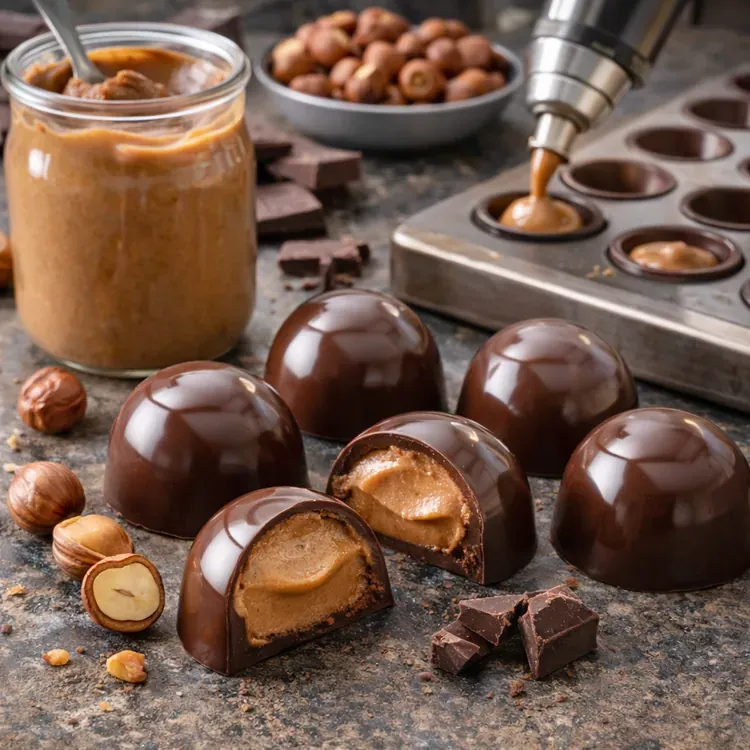
Hazelnut paste for chocolate fillings illustration

Where it fits

Hazelnuts are selected for chocolate fillings because they deliver a distinctive nut aroma, a clean fat profile, and a naturally rounded sweetness—especially after roasting. In fillings, the main drivers are flavor consistency, particle control, depositability, and shelf stability. Your hazelnut input influences how the filling behaves under shear (mixing and pumping), how it sets in the final product, and how it holds up across temperature cycles.

We support manufacturers by aligning the hazelnut format and processing level to your production route: whole kernels for controlled roasting and grinding, blanched inputs for lighter color targets, controlled cuts for consistent feeding, and paste/flour for homogeneous, repeatable dosing. If your priority is line stability, a defined roast band and a controlled particle profile are usually the two most effective levers to reduce day-to-day process variation.

Procurement tip: if your filling is deposited (rather than slabbed), specify what “stable” means for your line—target viscosity at working temperature, allowable oil separation, and acceptable particle perception. This makes supplier alignment much faster.

Export-ready documentation Lot traceability Custom cuts & grinds Bulk & retail options
Common filling types and what hazelnut controls

Praline-style fillings

Hazelnut paste is the backbone of classic praline fillings. Roast level drives intensity; grind profile drives smoothness. Stable hazelnut input reduces batch-to-batch adjustments and helps keep depositing and enrobing consistent.

  • Roast band alignment protects your “signature” flavor.
  • Controlled particle profile supports smooth mouthfeel.
  • Oxidation protection keeps aroma fresh over time.

Creamy center fillings

Soft centers must stay creamy without separating. Hazelnut quality affects fat-phase behavior and perceived richness. Consistent specs help prevent “oily” texture and reduce sensitivity to temperature swings.

  • Stable fat phase helps reduce oiling-off.
  • Low variability supports stable viscosity at working temperature.
  • Defined storage and packaging reduce flavor fade.

Layered / wafer / bar systems

In layered products, migration can affect snap, gloss, and long-term texture. Hazelnut paste influences how fats move between layers. Clear specifications and compatible packaging reduce quality drift during distribution.

  • Migration control is critical for layered formats.
  • Consistent roast and particle reduce sensory changes.
  • Documentation supports repeatable performance across factories.

Recommended formats

Typical starting points for pilots and scale-up. We adapt roast level, calibration, grind targets (where applicable), and packaging to your process and quality goals.

  • Roasted kernels: common when you roast/grind in-house and want direct control of aroma.
  • Hazelnut paste / puree: ideal for consistent dosing, repeatable texture, and simplified line control.
  • Natural kernels (calibrated): used when blanching is not required; supports consistent roasting.
  • Blanched kernels: preferred for light color targets and cleaner sensory profiles.
  • Meal / flour: used when particle behavior is specified and solids handling is optimized.

If your filling is highly sensitive to viscosity drift, paste-based programs usually provide the most predictable processing behavior.

Technical considerations

The most common variables that impact throughput, flavor, and stability in chocolate filling production.

  • Particle size and dust control: supports smooth texture and consistent dosing/depositing.
  • Rheology at working temperature: influences pumping, shear response, and depositor performance.
  • Oil separation resistance: helps maintain creamy texture and consistent appearance during shelf life.
  • Migration behavior: critical in layered products and thin-shell molded items.
  • Oxidation protection: preserves roasted aroma and reduces “stale” notes over time.
  • Allergen control: supports segregation planning and customer compliance requirements.
  • Traceable lots: documented specs and COA flow reduce production surprises and simplify QA release.

For fillings, “stable” usually means: consistent mouthfeel + predictable depositing + minimized defects over distribution. Good hazelnut specs help deliver all three.

Packaging approach

Roasted hazelnut aroma is valuable—and sensitive to oxygen, heat, and time. Packaging should protect quality during storage and long-haul logistics.

  • Lined cartons: practical for kernels and meal; designed for export handling.
  • Oxygen-barrier liners: reduce aroma loss and slow oxidation for roasted formats.
  • Vacuum or MAP: useful when storage horizons are longer or routes are challenging.
  • Palletization: optimized for sea, road, or air freight; helps protect product integrity.

For sensitive formats (roasted kernels, paste), oxygen protection and temperature management are key to preserving aroma and keeping filling performance consistent.

See bulk supply details →

Process-focused checklist for procurement & QA

Chocolate fillings often run at high speed with narrow tolerance windows. A small change in hazelnut input can show up as depositor instability, inconsistent center weights, texture drift, or shelf-life complaints. Many factories use a short, process-linked checklist to keep quality predictable.

  • Define your roast target: light/medium/strong band and how you verify it.
  • Confirm particle expectations: “smooth” vs “textured” and the tolerance you can accept.
  • Set stability targets: acceptable oil separation and viscosity behavior at working temperature.
  • Protect aroma: oxygen barrier packaging and sensible storage discipline (FIFO, sealed packs).
  • Keep documentation tight: COA flow, traceability, and batch-level records for root cause analysis if needed.

If you share your filling type (praline, creamy center, layered) and how you deposit/enrobe, we can recommend the most suitable hazelnut format and specification markers.

Typical specification markers

Below is a practical checklist used by procurement and QA teams. For chocolate fillings, specifications usually connect sensory targets (roast, aroma, color) to operational controls (particle behavior, oxidation protection, and documentation flow).

ParameterHow we align it
MoistureControlled to your target range to support stability and predictable processing.
Defect sortingScreened and optically sorted where required; aligned to your quality expectations.
Roast profileAligned to your flavor target; roast band documented for repeatability.
Particle / grindCalibrated kernels and controlled cuts; paste/grind targets aligned to your texture and depositing goals.
Micro profileAligned to customer specifications and destination requirements; COA flow supported per lot.
AflatoxinManaged through risk-based sourcing and partner controls with export documentation.
Oxidation protectionOxygen-barrier packaging and headspace control to protect roasted aroma.
PackagingVacuum / MAP / liners and export cartons as required; palletization suited to your route.

Final values depend on product form and customer requirements. We share lot documentation with each shipment and can support scheduled programs for repeatable production.

FAQ

Which hazelnut format is most common for hazelnut paste for chocolate fillings?

Most customers start with roasted kernels (for in-house roasting/grinding) or hazelnut paste (for direct dosing). They then fine-tune roast band and particle profile to match mouthfeel, depositor performance, and shelf-life expectations.

What matters most for stable chocolate fillings: taste or texture?

Both. Roast consistency protects the hazelnut aroma, while particle distribution and fat-phase stability protect texture. A controlled input helps reduce viscosity drift, oil separation, and migration-related defects in finished products.

Can you match a target particle size or cut?

Yes. We can supply calibrated kernels and controlled cuts (sliced, diced or chopped). For paste-based programs, we align grind targets and tolerance bands to support consistent refining, pumping, and depositing behavior on your line.

Do you support long-term supply programs?

Yes. We structure annual and multi-shipment programs with consistent specifications, batch documentation and forecast-based planning.

Next step

Send your filling type, expected volume, and destination. We will propose suitable hazelnut formats, roast options, packaging, and a shipment plan designed to keep depositing predictable and preserve roasted hazelnut aroma through shelf life.

  • Share your target: praline/cream center/layered and desired aroma intensity.
  • Share process info: refining approach, working temperature, and deposit/enrobe method.
  • Confirm logistics: preferred pack size, storage conditions, and shipment cadence.
Review products