Applications Library • Confectionery

Hazelnut paste for chocolate spread factories

Chocolate spreads depend on one ingredient more than most people realize: hazelnut input. Whether you process whole kernels in-house or dose ready paste, hazelnuts control the spread’s aroma, color, creaminess, and long-term stability on the shelf. This page is a procurement-ready guide for choosing the right hazelnut format (kernels, paste, meal), defining the specifications that matter for production, and protecting the roasted hazelnut profile through packaging and logistics.

Back to applications
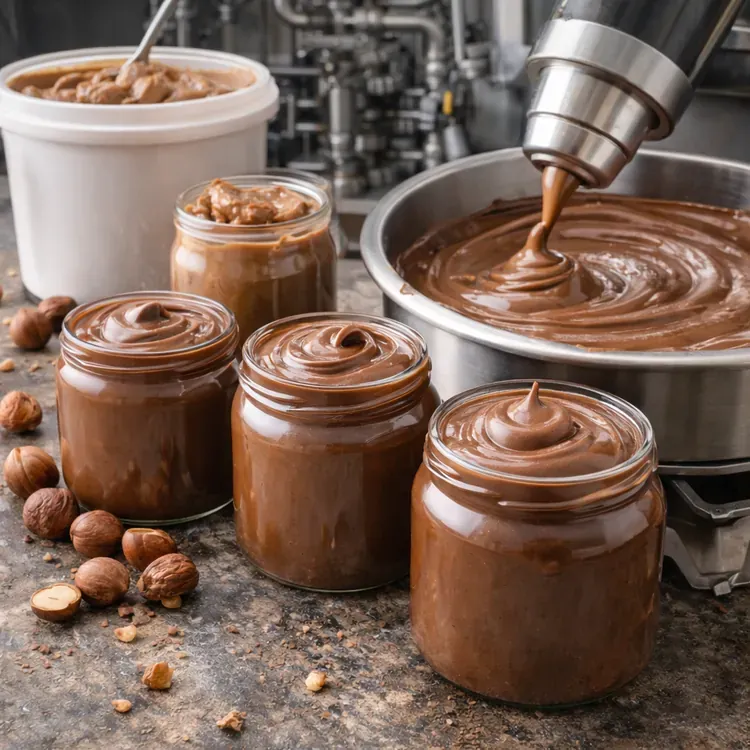
Hazelnut paste for chocolate spread factories illustration

Where it fits

In chocolate spreads, hazelnuts are used to deliver a recognizable nut aroma and a rich, creamy mouthfeel. Roast level drives the “signature” flavor; grind and particle distribution drive perceived smoothness; and packaging/handling drive how fresh the product tastes months later. For factories, the big operational priorities are flavor consistency, texture control, throughput, and shelf stability.

Spread plants typically run continuous or semi-continuous processes where consistency matters as much as cost. When hazelnut input shifts (roast band, moisture, particle profile), it can show up as viscosity drift, oil separation, filling issues, or a final product that tastes “different” from the previous batch. This is why stable specifications and long-term programs matter: they protect your brand’s taste and keep your line predictable.

We support manufacturers by aligning hazelnut format and processing level to your line: kernels for in-house roasting/grinding, blanched for lighter color targets, controlled cuts for consistent feeding, and paste for straightforward dosing into mixers and refiners.

Export-ready documentation Lot traceability Custom cuts & grinds Bulk & retail options
What spreads need from hazelnut paste

Flavor consistency

A spread’s identity comes from roasted hazelnut notes balanced with cocoa and sweetness. To keep taste stable across months and markets, factories usually define a roast band (light/medium/strong) and control the raw material (grade, blanching) so the nut character doesn’t drift.

  • Roast band selection is the biggest driver of “signature aroma”.
  • Blanched inputs reduce skin notes and support lighter color targets.
  • Traceable lots and documented targets reduce reformulation risk.

Texture & smoothness

Consumers judge spreads by mouthfeel. Smoothness is driven by particle size distribution and how solids interact with the fat phase. Consistent grind targets help your refiners run predictably and help your finished product keep the same “creamy” perception batch to batch.

  • Controlled particle profile supports consistent viscosity and filling behavior.
  • Reduced dust/fines helps stable feeding and reduces process variability.
  • Defined tolerance bands help avoid “gritty” complaints.

Shelf stability

Hazelnuts are naturally rich in fat, which makes them great for texture—but also sensitive to oxidation. Shelf stability is protected by oxygen control, careful packaging, and temperature discipline in storage and transport.

  • Oxygen barrier packaging slows flavor fade and rancid notes.
  • Stable handling reduces oil separation and texture drift.
  • Clear FIFO and storage guidance protects finished quality.

Recommended formats

Typical starting points for pilots and scale-up. We can align roast band, calibration, and packaging to your processing route and target sensory profile.

  • Roasted kernels: common for in-house grinding when factories control roast and aroma profile.
  • Roasted hazelnut paste (smooth): ideal for direct dosing and repeatable texture; reduces variability.
  • Blanched kernels: used for lighter color spreads or cleaner taste targets.
  • Natural kernels (calibrated): preferred when blanching is not required; supports consistent roasting and feeding.
  • Meal / flour: used when solids handling is optimized and defined particle behavior is needed.

If you run high volume with tight sensory standards, paste-based programs often reduce variability and simplify line control.

Technical considerations

The most common variables that impact throughput, flavor, and stability in spread production—especially when you scale up or switch lots.

  • Particle size profile: impacts smoothness, viscosity, and filling performance.
  • Rheology at working temperature: influences pumping, mixing load, and jar/bulk filling consistency.
  • Oil separation control: stable fat phase behavior supports shelf life and reduces top-oil issues.
  • Roast profile alignment: ensures consistent aroma and color across production runs.
  • Oxidation protection: oxygen and heat exposure cause flavor fade; packaging and handling reduce risk.
  • Moisture management: supports stability and helps keep processing predictable.

For factories, the goal is repeatability: stable input specs reduce adjustment time, reduce rework, and protect consumer perception.

Packaging approach

Roasted hazelnut aroma is valuable—and fragile. Packaging should protect against oxygen and temperature swings during storage and transport. We can supply formats that suit your unloading, dosing, and hygiene requirements.

  • Lined cartons / export packs: practical for kernels and meal; designed for sea/road/air routes.
  • Oxygen barrier liners: reduce aroma loss and slow oxidation, especially for roasted formats.
  • Vacuum or MAP options: useful for long-haul shipments and longer storage horizons.
  • Bulk handling: pails/drums (where applicable) aligned to your factory’s receiving and dosing method.

For sensitive formats (roasted kernels, paste), oxygen protection and temperature management are key to preserving aroma and keeping spreads consistent.

See bulk supply details →

Typical spread production checkpoints

Spread plants often standardize a few checkpoints to keep batches aligned. These checkpoints are not about “over-complicating” procurement—rather, they reduce the need for emergency adjustments on the line.

  • Roast band confirmation: ensures aroma intensity and color remain consistent.
  • Grind/particle consistency: supports smooth texture and stable viscosity during refining.
  • Storage discipline: FIFO, sealed packaging, and controlled temperature protect roasted notes.
  • Documentation flow: COA and traceability support QA release and customer requirements.

If you share your current formulation type (nut %, cocoa type, target viscosity, filling temperature), we can suggest a matching hazelnut format and specification approach.

Typical specification markers

Below is a practical checklist used by procurement and QA teams. For spreads, specifications typically connect sensory targets (roast, aroma, color) to operational controls (particle profile, oxidation protection, packaging, and documentation).

ParameterHow we align it
MoistureControlled to your target range to support stability and predictable processing.
Defect sortingScreened and optically sorted where required; aligned to your quality expectations.
Roast profileAligned to your flavor target; roast band documented for repeatability.
Particle / grindCalibrated kernels and controlled cuts; paste/grind targets aligned to your refining and texture goals.
Micro profileAligned to customer specifications and destination requirements; COA flow supported per lot.
AflatoxinManaged through risk-based sourcing and partner controls with export documentation.
Oxidation protectionOxygen-barrier packaging and headspace control to protect aroma.
PackagingVacuum / MAP / liners and export cartons as required; palletization suited to your route.

Final values depend on product form and customer requirements. We share lot documentation with each shipment and can support scheduled programs for repeatable production.

FAQ

Which hazelnut format is most common for hazelnut paste for chocolate spread factories?

Most customers start with roasted kernels (when roasting and grinding in-house) or roasted hazelnut paste (for direct dosing). They then lock roast band, particle profile, and packaging to match texture targets and shelf-life expectations.

Can you match a target particle size or cut?

Yes. We can supply calibrated kernels and controlled cuts (sliced, diced or chopped). For paste-based programs, we align grind targets and tolerance bands to support smooth processing and consistent consumer mouthfeel.

What are the top quality drivers for spread performance?

The top drivers are particle profile (smoothness), stable fat phase behavior (reduced oil separation), roast consistency (repeatable flavor), and oxidation control (fresh aroma over shelf life). Traceable lots and documentation help avoid surprises during continuous production.

Do you support long-term supply programs?

Yes. We structure annual and multi-shipment programs with consistent specifications, batch documentation and forecast-based planning.

Next step

Send your target spread type, expected volume, and destination. We will propose suitable hazelnut formats, roast options, packaging, and a shipment plan designed to keep texture stable and preserve roasted hazelnut aroma throughout storage and distribution.

  • Share your target: nut %, cocoa style, and desired aroma intensity.
  • Share process info: refining approach, working temperature, and filling method.
  • Confirm logistics: preferred pack size, storage, and shipment cadence.
Review products