Applications Library • Cosmetics

Hazelnut paste for cosmetics scrubs (food grade carrier)

Hazelnut paste can be used as a rich, natural carrier in scrub-style personal care products—especially oil-rich and anhydrous systems where slip, texture, and sensorial “gourmet” cues matter. This page explains how hazelnut paste, oil, and fine meal are typically specified for cosmetic scrub applications, with a focus on stability (oxidation control), particle consistency, and packaging for safe handling and repeatable production.

Back to applications
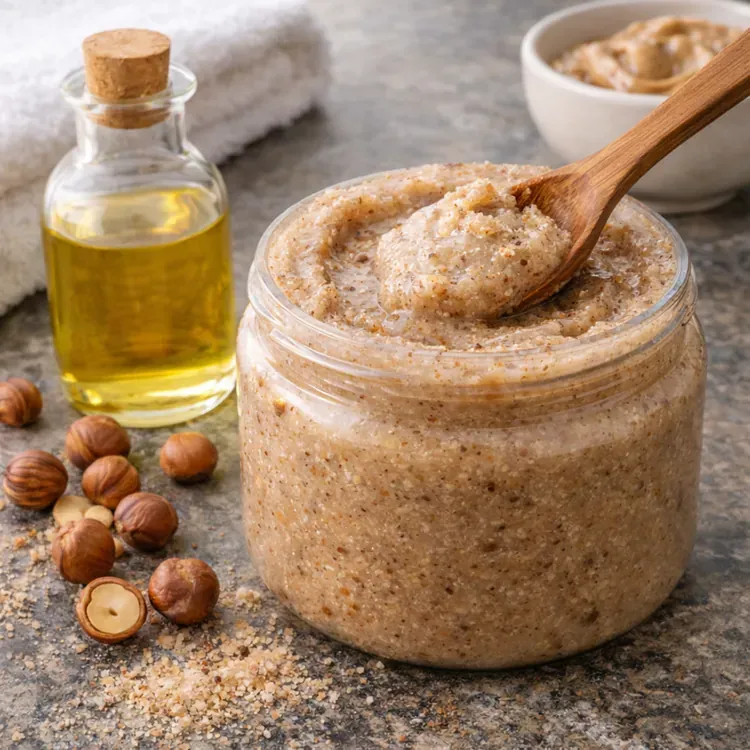
Hazelnut paste for cosmetics scrubs (food grade carrier) illustration

Where it fits

In scrub formulations, hazelnut ingredients are used less for “taste” and more for sensorial performance: a creamy base, natural emollience, and a warm nut aroma that supports premium positioning. Hazelnut paste (as a food-grade carrier) can provide body and slip in oil-rich bases, while hazelnut oil can improve spreadability and after-feel. Fine hazelnut meal may be used as a gentle texturizing component when the formulation is designed for it.

For manufacturers, the main procurement drivers are typically oxidation resistance (to avoid rancid off-notes), particle consistency (to deliver a uniform scrub feel), and batch-to-batch repeatability for texture and color. Packaging and handling are especially important because nut-based ingredients are sensitive to oxygen, heat, and repeated temperature swings.

Note: Cosmetic compliance (labeling/INCI, safety assessment, preservatives, and regulatory requirements) depends on your finished product and destination market. We supply traceable hazelnut ingredients with export-ready documentation; your cosmetic team defines the final cosmetic specification and claims.

Export-ready documentation Lot traceability Custom cuts & grinds Bulk packaging options

How hazelnut ingredients behave in scrub systems

Scrub products are commonly oil-rich (anhydrous) or emulsified (oil + water) systems containing exfoliating particles and sensorial oils/butters. Hazelnut paste and oil can contribute a premium sensorial profile, but stability depends on managing oxidation, moisture, and particle distribution.

  • Slip and spread: hazelnut oil improves glide; paste adds body and a creamy texture to oil-rich systems.
  • Texture uniformity: consistent grind helps prevent gritty “hot spots” and supports repeatable filling performance.
  • Oxidation sensitivity: nut lipids can develop stale/rancid notes if exposed to oxygen or heat—packaging and storage guidance are critical.
  • Color and aroma cues: roast level (if used) influences color and scent; many cosmetic scrubs prefer mild/clean profiles rather than dark roast notes.
  • Allergen context: hazelnut is a tree-nut allergen; manufacturers typically plan labeling, segregation, and cleaning validation accordingly.

A strong specification usually includes: a defined sensory target (aroma/color), practical grind/viscosity targets for your mixer and filler, and an oxidation-control plan (packaging + storage + FIFO discipline).

Recommended formats

Typical starting points for pilots and scale-up. We align processing level, grind approach, and packaging to your product concept and line requirements.

  • Hazelnut paste / puree (smooth): used as a rich carrier for oil-rich scrub bases and “gourmet” textures.
  • Hazelnut oil: supports emollience and slip; can be blended with other cosmetic oils to tune after-feel.
  • Hazelnut meal (fine): used selectively as a texturizer or mild particulate component when designed for the target skin-feel.
  • Natural or blanched kernels: chosen when manufacturers want in-house processing control for specific grind or sensory targets.

If your product requires very smooth sensorial performance, paste and oil are typically prioritized over coarse particulates.

Technical considerations

The variables that most often impact throughput, texture, aroma, and shelf stability in cosmetic scrub applications.

  • Oxidation protection: oxygen barrier packaging, reduced headspace, and temperature control help preserve aroma and color.
  • Moisture management: important for stability—especially if your system contains water or is exposed to humid filling environments.
  • Grind and viscosity: influences pumpability, mixing time, and the feel on skin; consistency supports repeatable batches.
  • Separation control: oil separation can occur with temperature swings; packaging and handling guidance reduces risk.
  • Sensory alignment: define acceptable aroma and color ranges (clean vs roasted notes) to avoid drift between lots.
  • Allergen controls: segregation planning, documentation, and line hygiene expectations for nut-based materials.

If you share your formulation type (anhydrous vs emulsified) and filling method, we can propose practical format and packaging options.

Packaging approach

For nut-based ingredients used outside food, packaging still matters for stability: oxygen, light, and heat can degrade aroma and increase rancidity risk. We recommend choosing packaging based on your storage time, warehouse temperature, and shipment route.

  • Oxygen-barrier liners: reduce aroma loss and slow oxidation for paste and oil-rich formats.
  • Vacuum / MAP options: useful for sensitive formats and longer storage horizons.
  • Robust outer packaging: export cartons, pails, or other handling-friendly formats depending on your line and unloading method.
  • Palletization & routing: selected to minimize heat exposure and protect packaging integrity in transit.

For sensitive formats (paste, oil), oxygen protection and temperature management are the two biggest levers for preserving a clean sensorial profile.

See bulk supply details →

Use cases and workflow examples

Anhydrous sugar/salt scrubs

These formulas rely on oils and butters for slip and sensorial performance. Hazelnut paste can add a rich, “dessert-like” texture and warm aroma cues. Hazelnut oil can be used to tune spreadability and after-feel.

  • Common goal: stable texture with no weeping/separation during temperature swings.
  • Key focus: oxidation control and consistent viscosity for filling.
  • Share with us: pack size, expected storage duration, and temperature range.

Emulsified body polishes

Emulsified scrubs combine water and oil phases, so stability and microbial strategy become more complex. Hazelnut ingredients may still be used for sensorial value, but the formulation and preservative system must be designed by the cosmetic manufacturer.

  • Common goal: smooth, stable emulsion with uniform particle distribution.
  • Key focus: moisture management, consistent grind, and documentation flow.
  • Share with us: whether you need paste, oil, or both—and your mixing method.

Cleansing balms with textured feel

Some balms use fine texturizers for a “micro-polish” effect while keeping a luxurious, non-scratch sensorial profile. Paste and oil can support a rich feel, while any particulate component should be selected to match the intended gentleness.

  • Common goal: premium feel without gritty perception.
  • Key focus: fine grind targets and sensory consistency.
  • Share with us: desired skin-feel and whether screening/filters are used.

Typical specification markers

Below is a practical checklist used by procurement and QA teams for nut-based ingredients used in cosmetic manufacturing. We align each item to your processing level (paste, oil, meal, kernels) and to your documentation expectations for traceability and repeatability.

ParameterHow we align it
Moisture / water activity (where relevant)Aligned to product form to support stability and handling expectations.
Grind / particle profilePractical targets aligned to your texture goal, mixing method, and filling equipment constraints.
Sensory (aroma/color)Aligned to a defined target range; helps reduce lot-to-lot drift in finished goods.
Oxidation indicatorsManaged through sourcing, handling, and packaging choices designed to protect freshness.
Foreign matter / defect sortingScreened and optically sorted where required; documentation supports QA review.
Micro profileAligned to customer specifications and destination requirements; lot documentation supplied.
AflatoxinManaged through risk-based sourcing and partner controls with export documentation.
PackagingOxygen-barrier liners, vacuum/MAP options where appropriate, and export-ready outer packaging.

Final values depend on product form and customer requirements. We share lot documentation with each shipment and can support long-term programs with consistent specification targets.

FAQ

Which hazelnut format is most common for hazelnut paste for cosmetics scrubs (food grade carrier)?

Most customers start with hazelnut paste/puree as the carrier for an oil-rich or anhydrous scrub base, then adjust grind/viscosity and packaging to match filling, texture, and shelf-life targets. Hazelnut oil is often added to improve slip, and fine meal may be used selectively for a mild textural effect where appropriate.

What matters most for stability in scrub-style formulations?

The biggest drivers are oxidation control (to prevent rancid notes), moisture management (especially in water-containing systems), and particle consistency to keep texture uniform. Oxygen-barrier packaging and temperature discipline during storage and transit help preserve aroma and color.

Can you match a target particle size or cut?

Yes. We can supply calibrated kernels and controlled cuts (sliced, diced or chopped) and align tolerance bands to your process. For paste and meal, we can work toward practical grind targets based on your mixing method and desired skin-feel.

Do you support long-term supply programs?

Yes. We structure annual and multi-shipment programs with consistent specifications, batch documentation and forecast-based planning—helpful for repeated production runs and stable product performance.

Is food-grade material suitable for cosmetic manufacturing?

Many cosmetic manufacturers source food-grade nut ingredients for quality and traceability, but cosmetic compliance depends on your finished product, labeling, and regulatory obligations in the destination market. Share your requirements and we will align documentation and handling expectations accordingly.

Next step

Send your target product type (anhydrous scrub, body polish, balm), expected annual volume (or trial volume), and destination. We will propose suitable hazelnut formats (paste/oil/meal), packaging, and a shipment plan designed to protect freshness and maintain specification consistency across lots.

  • Define the sensorial target: clean/natural vs warm/roasted aroma and your color preference.
  • Share process constraints: mixer type, filling method, and any viscosity limits.
  • Confirm logistics: pack size preference, storage conditions, and shipment cadence.
Review products