Applications Library • Confectionery

Hazelnut paste for high-fat fillings stability

A practical, procurement-ready guide to selecting hazelnut paste for stable, high-fat fillings — including recommended formats, texture and flow targets, oil separation control, fat migration considerations, and packaging approaches that protect aroma.

Back to applications
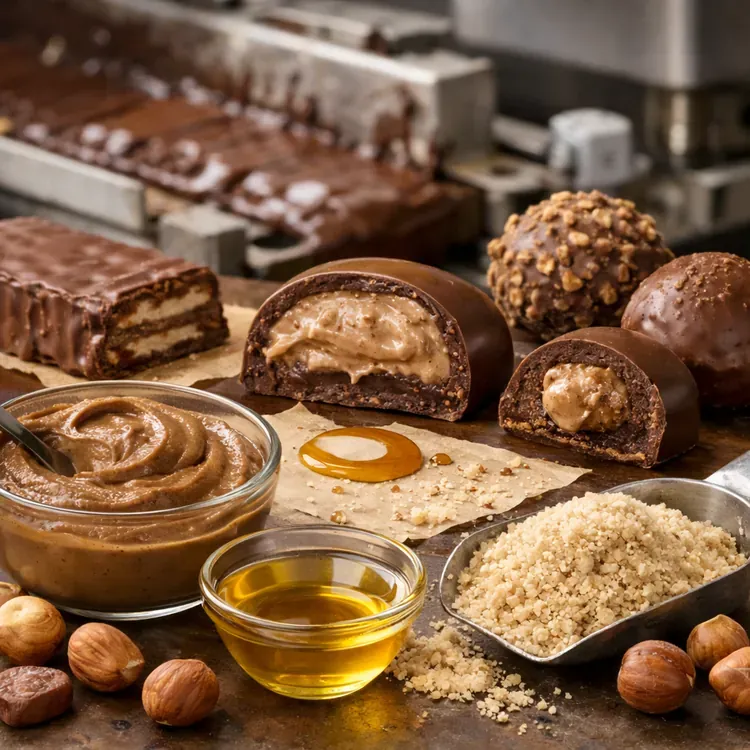
Hazelnut paste for high-fat fillings stability illustration

Where it fits

High-fat fillings — such as praline-style centers, layered wafer creams, bakery fillings, and chocolate-adjacent systems — are sensitive to small changes in ingredient behavior. Hazelnut paste is chosen because it delivers intense aroma and natural sweetness, but it also brings a fat phase that must be managed to keep the filling smooth, stable, and consistent over shelf life.

In this application, stability means more than “good texture on day one.” Manufacturers typically want to avoid oiling out, reduce fat migration into shells or wafers, and keep viscosity predictable for depositing and enrobing. The right hazelnut specification helps the filling behave consistently across batching, storage, and distribution.

  • Separation control: limit visible oiling out and keep a uniform appearance after storage.
  • Texture repeatability: defined grind supports smooth mouthfeel and consistent flow for dosing.
  • Migration management: minimize softening of wafers and reduce surface defects on coated products.
  • Flavor protection: protect roasted aroma by managing oxygen exposure and process temperatures.
Oil separation control Defined texture & flow Migration-aware specs Export-ready documentation
Recommended formats

Typical starting points for trials and scale-up. We align roast style, grind and packaging to match your filling style and process.

  • Hazelnut paste / puree (smooth, structured base for stable fillings)
  • Roasted kernels (for in-house paste or customized roast integration)
  • Hazelnut oil (optional: fat standardization and viscosity tuning)
  • Hazelnut meal / flour (optional: dry solids control, texture tuning)

Most high-fat fillings perform best when paste is specified for consistency and handled with good temperature control.

Technical considerations

The variables that most commonly decide whether a filling stays stable throughout shelf life.

  • Oil separation (“oiling out”): managed through consistent processing, grind control and handling guidance
  • Fat migration: consider interactions with chocolate, wafers and layered systems
  • Viscosity window: ensure depositability and stable flow at your operating temperature
  • Roast profile alignment: match flavor intensity and color to the finished product
  • Temperature stability: reduce repeated warm/cool cycles that can destabilize fat systems
  • Allergen control: segregation planning and documented controls

Packaging approach

Packaging should preserve aroma and limit oxidative stress — especially for roasted pastes used in long-shelf-life fillings.

  • Pails / drums with food-grade liners for paste
  • Oxygen protection options for aroma retention and stability
  • Export cartons & palletization suited to sea, road or air freight

For high-fat fillings, stable storage temperatures and minimizing oxygen exposure help keep flavor and appearance consistent.

See bulk supply details →

Stability map: what typically causes defects in high-fat fillings

When a filling is rich in fat, small imbalances become visible over time. Below are the most common stability issues procurement and QA teams plan for, and the practical levers used to reduce risk during scale-up.

Oiling out (surface oil)

Visible oil on the surface can appear after storage, temperature swings, or incomplete dispersion. Stable paste specs and handling reduce this risk.

  • Use a defined paste consistency and mix-in guidance
  • Keep storage temperatures stable (avoid repeated warm/cool cycles)
  • Re-homogenize paste before batching when needed

Fat migration & softening

Migration can soften wafers, change bite, or impact coated products. Ingredient choice and process conditions both matter.

  • Align roast and grind for predictable dispersion (helps structure)
  • Use oil as a controlled tuning tool rather than an uncontrolled variable
  • Share your layering format so we can propose a stability-focused spec

Texture drift over time

Fillings can thicken, loosen, or lose smoothness after storage if the formulation and ingredient behavior are not aligned.

  • Set a target processing temperature window for consistent viscosity
  • Choose a paste grind that supports your mouthfeel and depositor needs
  • Protect aroma with oxygen-aware packaging and handling

If you tell us the filling type (wafer cream, praline center, bakery filling), target shelf life, and your process temperature window, we can propose a starter specification aimed at stability in real distribution conditions.

Typical specification markers

Below is a practical checklist used by procurement and QA teams for high-fat fillings. We align each item to your destination market, customer requirements and processing method.

ParameterHow we align it
Roast profile / colorDefined roast style aligned to your flavor target and color expectations
Grind / texture behaviorPractical grind targets to support smooth mouthfeel and stable dispersion
Consistency / flowAligned to depositability and your operating temperature window
Oil separation tendencyManaged through consistent processing + handling guidance (including re-homogenization)
MoistureControlled to your target range
Defect sortingScreened and optically sorted where required
Micro profileAligned to customer specifications and destination requirements
AflatoxinManaged through risk-based sourcing and partner controls
Allergen documentationTree nut allergen controls and traceability documentation
PackagingPails/drums with liners; oxygen protection options; export cartons as required

Final values depend on product form and customer requirements. We share lot documentation with each shipment.

FAQ

Which hazelnut format is most common for hazelnut paste for high-fat fillings stability?

Most customers start with hazelnut paste / puree because it provides the core flavor and structure for the filling. Hazelnut oil is typically used as an optional tuning tool (fat standardization and viscosity adjustment), while meal / flour can be used when a dry addition is preferred to help manage solids and texture.

Can you match a target particle size or cut?

Yes. We can supply calibrated kernels and controlled cuts (sliced, diced or chopped) and align tolerance bands to your process. For fillings, the most important control points are usually paste grind/texture behavior and consistency at working temperature.

Do you support long-term supply programs?

Yes. We structure annual and multi-shipment programs with consistent specifications, batch documentation and forecast-based planning — supporting stable filling performance across seasonal production cycles.

Next step

Send your filling type, target shelf life, operating temperature window, and destination. We will propose suitable formats (paste / kernels / oil), packaging, and a shipment plan aligned to stability and repeatability.

Review products