Applications Library • Bakery

Hazelnut paste for premium tart fillings

A practical, procurement-ready guide to hazelnut paste used in premium tart fillings—from praline-style fillings to nut-forward pastry creams and baked frangipane variants. Covers roast profile selection, grind/smoothness, piping performance, bake stability, fat migration control and packaging approaches for consistent results.

Back to applications
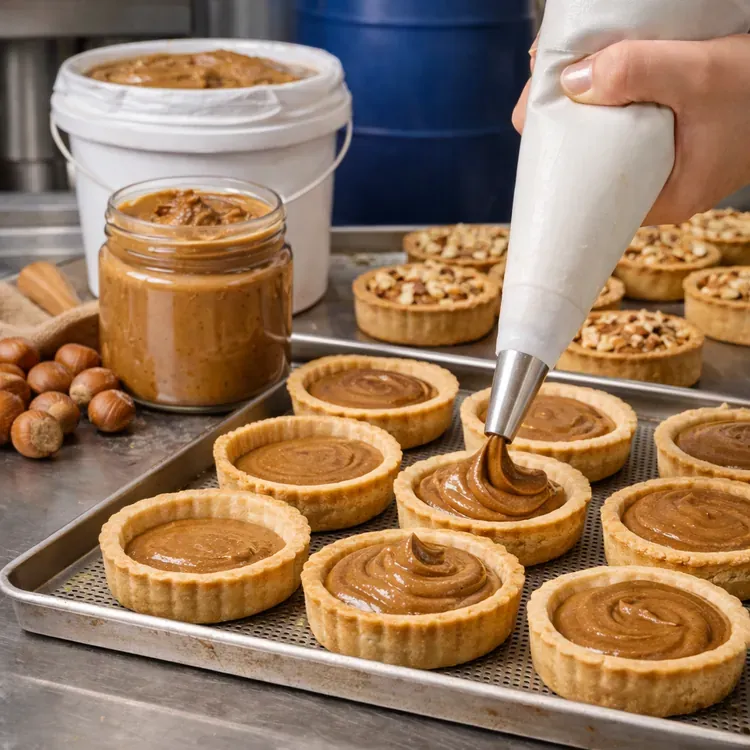
Hazelnut paste for premium tart fillings illustration

Where it fits

In premium tarts, the filling is the “signature bite.” Hazelnut paste is chosen because it delivers deep roasted aroma, a naturally rich mouthfeel, and a clean sweetness that pairs well with chocolate, caramel, coffee, citrus and many fruit profiles. Unlike loose nut ingredients, smooth paste disperses evenly and helps create a refined, consistent texture—especially important when you are selling premium pastry where every slice must look and taste the same.

This application typically focuses on three performance drivers: flavor repeatability (roast profile and raw material stability), texture and flow control (fine grind for smoothness and reliable piping), and shelf stability (oxidation protection and controlled fat behavior to limit oiling-off and migration). We support pastry manufacturers and artisanal-to-industrial bakeries by aligning hazelnut paste type, grind and packaging to your process.

  • Baked tart fillings: frangipane-style systems where nut paste supports flavor, structure and moisture balance.
  • Cold-set fillings: praline and nut-creams where smoothness and stable fat phase matter for clean slicing.
  • Layered desserts: hazelnut paste helps deliver nut intensity without adding gritty particulates.
  • Decor and inclusions: controlled cuts provide visual appeal without excess dust or inconsistent bite.
Defined roast styles Fine grind options Piping performance Lot traceability
Recommended formats

Typical starting points for pilots and scale-up. We adapt roast, grind and packaging to match your tart style, target texture and production flow.

  • Hazelnut paste / puree (smooth; roasted or blanched depending on flavor & color)
  • Hazelnut meal / flour (optional: supports body and structure in baked fillings)
  • Diced / sliced / chopped (optional: topping or inclusion with controlled dust)

If your product is positioned as “light color” (e.g., vanilla-forward), blanched paste can help keep the filling visually clean.

Technical considerations

The variables that most often impact throughput, finish quality, flavor and shelf-life for premium tart fillings.

  • Roast profile alignment: match toasted intensity to your flavor target and bake profile
  • Grind & smoothness: fine grind supports premium mouthfeel and consistent piping
  • Flow at working temperature: target consistency for mixers, pumps and depositors
  • Fat migration control: manage oiling-off and migration into shells or layers
  • Oxidation protection: preserve aroma with oxygen barrier packaging and stable storage
  • Moisture strategy: keep texture stable in baked and cold-set systems

Packaging approach

Premium pastry depends on aroma. For hazelnut paste, oxygen exposure and temperature cycling are the biggest risks. We offer packaging designed to protect flavor and simplify export logistics.

  • Pails / drums with food-grade liners for paste
  • Oxygen barrier options to preserve roasted notes
  • Lot labeling (roast, grind, batch ID) for repeatability
  • Palletization suited to sea, road or air freight

Best practice: store cool and stable, avoid heat spikes, and re-homogenize paste before use for uniform dosing.

See bulk supply details →

Designing a premium tart filling around hazelnut paste

Premium tart fillings usually need to do several jobs at once: deliver a clean, intense flavor; remain stable from production to service; and provide a consistent cut and visual finish. Hazelnut paste affects each of these outcomes—especially when combined with sugar, dairy or plant-based fats, cocoa, eggs, starches, emulsifiers and stabilizers.

Flavor & color control

Roast is the signature. Defining roast style up front helps you avoid batch-to-batch drift and ensures the filling matches the product’s premium positioning.

  • Choose roasted paste for deep nut aroma and praline character
  • Choose blanched paste for lighter color and softer nut notes
  • Align roast with bake time/temperature to prevent over-toasted bitterness

Piping & finish quality

Deposit consistency defines your line performance and your final appearance. A stable grind and repeatable flow help you achieve clean peaks, smooth surfaces and consistent weight control.

  • Set a grind target to reduce grit and avoid nozzle blockage
  • Confirm flow at your real working temperature (mixing and depositing)
  • Use controlled inclusions to add visual texture without excess dust

Stability after bake / during shelf-life

Tart fillings can experience oil migration, softening, or “oiling-off” over time. Controlled fat behavior and oxidation protection help preserve a premium bite.

  • Plan for fat migration into shells and layers
  • Protect roasted aroma with oxygen barriers and stable storage
  • Re-homogenize paste before use to restore a uniform fat phase

If you share your tart type (baked vs cold-set), processing method (handmade vs depositor), and target shelf-life window, we can propose a practical starter specification.

Typical specification markers

Below is a practical checklist used by procurement and QA teams for hazelnut paste intended for premium tart fillings. We align each item to your destination market, customer requirements and processing style.

ParameterHow we align it
Roast profileDefined roast style to hit target aroma and color (roasted vs blanched options)
Particle size / grindSpecified grind band for smooth mouthfeel and reliable piping
Consistency / flowAligned to your mixing and depositing temperature window
Oil separation behaviorManaged via consistent grind, stable storage guidance and re-homogenization
MoistureControlled to a stable target range for processing and shelf-life performance
Defect sortingScreened and optically sorted where required
Micro profileAligned to customer specifications and destination requirements
AflatoxinManaged through risk-based sourcing and partner controls
Allergen documentationTree nut allergen controls and traceability documentation for your program
PackagingPails/drums with liners; oxygen protection options; export cartons as required

Final values depend on product form and customer requirements. We share lot documentation with each shipment.

FAQ

Which hazelnut format is most common for hazelnut paste for premium tart fillings?

Most pastry teams start with smooth hazelnut paste as the primary flavor base. Roasted paste gives a deeper praline character, while blanched paste supports lighter color profiles. In baked tart fillings, small amounts of hazelnut meal/flour may be used to build body, support structure and tune texture without introducing coarse particles.

Can you match a target particle size, grind or consistency?

Yes. We can align paste grind and consistency targets so the ingredient performs consistently in your mixing and depositing process. This is especially useful when you need stable piping, smooth surfaces, and repeatable weights across production runs.

Do you support long-term supply programs?

Yes. We structure annual and multi-shipment programs with consistent specifications, batch documentation and forecast-based planning, helping you maintain stable flavor and production performance across seasons.

Next step

Send your tart type (baked or cold-set), target flavor profile (roasted vs light), expected monthly volume and destination. We will propose a suitable hazelnut paste specification (roast, grind, consistency), packaging option and shipment plan.

Review products