Applications Library • Confectionery

Hazelnut paste for spreadable praline

A practical, procurement-ready guide to hazelnut paste used in spreadable praline and nut-based spreads — including roast profile selection, grind and viscosity targets, refining compatibility, oil separation control, oxidation protection, and packaging approaches for export and shelf-life performance.

Back to applications
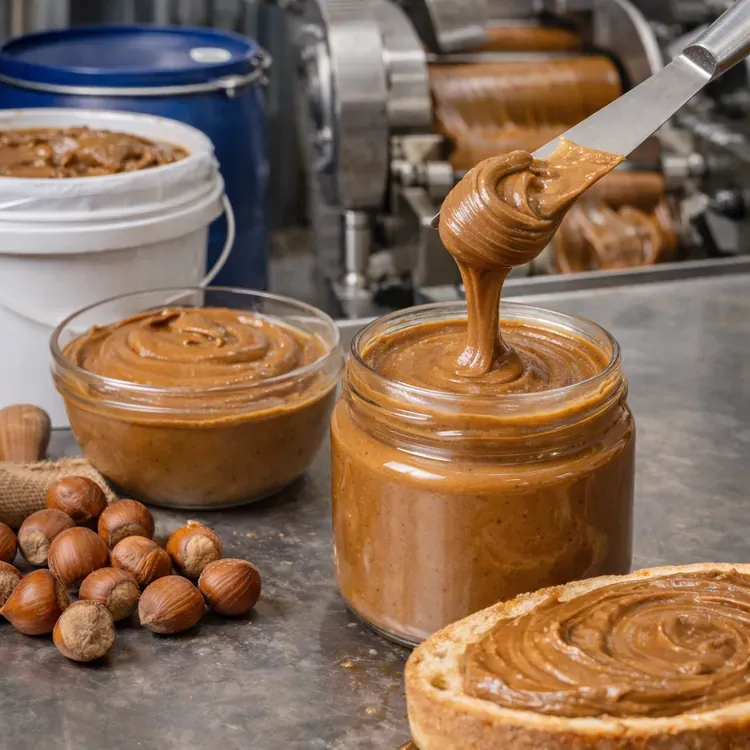
Hazelnut paste for spreadable praline illustration

Where it fits

Spreadable praline is a confectionery-style system where hazelnut solids and hazelnut fat create the signature taste and mouthfeel. Whether you are producing a classic praline base, a cocoa-hazelnut spread, or a premium “high nut” spread, hazelnut paste is the anchor ingredient: it defines the roast aroma, the color tone, and the way the spread flows at consumer and processing temperatures.

In manufacturing, performance is largely determined by three factors: flavor consistency (roast and raw material stability), particle control (smoothness, refining behavior, and absence of grit), and shelf stability (oxidation protection and controlled oil separation). We support confectionery and spread manufacturers by aligning paste type, roast profile, grind and packaging to your equipment and target market.

  • Praline-style bases: hazelnut paste provides depth, toasted notes and natural sweetness synergy.
  • Chocolate-hazelnut spreads: consistent grind supports refining and helps maintain a glossy, stable texture.
  • Fillings & layers: stable fat behavior helps reduce oil migration in wafers, biscuits and bakery formats.
  • Premium “high nut” spreads: clean roast control avoids bitterness and keeps the flavor “nut-forward.”
Defined roast profiles Fine grind options Oil separation control Export-ready documentation
Recommended formats

Typical starting points for pilots and scale-up. We adapt roast level, grind and packaging to match your praline spread system and process temperature.

  • Roasted hazelnut paste (smooth; primary praline flavor base)
  • Blanched hazelnut paste (lighter color; milder roast notes)
  • Hazelnut meal / flour (optional: builds body, supports texture, reduces free oil)

Optional: controlled cuts (diced/chopped) for inclusions when you want visible nut pieces without excessive dust.

Technical considerations

The most common variables that impact refining, spreadability, mouthfeel and shelf-life stability in praline and nut-based spreads.

  • Grind & smoothness: finer grind reduces grit and supports premium mouthfeel
  • Rheology / flow: match paste consistency to your mixer, pump, refinery or depositor
  • Oil separation: manage with consistent grind, stable storage and re-homogenization
  • Oxidation risk: protect roasted aroma with oxygen barrier packaging and temperature control
  • Moisture control: low moisture helps reduce texture drift and microbiological risk
  • Allergen management: hazelnut is a tree nut allergen—plan segregation and labeling
  • Traceability: batch documentation to maintain repeatability across production runs

Packaging approach

For hazelnut paste used in spreads, the biggest risks are oxygen exposure and repeated warming/cooling cycles. We offer packaging designed to protect aroma and simplify export logistics.

  • Pails / drums with food-grade liners for paste
  • Oxygen barrier options to preserve roast aroma and reduce rancidity risk
  • Lot labeling (roast, grind, net weight, batch ID) for production repeatability
  • Palletization suited to sea, road or air freight

Best practice: store cool and stable, avoid heat spikes, and mix paste before use to restore a uniform fat phase.

See bulk supply details →

What “good” looks like in a spreadable praline base

A successful praline spread delivers clean hazelnut aroma, smooth texture and stable spreadability from production through consumer shelf life. Hazelnut paste influences each of these outcomes—especially when paired with sugar, cocoa, emulsifiers and stabilizers in the finished formulation.

Flavor and roast consistency

Roast profile is the signature. A defined roast approach helps you hit the same toasted notes every batch and avoids bitterness that can show up when roast is too aggressive or inconsistent across lots.

  • Define target color and aroma intensity
  • Align blanched vs roasted paste to your product positioning
  • Validate with a retained-sample approach for long programs

Smoothness and refining fit

Spread quality is heavily tied to particle perception. A consistent fine grind supports your refining step (if used), improves gloss, and reduces consumer perception of grit.

  • Set a practical grind target for your equipment
  • Reduce dust and oversized particles that can cause texture spikes
  • Confirm performance at your actual processing temperature

Shelf stability and oil separation

Oil separation is a common complaint in nut-based spreads. Stable storage, proper homogenization, and packaging oxygen control help preserve aroma and reduce separation risk over time.

  • Use oxygen protection for roasted aroma retention
  • Plan for re-mixing after storage and before dosing
  • Avoid repeated temperature cycling in logistics

If you share your process (mixer only vs. refining), target nut %, and expected shelf-life window, we can propose a practical starter specification and packaging option.

Typical specification markers

Below is a practical checklist used by procurement and QA teams for hazelnut paste intended for spreadable praline and nut-based spreads. We align each item to your process, destination requirements and product positioning.

ParameterHow we align it
Roast profileDefined roast style to hit target aroma and color while avoiding bitterness
Particle size / grindSpecified grind band for smooth mouthfeel and consistent processing
Consistency / flowAligned to your mixing, pumping and dosing temperature window
Oil separation behaviorManaged via consistent grind, stable storage guidance and re-homogenization
MoistureControlled to a stable target range for processing and shelf-life performance
Micro profileAligned to customer specifications and destination requirements
AflatoxinManaged through risk-based sourcing and partner controls
Allergen documentationTree nut allergen controls and traceability documentation for your program
PackagingPails/drums with liners; oxygen protection options; export cartons as required

Final values depend on your formulation and customer requirements. We share lot documentation with each shipment.

FAQ

Which hazelnut format is most common for hazelnut paste for spreadable praline?

Most manufacturers start with smooth roasted hazelnut paste (fine grind) as the praline flavor base. Blanched hazelnut paste is used when a lighter color and milder roast profile is required. In some systems, small amounts of hazelnut meal/flour are used to build body and help reduce free oil in the finished spread.

Can you match a target particle size or grind to our process?

Yes. We can supply hazelnut paste with defined grind and consistency targets and align documentation and sampling to support stable performance on your refinery, mixer, pump or depositor.

Do you support long-term supply programs?

Yes. We structure annual and multi-shipment programs with consistent specifications, batch documentation and forecast-based planning. This helps maintain flavor repeatability and processing stability across production runs.

Next step

Send your target product (praline base / chocolate-hazelnut spread), nut percentage range, processing method (mixer only or refining), expected monthly volume and destination. We will propose a suitable hazelnut paste specification, packaging option and shipment plan.

Review products