Applications Library • Retail

Hazelnut paste in small jars

A procurement-ready guide to jarred hazelnut paste — including paste types and roast profiles, texture and oil separation control, packaging and labeling considerations, and the key specification markers used by QA teams for repeatable retail batches.

Back to applications
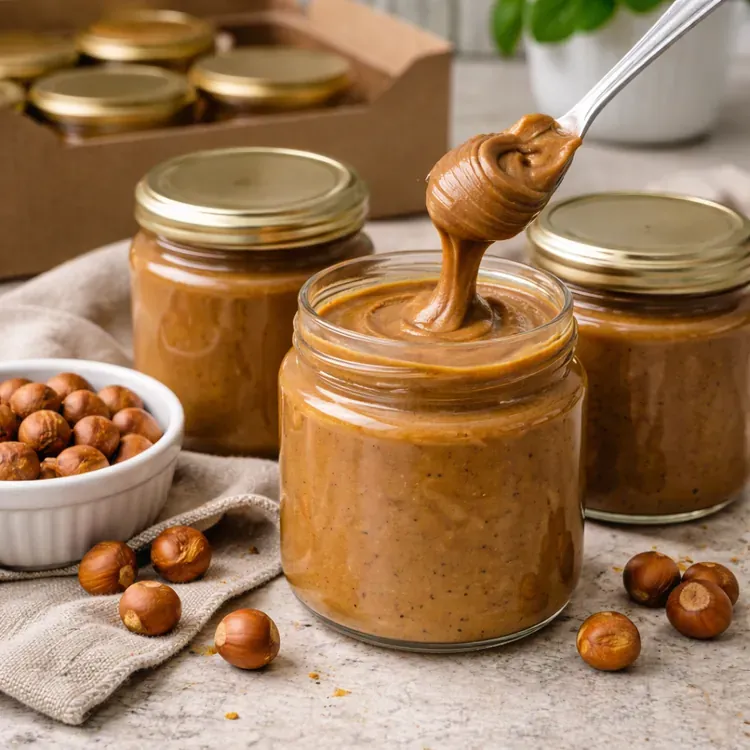
Hazelnut paste in small jars illustration

Where it fits

Small jars of hazelnut paste are used in retail as a premium “single-ingredient” spread, a baking ingredient, or a base for flavored spreads (for example cocoa-hazelnut or sweetened hazelnut cream). Compared with bulk industrial paste, jar formats bring additional priorities: consumer texture expectations, label compliance, and appearance stability on shelf.

Hazelnuts are selected for their clean fat profile, natural sweetness, and aroma development during roasting. For a jar product, the main performance drivers are typically flavor consistency, smoothness and spreadability, and shelf stability (especially oxidation and oil separation).

We support retail and private label projects by aligning raw material selection (natural vs blanched), roast profile, milling fineness, and packaging approach to your target market and positioning — from light, delicate pastes to deeper roasted, more aromatic profiles.

Retail-ready documentation Lot traceability Roast & texture alignment Bulk or finished programs

Recommended formats

Jarred paste is typically produced from roasted kernels that are finely milled. Depending on your product positioning, you can select a lighter (often blanched) profile or a deeper roasted profile. Textured variants (crunchy) usually add inclusions after milling.

  • Roasted hazelnut paste (smooth, retail-ready base)
  • Blanched roasted paste (lighter color, “clean” appearance)
  • Natural roasted paste (stronger nut identity, deeper taste)
  • Paste + inclusions (crunchy variant with diced nuts added post-mill)

Technical considerations

The most common variables that impact jar stability, consumer perception, and production efficiency.

  • Roast profile aligned to flavor target and desired color
  • Milling fineness (texture and mouthfeel; influences separation risk)
  • Oil separation control through process and storage conditions
  • Oxidation protection via oxygen exposure reduction and temperature stability
  • Label strategy (100% paste vs sweetened/stabilized formulations)

Packaging approach

Packaging choices for jar programs usually focus on protecting flavor (oxygen/light), enabling clean filling, and preventing leakage in transit. We can supply bulk paste for your filling line or support export-oriented programs depending on scope.

For aroma-sensitive roasted paste, temperature management and oxygen barrier handling are key to preserving “fresh roast” notes through shelf life.

See retail & private label →

Paste types: 100% paste vs formulated spreads

“Hazelnut paste” is often used as shorthand for different retail products. Clarifying the type early makes specification and labeling simpler. In procurement terms, the biggest split is between 100% hazelnut paste and formulated spreads.

  • 100% hazelnut paste: pure ground hazelnuts (roasted or blanched-roasted). Premium positioning, clean label, natural separation may occur.
  • Formulated hazelnut spreads: paste blended with ingredients such as sugar, cocoa, oils, milk powders, or stabilizers (market-dependent).
  • Crunchy variants: smooth paste base plus diced nuts or inclusions added after milling for controlled texture.

If the product is “single ingredient,” the process focus is texture and stability without changing the ingredient list. If it is formulated, your label and regulatory framework will guide ingredient selection and the stability strategy.

Texture, spreadability, and oil separation

Consumers judge jarred paste instantly: how it looks on opening, whether it stirs easily, and how it spreads on bread or in baking. Oil separation is natural in nut pastes because the oil phase can rise over time — especially when storage temperatures fluctuate. Rather than treating this as purely a defect, many brands manage it through clear product positioning and tight process control.

Milling fineness

Finer milling improves smoothness and premium mouthfeel. It also increases surface area and can affect how oil behaves over time. Setting a clear texture target helps keep jar performance consistent.

  • Agree on a texture benchmark (reference sample)
  • Control process temperature during milling
  • Define acceptable visual appearance at shelf

Roast profile

Roast drives aroma and color. Deeper roast increases intensity but can require stronger oxidation control. Lighter profiles often look “cleaner” and are popular for premium jars.

  • Choose light / medium / deep roast direction
  • Confirm color expectations (blanched vs natural)
  • Align with your intended shelf-life window

Storage stability

Temperature stability matters. Heat exposure and temperature swings can accelerate separation and aroma loss. Good logistics planning supports consistent shelf presentation.

  • Minimize warm storage and direct sunlight
  • Use packaging and handling that reduce oxygen exposure
  • Define your “best before” expectation early

If you want a “no-stir” experience, that usually becomes a formulation question (and must match your label/market requirements). For pure paste, stability is typically managed through process consistency and storage guidance.

Typical specification markers

Jar programs often require tighter control than industrial paste because consumers notice texture and appearance changes. Below is a practical checklist used by procurement and QA teams. We align each item to your destination market, customer requirements, and processing level.

ParameterHow we align it
Paste type100% paste or formulation base (as specified)
Roast & colorAligned to target profile (natural vs blanched; light/medium/deep)
Texture targetAgreed smoothness/benchmark sample; consistency expectations
MoistureControlled to support stability and reduce quality drift
Oxidation managementPackaging/handling approach aligned to shelf-life needs
Micro profileAligned to customer specifications and destination requirements
AflatoxinManaged through risk-based sourcing and partner controls
PackagingBulk paste packaging or retail-ready program scope (as required)
TraceabilityLot coding and COA flow with each shipment

Final values depend on product form and customer requirements. We share lot documentation with each shipment and can align with your internal QA template.

Jar and filling considerations (practical checklist)

If you are filling small jars, practical details can make or break the project: fill temperature, viscosity, headspace, closure selection, and transport performance. Even when the paste itself is excellent, inconsistent filling or weak closure integrity can create leakage, separation, or consumer complaints.

Area What to define Why it matters
Fill viscosity Target flow behavior for your filler Prevents under/overfill, supports consistent weight control
Fill temperature Range that preserves quality and fills cleanly Too warm can accelerate separation; too cool can hinder filling
Headspace Agreed headspace and closure torque Supports seal integrity and reduces mess during handling
Closure Cap type, liner, tamper evidence Protects against leakage and oxygen ingress in distribution
Secondary packaging Case pack and dividers Prevents glass-to-glass impact and improves pallet stability

If you already have a jar/closure standard, share it with your RFQ. It helps align packaging and transport expectations from the first quote.

FAQ

Which hazelnut format is most common for hazelnut paste in small jars?

For jarred hazelnut paste, most customers use roasted hazelnut paste made from cleaned kernels (often blanched for a lighter color) that is finely milled to a smooth texture. Cut pieces are typically not used for pure paste unless you are making a crunchy or textured variant.

How do you manage oil separation in jarred hazelnut paste?

Oil separation is influenced by roast level, milling fineness, and storage temperature. Common approaches include setting a clear texture target, controlling processing temperature, and selecting packaging/storage conditions that reduce heat exposure. If you use a stabilized recipe, the formulation must match your label and market requirements.

Can you match a target texture, color, or roast profile?

Yes. We can align roast intensity, color direction (lighter blanched profile or deeper roasted profile), and texture targets so your jar product is consistent across batches. If you have a benchmark jar or specification sheet, we can map the closest match.

Do you support private label and export programs for small jars?

Yes. We support retail/private label programs with specification alignment, documentation, and planning for repeated shipments. The exact scope depends on whether you are sourcing bulk paste for your own filling line or a finished jar product.

Next step

Send your target product (100% paste or formulated), roast/color direction, jar size, expected annual volume, and destination country. If you have a benchmark jar, label draft, or texture reference, include it — we will propose a suitable paste profile, packaging scope, and shipment plan.

Review products