Applications Library • Nutrition

Hazelnut pieces for granola manufacturers

A practical, procurement-ready overview of hazelnut pieces used in granola — including recommended formats (diced, chopped, sliced), technical considerations (blend uniformity, dust control, roast alignment, oxidation management), and packaging approaches that protect crunch and flavor stability.

Back to applications
Hazelnut pieces for granola manufacturers illustration

Where it fits

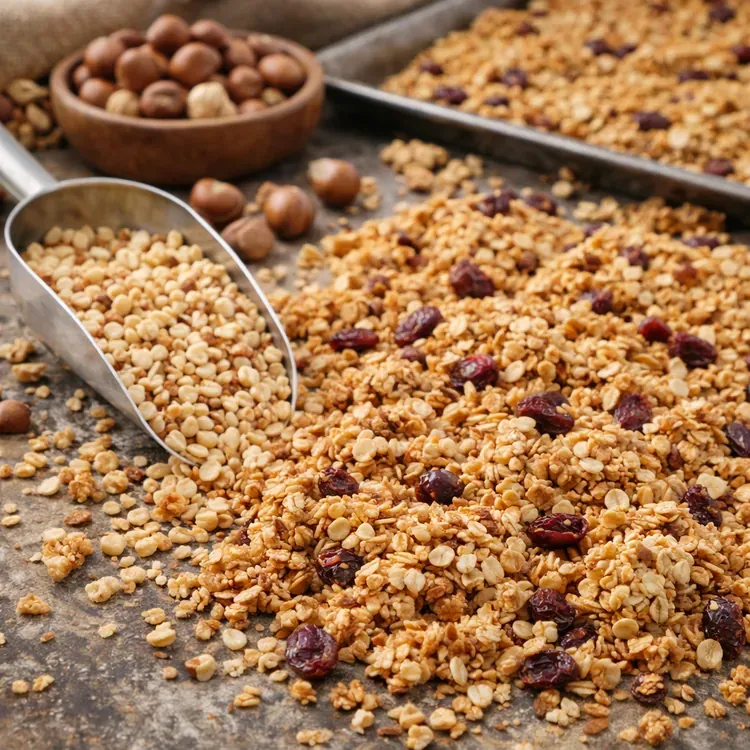
Hazelnut pieces bring a premium cue to granola: they add roasted aroma, natural sweetness, and a satisfying crunch that pairs well with oats, seeds, cocoa, dried fruit, and honey-style binders. In production, hazelnuts are used both as a blended inclusion (distributed through the mix) and as a visible top garnish for “premium” SKUs.

Granola manufacturers typically prioritize three procurement outcomes: consistent particle size (for even distribution and clean label appearance), low dust (to reduce fines at the bottom of the bag and improve handling), and shelf stability (minimizing rancidity and flavor drift over time). Getting these right reduces rework, improves pack consistency, and supports predictable consumer experience across batches.

Hazelnut is a tree nut allergen. Many granola plants run multiple allergens (nuts, dairy, gluten, soy). A clear allergen program—documentation, segregation procedures, and traceability—is commonly required for retail and co-manufacturing approvals.

Export-ready documentation Lot traceability Controlled cuts Oxygen-protective packing

Recommended formats

Typical starting points for pilots and scale-up. We align cut, roast and packaging to your granola process.

  • Roasted diced / chopped pieces (blend-ready, controlled size distribution)
  • Blanched pieces (lighter color targets and clean visual)
  • Sliced hazelnuts (premium appearance, topping lines)

Technical considerations

The most common variables that impact blending, packaging, and shelf-life stability.

  • Particle size distribution + dust limit for even mix and reduced “fines”
  • Oxidation protection via oxygen-barrier packaging and controlled headspace
  • Moisture alignment to protect crunch and reduce texture softening
  • Roast profile alignment to withstand bake/toast steps and flavor targets

Packaging approach

We can supply lined cartons, vacuum or MAP options and palletization suited to sea, road or air freight.

For granola inclusions, oxygen exposure is the main driver of flavor drift. High-barrier liners and sensible pack sizes help preserve aroma after opening and reduce rancidity risk across long production runs.

See bulk supply details →

How hazelnut pieces perform in granola lines

Granola is a mechanically demanding product: it is mixed, sometimes baked or toasted, cooled, conveyed, and then packed—often at high speeds. Hazelnut pieces need to survive handling without excessive breakage and still deliver crisp bite in the final pack.

1) Blend uniformity and segregation control

Differences in density and size between oats, seeds, dried fruit, and nuts can cause segregation during conveying and vibration. A controlled cut size helps keep hazelnuts evenly distributed, reducing “nut-heavy” and “nut-light” packs.

2) Dust and fines management

Fines accumulate at the bottom of retail packs and can also increase dust in packaging areas. Setting a dust limit and maintaining it across lots improves pack appearance, reduces product loss, and supports consistent consumer perception.

3) Bake compatibility and roast direction

If your granola is baked after nuts are added, the hazelnut roast level should anticipate additional heat exposure. Light to medium roast can be preferred where a second heat step occurs, while fully roasted pieces can be used when nuts are added post-bake.

4) Shelf stability in fat-containing inclusions

Nuts are fat-rich ingredients, so oxidation control is a key shelf-life lever. Packaging choice and storage temperature have a measurable impact on aroma retention, especially in warm climates or extended distribution.

Practical trial tip: Evaluate finished granola at both “typical” and “worst-case” distribution temperatures, and include open-pack handling time (how long an ingredient bag stays open on the line) in your stability checks.
Scale-up checklist for granola programs

When moving from development batches to regular production, teams typically lock targets for cut size, dust, roast, and packaging. This checklist helps align procurement, QA, and production.

AreaWhat to defineWhy it matters
Process step Added pre-bake, post-bake, or as topping Determines roast direction and breakage tolerance
Cut specification Target size range + tolerance band; dust limit Controls distribution, pack appearance, and fines
Roast profile Light / medium / classic roasted Stabilizes flavor across lots and heat steps
Moisture and texture Moisture target and crunch expectations Protects eating quality over shelf life
Oxidation management Oxygen-barrier packaging; storage temperature guidance Reduces rancidity risk and aroma loss
Documentation COA, traceability, allergen statement, destination requirements Supports audits and co-man approvals

Targets vary by recipe and packaging format. We align the program to your inclusion rate, process temperature, and intended shelf-life window, and provide lot documentation with each shipment.

Typical specification markers

Below is a practical checklist used by procurement and QA teams for hazelnut pieces intended for granola and nutrition mixes. We align each item to your destination market, customer requirements and processing level.

ParameterHow we align it
Cut size distributionDefined target range and tolerance band for consistent blending
Dust / fines controlManaged to reduce “bottom-of-bag” fines and improve handling
Roast levelMatched to your flavor profile and bake/toast step
MoistureControlled to support crunch and shelf stability
Defect sortingScreened and optically sorted where required
Micro profileAligned to customer specifications and destination requirements
AflatoxinManaged through risk-based sourcing and partner controls
Allergen documentationTree nut allergen statement and traceability support
PackagingVacuum / MAP / liners and export cartons as required

Final values depend on product form and customer requirements. We share lot documentation with each shipment.

FAQ

Which hazelnut format is most common for granola manufacturers?

Most granola manufacturers start with diced or chopped hazelnut pieces (often roasted) because they blend evenly with oats and seeds and deliver reliable crunch. Blanched pieces are used for lighter color targets, while sliced hazelnuts are popular for premium “visual” inclusions and topping lines.

How do you prevent rancidity and flavor drift in hazelnut pieces used in granola?

Shelf-life stability is primarily managed through oxidation control: selecting an appropriate roast level, maintaining low moisture targets, and using oxygen-barrier packaging (vacuum or MAP where required). Temperature management during storage and transport also helps preserve aroma.

Can you match a target particle size or cut?

Yes. We can supply calibrated kernels and controlled cuts (sliced, diced or chopped) and align tolerance bands to your process so the hazelnut distribution stays consistent across each batch and pack size.

Do you support long-term supply programs?

Yes. We structure annual and multi-shipment programs with consistent specifications, batch documentation and forecast-based planning.

Next step

Send your granola format (baked cluster, loose mix, topping), inclusion rate, target cut size range, roast direction, monthly volume, and destination. We will propose suitable hazelnut piece formats, packaging, and a shipment plan designed for uniform blending, low fines, and stable shelf life.

Review products