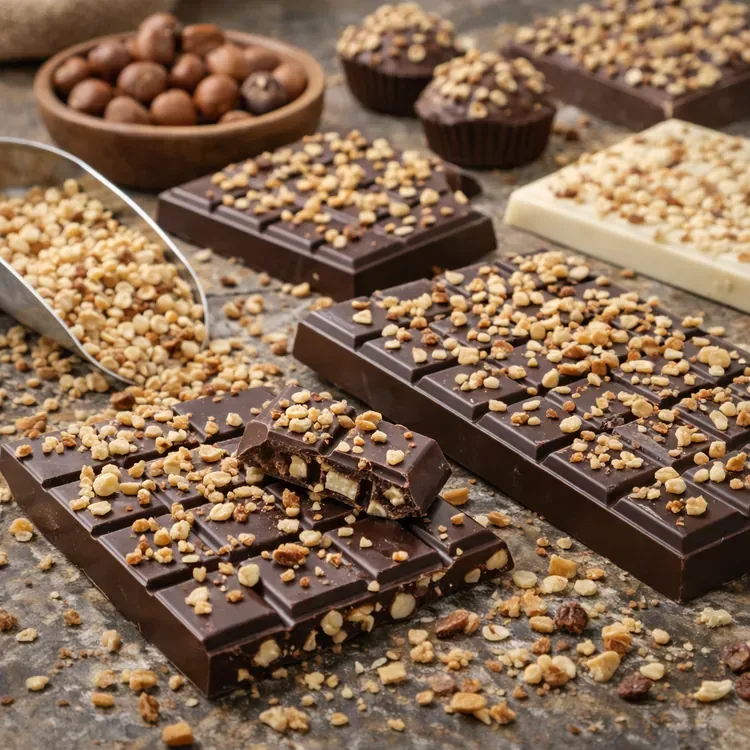
How hazelnut pieces behave in chocolate
Chocolate is sensitive to texture, fat balance, and visible defects. Hazelnut pieces can elevate a product—or create issues—depending on how size,
dust, and roast are aligned to your line. Below are the most practical performance points chocolate teams evaluate during trials.
1) Appearance and dosing
Uniform piece size improves visual consistency across bars and enrobed items. A tight size distribution reduces “sink/float” variability,
helps automate dosing, and prevents occasional oversized pieces from puncturing shells or interfering with demolding.
2) Dust control and finish quality
Excess fines can make chocolate look dull, create messy depositor behavior, and increase the risk of gritty mouthfeel.
Setting a dust limit (and maintaining it lot-to-lot) improves processing cleanliness and final sensory.
3) Flavor stability and oxidation management
Hazelnut aroma is at its best right after roasting and protected storage. Oxygen exposure and warm storage accelerate quality drift.
High-barrier packaging and temperature management are the main procurement levers to preserve “fresh roasted” notes.
4) Fat behavior in layered products
In layered systems (bars with fillings, centers, or wafers), fat movement can change bite and stability over time.
Selecting the right hazelnut format and aligning handling conditions helps reduce unwanted texture changes and quality complaints during shelf life.
Practical trial tip: Evaluate inclusions at your warm-season storage conditions and your longest intended shelf-life window.
A specification that performs under both is easier to scale and defend in premium programs.