Applications Library • Industrial

Hazelnut shell powder for abrasive media

A practical, procurement-ready overview of using hazelnut shell powder (screened grit) as a bio-based abrasive — including recommended grit ranges, performance-critical quality markers (dust, hardness consistency, foreign matter control), and packaging approaches for industrial supply.

Back to applications
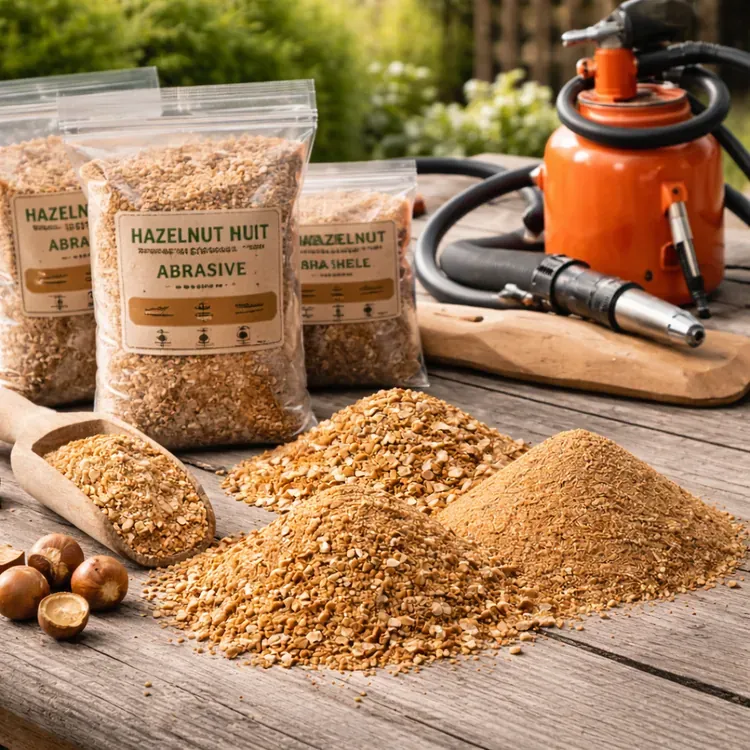
Hazelnut shell powder for abrasive media illustration

Where it fits

Hazelnut shells are a hard, lignocellulosic material that can be milled into granules and powders and then screened into defined grit bands. In abrasive applications, shell-based media are usually positioned as a soft-to-medium abrasive intended for cleaning, surface preparation, polishing, deburring, and gentle stripping where you want to reduce the risk of cutting into the base material.

The key procurement drivers for abrasive-grade shell powder are not “food” attributes like flavor or roast — they are particle size distribution, fines (dust) control, foreign matter limits, and repeatable flow and density for consistent metering through blasting or finishing equipment. Well-controlled lots help operators maintain stable performance (finish quality, cycle time, and dust management) and reduce unplanned shutdowns.

Typical use cases include:

  • Dry blasting for cleaning or stripping when a gentler media is desired
  • Vibratory / tumbling finishing as a carrier, polishing aid, or compound support (process-dependent)
  • Deburring and surface smoothing on sensitive parts and complex geometries
  • Multi-media blends where shell grit is blended to tune cut rate, finish, or dust behavior

Performance depends on your equipment (nozzle, cabinet dust extraction, wheel blast, vibratory bowl), substrate, and target finish. Most programs start with one or two grit bands and adjust after a controlled trial.

Screened grit bands Fines & dust control Lot traceability Export-ready documentation
Recommended formats

Typical starting points for pilots and scale-up. We align grit band, fines level and packaging to your equipment and finish target.

  • Screened shell grit (common mesh bands for abrasive use)
  • Fine shell powder for gentle finishing or blend formulations
  • Dedusted grade for installations with strict dust control requirements

If you share your process (blasting vs. vibratory), nozzle/wheel details, and target surface result, we can recommend a practical starting grit band.

Technical considerations

The variables that most often drive performance, consistency, and operator experience in abrasive applications.

  • Grit size distribution: narrow bands improve repeatability of cut rate and finish
  • Fines / dust: affects cabinet visibility, extraction load, and initial “dust burst” on start-up
  • Moisture: too high can cause clumping and unstable feeding; too low can increase airborne dust
  • Bulk density & flow: impacts metering, hopper discharge, and media consumption calculations
  • Foreign matter: stones/metal/wood fibers must be controlled to protect equipment and parts
  • Breakdown rate: media attrition influences dust generation and replenishment frequency
  • Surface compatibility: validate on your substrate and coating system to avoid unintended texture changes
  • Housekeeping & safety: align dust controls, PPE, and local requirements for particulate handling

Shell-based abrasives are often selected to be gentler than mineral abrasives. The right grit choice helps you balance cleaning speed with surface protection.

Packaging approach

Abrasive media logistics focus on keeping product dry, clean, and consistent while minimizing dust during handling.

  • 25 kg sacks (lined) for warehouse and cabinet replenishment
  • Big bags (FIBC) for plant-scale consumption and bulk programs
  • Moisture protection to reduce clumping and preserve sieve integrity in transit
  • Labeling: lot ID, grit band, net weight, and handling notes for traceability

For dust-sensitive sites, dedusted grades and careful pallet wrapping reduce handling losses and improve operator experience.

See bulk supply details →

Typical specification markers

Below is a practical checklist used by procurement and QA teams when qualifying abrasive-grade hazelnut shell powder. We align each item to your process sensitivity (dust, metering, finish consistency) and destination market requirements.

ParameterHow we align it
Grit / mesh band Defined sieve fraction with agreed tolerance; screening approach aligned to your equipment
Fines content (dust) Dedusting / secondary screening to limit excessive fines and reduce start-up dust spikes
Moisture Controlled to support stable flow and minimize clumping during storage and transport
Bulk density Measured to support consumption planning and consistent metering/feeding behavior
Foreign matter Sorting and controls to limit stones, metal fragments, and oversize particles
Oversize/undersize limits Acceptance thresholds defined to protect nozzle flow and maintain finish consistency
Ash/mineral content (optional) Specified when low mineral content is important for wear reduction or downstream cleanliness
Odor / color consistency (optional) Aligned where visual or residue considerations matter (process-dependent)
Packaging Lined sacks or FIBC; palletized and sealed to reduce moisture pickup and contamination risk
Documentation COA, packing list, origin documents, and lot identification per shipment

Final values depend on your application (blasting vs. finishing), dust extraction capacity, and the surface result you’re targeting. For many programs, the most “make-or-break” markers are grit band + fines limit + foreign matter control.

How to choose the right grit (fast qualification workflow)

A short, structured trial plan helps you select a grit band quickly and lock a repeatable specification for ongoing supply. Below is a practical workflow used by many procurement and operations teams.

  1. Define the goal: cleaning/stripping vs. polishing/deburring; target finish and allowable surface change.
  2. Confirm equipment constraints: nozzle size, cabinet extraction, wheel systems, hopper feeding, and media recovery method.
  3. Select an initial band: start with one medium band and one finer band if you need better surface finish control.
  4. Set acceptance checks: verify mesh band, fines level, moisture/flow, and foreign matter before loading equipment.
  5. Run a controlled trial: record cycle time, finish quality, dust behavior, and media breakdown rate.
  6. Lock the spec: finalize mesh band + fines threshold + packaging format and move to scheduled lots with documentation.

Share your substrate (metal/plastic/composites), coating type (if any), and target result, and we can propose a practical starting band and trial checklist.

FAQ

Which format is most common for hazelnut shell powder used as abrasive media?

Most customers start with screened hazelnut shell grit (a defined mesh band) rather than an unscreened powder. Screened media provides more predictable feeding, cut rate, and finish. Fine powder grades are usually reserved for gentler finishing or blends.

Can you match a target grit size and control fines?

Yes. We can supply calibrated size fractions and manage fines through screening and dedusting. If you share your equipment type and dust constraints, we can recommend a starting band and align tolerance to your process.

What should we provide to request an accurate quotation?

The fastest way is to share: (1) application type (blasting/tumbling/polishing), (2) target grit/mesh (or nozzle size and finish goal), (3) monthly/annual quantity, (4) destination country, and (5) packaging preference (25 kg sacks or big bags).

How should hazelnut shell abrasive be packed for export and safe handling?

We typically ship in lined sacks or FIBC big bags, palletized for sea/road/air freight. Packaging is selected to reduce moisture pickup, maintain sieve integrity, and minimize dust release during handling.

Do you support long-term supply programs?

Yes. We structure annual and multi-shipment programs with consistent specifications, lot traceability, and forecast-based planning to keep media performance stable across replenishment cycles.

Next step

Send your application details (equipment type, target grit/mesh or nozzle size, quantity and destination). We will propose suitable grit bands, packaging, and a shipment plan for trials or steady supply.

Review products