Where it fits
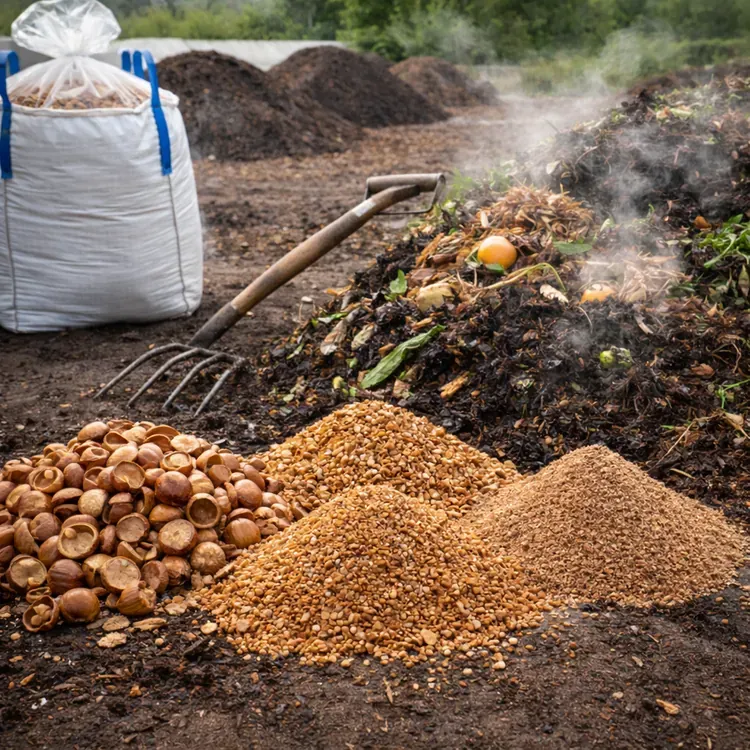
Hazelnut shells are a high-value agricultural by-product used in composting systems as a structural bulking agent and carbon-rich blend component. Their rigid, irregular particles help keep piles porous—supporting oxygen transfer, reducing compaction and improving drainage. These fundamentals are what most operators mean by “acceleration”: fewer anaerobic pockets, cleaner temperature curves and more consistent throughput.
Shells are especially useful when processing wet, high-nitrogen feedstocks (food waste, manure, digestate solids, sludge blends) that tend to mat or slump. Adding a screened shell fraction can improve pile structure quickly, reduce odors associated with low oxygen, and make turning or forced aeration more effective.
Shells are naturally lignocellulosic (more resistant than soft green waste). In practice, the best results come from selecting the right particle size and blending for aeration, then using process controls (moisture, oxygen, turning) to drive rapid biological activity.
Screened shell fractions
Low contaminant targets
Bulk logistics
Lot traceability