Where it fits
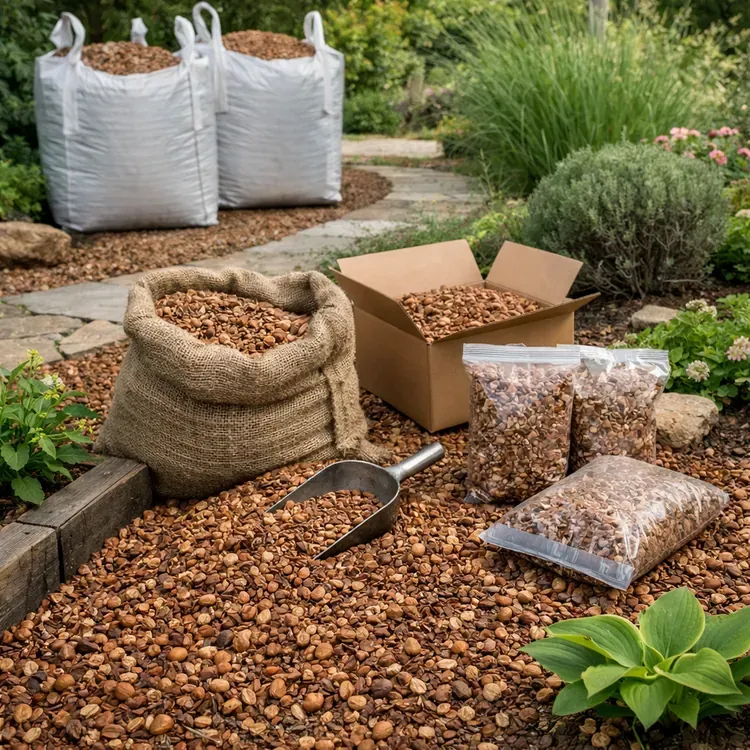
Hazelnut shells are a hard, lignin-rich by-product from hazelnut processing. In landscaping, they are used as a natural mulch alternative
where customers want a distinctive look, slower breakdown versus soft wood mulches, and a surface that drains well while still reducing evaporation.
Unlike food applications, success here is defined by coverage and uniformity, cleanliness (low foreign matter),
low dust, and consistent grading across shipments.
We support landscape suppliers, garden brands, and bulk distributors by matching shell grade and packaging to the destination channel:
larger grades for longer-lasting decorative mulch, mid grades for broad retail appeal, and controlled grit grades for stable spreading and reduced tracking.
Many buyers also request limits on residual kernel content to reduce odor/pest attraction and to keep the product visually consistent.
Graded shell sizes
Low foreign matter
Fines control
Bulk & retail options
Export-ready documentation
Performance notes for landscaping
Hazelnut shell mulch behaves differently than wood chips. It tends to be denser, drains quickly, and stays in place better in many settings,
but grade selection matters to reduce tracking and keep the surface tidy.
- Weed suppression: most effective when applied as a continuous layer with minimal gaps.
- Drainage: shells typically allow rapid infiltration, which can be beneficial around plants sensitive to waterlogging.
- Longevity: shells are relatively durable; whole or larger crushed grades often last longer before topping up is needed.
- Tracking & scatter: finer grades can track more; mid-to-larger grades often look cleaner on paths and around borders.
- Soil interface: as with many carbon-rich mulches, keeping the mulch layer on top (not mixed into soil) helps avoid short-term nutrient competition.