Applications Library • Nutrition

Hazelnut skins as natural antioxidant extracts

A practical, procurement-ready guide to using hazelnut skins (pellicle) as an extraction input for natural antioxidant-style ingredients—covering the right raw formats, extraction pathways, standardization markers, quality risks, and packaging choices that protect repeatability across shipments.

Back to applications
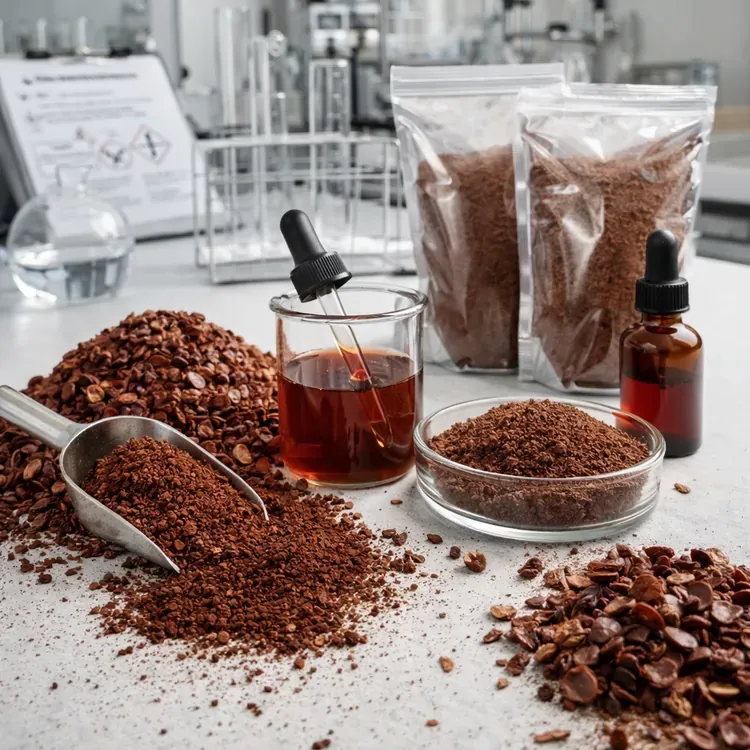
Hazelnut skins as natural antioxidant extracts illustration

Where it fits

Hazelnut skins are the thin brown layer (pellicle) that loosens during roasting and is separated during blanching or skin removal. In addition to contributing roasted notes in food systems, skins are commonly evaluated as an extraction input for botanical-style ingredients because they contain naturally occurring plant compounds that can be measured and standardized.

This application is typically relevant to programs working on natural ingredient positioning, process-consistent inputs, and traceable upcycling streams. The core procurement drivers are not only price and availability—but also repeatability: extraction performance depends heavily on how skins are cleaned, milled, protected from moisture pickup, and documented lot-by-lot.

We support manufacturers by aligning the hazelnut skin format to your process: cleaned skins for low-dust handling, milled powder for efficient extraction and batching accuracy, and controlled coarse mills when filtration or dust control is the priority.

Traceable lots Controlled milling Export-ready documentation Program supply

What “antioxidant extract” means in procurement terms

In practical sourcing, “antioxidant extract” projects succeed when the raw input is standardized and the measurement approach is agreed. Teams typically define:

  • Input format: skins vs powder vs coarse mill.
  • Extraction compatibility: how the input behaves under your solvent system, temperature and filtration setup.
  • Standardization approach: agreed markers (assay method + acceptance bands) to keep performance consistent.
  • Safety/compliance: micro, contaminants, allergen and traceability expectations aligned to destination markets.

Note: formulation and regulatory claims (including “antioxidant” claims) depend on jurisdiction and finished product context. Most customers treat this page as ingredient sourcing guidance, not labeling advice.
Recommended formats

Typical starting points for pilots and scale-up. Extraction inputs often benefit from controlled particle size and strong foreign matter control.

  • Cleaned hazelnut skins — lower dust; useful when you mill in-house and want tighter internal control.
  • Hazelnut skin powder (milled) — improves extraction efficiency; enables precise batching and repeatable throughput.
  • Coarse milled skins — supports easier filtration and reduced dusting vs very fine powders.
  • Hazelnut meal / flour — used when programs explore broader hazelnut fractions; may change flavor and lipid profile vs skins alone.

If your goal is extraction repeatability, a skin powder with defined particle distribution is usually the fastest route to consistent runs.

Technical considerations

The most common variables that impact extraction efficiency, standardization and shelf stability of the input material.

  • Particle size distribution — drives extraction yield and filtration behavior; overs can reduce efficiency, fines can increase dusting and clogging.
  • Moisture pickup — affects flow, caking and micro risk; moisture control is a frequent root cause of “process drift.”
  • Foreign matter — light materials can trap debris; define screening/cleaning expectations and acceptance criteria.
  • Oxidation protection — skins can contain residual lipids; oxygen exposure can shift aroma; barrier packaging matters for long storage windows.
  • Traceability & COA flow — extraction programs benefit from consistent lot documentation and change control.
  • Allergen management — hazelnut is a tree nut allergen; align inbound labeling, segregation and cleaning expectations.

Practical tip: if extraction times suddenly increase, first check moisture (caking/poor wetting) and particle distribution (more fines than normal can change permeability).

Packaging approach

For extraction inputs, packaging must protect against moisture pickup, minimize oxygen ingress and fit your receiving workflow. We can supply lined cartons and industrial packs with palletization suited to sea, road or air freight.

Packaging priorities for skin powders

  • Moisture barrier: prevents caking and preserves flow for accurate batching.
  • Oxygen barrier: supports aroma stability and reduces oxidation-driven drift during long storage windows.
  • Dust control: pack format and liner choice can reduce dusting during opening and tipping.
  • Handling integrity: protects particle distribution from compaction and crushing.

For warm routes or long lead times, temperature-aware logistics and reduced headspace can further improve stability.

See bulk supply details →

Extraction pathways and how they change the input requirement

Different extraction setups demand different input behavior. Many teams align procurement specifications to how the ingredient must run in the plant—especially around wetting, permeability, filtration and standardization.

Common process routes (high level)

  • Water-based extraction: often prioritizes clean input and predictable wetting; moisture control and micro profile are especially important.
  • Hydroalcoholic extraction: can change solubility and extraction rate; input consistency matters for repeatable throughput and filtration.
  • Concentrate + dry-down: if producing a dry extract, define expectations for carriers (if used) and residual processing markers as required.

We can support supply of the raw input formats (skins/powders) and align documentation to your quality system. If you are sourcing a finished extract, share your target standardization approach so the upstream input can be aligned.

Standardization: agree the “marker plan” early

“Antioxidant” is not a single compound. Programs typically choose a practical marker approach that matches the end use and regulatory context. A procurement-friendly approach is to define:

  • Analytical method: specify the assay method and lab alignment approach used for acceptance.
  • Acceptance bands: define target range and tolerance; avoid open-ended “as high as possible” targets.
  • Change control: define how a shift in marker results triggers review (milling, blending, seasonality, or storage).

Stability planning

  • Storage conditions: align temperature and humidity expectations to preserve flow and reduce drift.
  • Packaging discipline: oxygen/moisture barrier + headspace control for long storage windows.
  • Sampling approach: define how you sample powders (top/middle/bottom) to avoid segregation bias.

Typical specification markers

Below is a practical checklist used by procurement and QA teams for hazelnut skin inputs used in natural antioxidant extract programs. We align each item to your destination market, customer requirements and processing level.

ParameterHow we align it
FormatCleaned skins, coarse mill, or milled powder aligned to extraction and filtration strategy.
Particle sizeDefined distribution target; align overs/fines to extraction efficiency, permeability and dust control needs.
MoistureControlled to a target range to protect flow, prevent caking and support storage stability.
Foreign matterScreening/cleaning approach aligned to risk assessment and application sensitivity; acceptance criteria documented.
Micro profileAligned to customer specifications and destination requirements; panel and frequency agreed.
Contaminants (as required)Heavy metals / pesticide residue expectations aligned to market and customer requirements where applicable.
Analytical markers (agreed)Marker approach aligned to your program (assay method + acceptance bands); change control defined for drift.
Oxidation protectionOxygen-barrier packaging and headspace control to reduce aroma drift during longer storage windows.
Aflatoxin riskManaged through risk-based sourcing and partner controls; testing expectations aligned where required.
Allergen managementHazelnut allergen controls aligned to your receiving SOPs: labeling, segregation and cleaning expectations.
PackagingLiners and export cartons (or industrial packs) aligned to handling needs and dust-control priorities.
TraceabilityLot coding + documentation flow (COA, shipment docs) aligned to your QA system and recall readiness.

Final values depend on product form and customer requirements. We share lot documentation with each shipment and can standardize a repeat pack for long-term programs.

FAQ

What are hazelnut skins and why are they used for natural antioxidant extracts?

Hazelnut skins are the thin pellicle removed during roasting/blanching. They contain naturally occurring plant compounds that can be measured and standardized, making skins a practical extraction input for botanical-style ingredients—especially when programs require traceability, repeatable raw material behavior and consistent quality checks.

Which hazelnut format is most common for hazelnut skins as natural antioxidant extracts?

Most extraction programs start with cleaned hazelnut skins supplied as a controlled powder (or a consistent coarse mill). Powder supports efficient extraction and accurate batching, while coarse mills can be preferred when filtration and dust control are the main constraints.

Can you match a target particle size or cut?

Yes. We can align particle size distribution targets for powder applications to help you achieve predictable extraction throughput and filtration behavior. For dust-sensitive environments, we can target coarser distributions—while controlling overs that could reduce extraction efficiency.

How do teams standardize performance over time?

Standardization typically combines physical controls (particle distribution, moisture, foreign matter limits) with an agreed analytical marker plan (assay method + acceptance bands). Programs often lock a reference and set change control rules so shifts in results trigger review before they become a production issue.

Do you support long-term supply programs?

Yes. We structure annual and multi-shipment programs with consistent specifications, batch documentation and forecast-based planning. For extraction inputs, programs often lock a milling target and packaging configuration so receiving, batching and processing remain consistent across shipments.

Next step

Send your target use case (extract input vs functional ingredient blend), annual volume, destination and any existing specification. We will propose suitable hazelnut skin formats (skins, coarse mill or powder), packaging options, and a documentation plan aligned to your quality system and processing needs.

Review products

If you already have an analytical marker plan or a preferred lab method, include it—this helps align the input specification faster and reduces iteration.