Applications Library • Confectionery

Hazelnut skins for cocoa extender blends

A procurement-ready guide to using hazelnut skins (pellicle) in cocoa extender blends—covering how skins are prepared, what to specify for texture and flavor consistency, and how packaging and documentation protect performance across shipments.

Back to applications
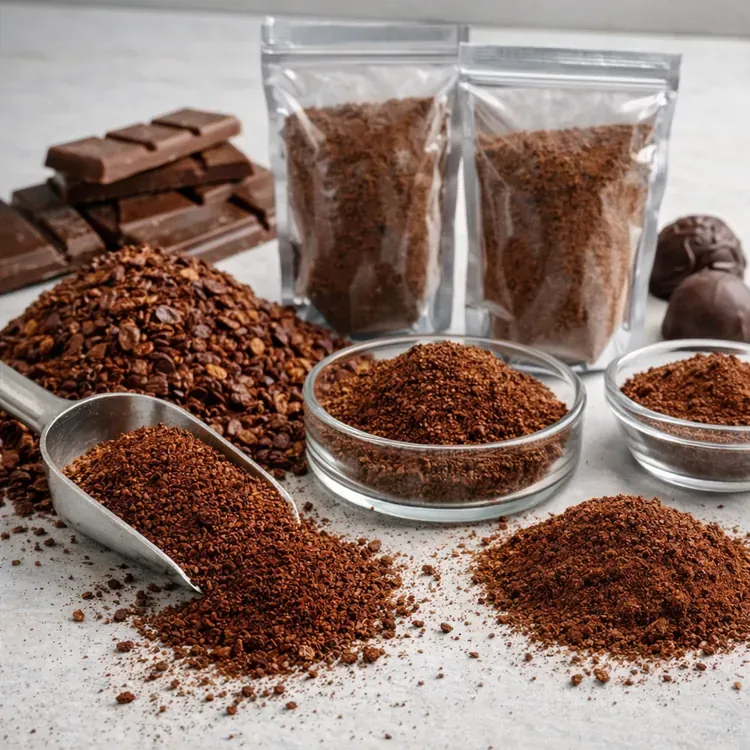
Hazelnut skins for cocoa extender blends illustration

Where it fits

Hazelnut skins (also called the pellicle) are the thin brown layer that loosens during roasting and is removed during blanching or skin separation. When cleaned and milled, skins can deliver dark color and roasted, cocoa-adjacent notes that are useful in cocoa extender blends for confectionery and bakery systems.

These blends are typically used to support a desired cocoa-like profile in applications where formulators are balancing cost, supply flexibility, flavor direction and label positioning. The goal is not to “replace cocoa” one-to-one, but to extend roast depth and color, and to build a consistent background note that performs well in chocolate-style fillings, wafers, coatings, biscuits and compound-style systems.

For procurement and QA teams, success depends on standardization: skins are a byproduct stream, so a program must define the handling model—cleaning, milling targets, moisture control, oxidation protection and traceability—so your blend behaves the same every shipment.

Traceable lots Controlled milling targets Foreign matter focus Export-ready documentation

What skins contribute (practically)

In extender blends, skins can be used to tune:

  • Color — darker appearance and roast impression in dry mixes and fat-based systems.
  • Roast depth — toasted/nutty notes that support cocoa perception.
  • Texture — depending on particle size, skins can add body or create grittiness (so milling control is critical).
  • Label narrative — upcycled/byproduct utilization can support sustainability messaging where appropriate.

Recommended formats

Typical starting points for pilots and scale-up. Cocoa extender blends usually perform best when skins are supplied in a controlled, cleaned and milled format designed for predictable dispersion.

  • Hazelnut skin powder (milled) — the common workhorse format; define particle size distribution and cleaning expectations.
  • Coarser milled skins — for applications where texture is acceptable and dusting needs to be reduced.
  • Roasted hazelnut flour/meal — sometimes combined with skin powder to add nut body alongside color.
  • Roasted hazelnut paste — used when fat-driven mouthfeel is desired in compound-style systems (often alongside skin powder).

Many projects use a blend approach: skin powder for color/roast depth plus another hazelnut ingredient (meal or paste) for body and rounding of flavor.

Technical considerations

The most common variables that impact texture, flavor consistency and finished product stability.

  • Foreign matter control — skins are light and can pick up debris; define screening/cleaning and acceptance criteria.
  • Particle size control — too coarse can cause grittiness; too fine can dust, segregate or over-intensify roast perception.
  • Roast intensity — roast direction must be standardized; define a sensory reference and tolerances.
  • Moisture management — moisture affects flow, caking and micro risk; define target range and handling requirements.
  • Oxidation risk — skins still carry lipids; oxygen exposure can drive flavor drift; packaging barrier matters.
  • Allergen control — hazelnut is a tree nut allergen; align inbound labeling, segregation and cleaning expectations.
  • Dust control — fine powders can create dusting; align packaging, handling and optional anti-dust strategies.
  • COA & traceability — consistent lot codes and documentation for complaint handling and repeatability.

Practical tip: when texture complaints appear, the root cause is often oversize particles (grittiness) or excess fines (dust/segregation). Tightening particle distribution is usually the fastest fix.

Packaging approach

Skins are sensitive to moisture pickup and can be vulnerable to oxidation-driven flavor drift. Packaging should protect the powder and also fit your receiving and blending operations.

Packaging priorities for skin powders

  • Moisture barrier: helps prevent caking and flow issues during storage.
  • Oxygen barrier: supports flavor stability, especially for longer storage windows.
  • Dust control: pack format and liner choice can reduce dusting during opening and tipping.
  • Handling integrity: protect from crushing/compaction that can change flow and dispersion behavior.

For longer lead times or warm routes, temperature-aware logistics and tighter headspace control can further protect aroma stability.

See bulk supply details →

How teams build a repeatable cocoa extender spec with skins

Because skins originate from roasting/blanching streams, the best results come from turning “skins” into a controlled ingredient. Below is a practical structure used by R&D, procurement and QA teams to prevent batch drift and protect texture in finished products.

1) Define the target role in your formula

  • Color contribution: how dark should the blend appear in the finished matrix?
  • Roast direction: nutty/toasted vs deeper, more bitter roast notes.
  • Texture tolerance: is the system refined (ganache, coating) or rustic (biscuit, wafer, filling)?
  • Process conditions: high shear refining vs low shear blending changes your particle size needs.

2) Translate into measurable parameters

The highest-impact specification items are usually cleaning, particle distribution, moisture and sensory reference.

  • Particle size distribution: define target range and acceptable overs/fines limits.
  • Cleaning / foreign matter: set screening expectations and acceptance criteria.
  • Moisture target: align to storage window and blending behavior.
  • Sensory reference: define roast direction and “acceptable bitterness” tolerance for repeatability.

3) Standardize program supply and change control

  • Program lots: align shipments to repeatable milling targets and packaging.
  • Documentation pack: COA + traceability + agreed quality checks per shipment.
  • Pilot approval: lock a reference sample (or reference profile) before scale-up orders.
  • Change control: define how any roast or milling changes are communicated and validated.

Typical specification markers

Below is a practical checklist used by procurement and QA teams for hazelnut skin powder and related cocoa extender applications. We align each item to your destination market, customer requirements and processing level.

ParameterHow we align it
Format Cleaned skins supplied as milled powder (or coarser milled); aligned to your blending/refining process.
Particle size Defined distribution target; align overs and fines limits to your texture tolerance and dusting risk.
Roast reference Aligned to target flavor direction (nutty/toasted vs deeper roast) with repeatable reference points.
Moisture Controlled to target range to protect flow, prevent caking and support storage stability.
Foreign matter / cleaning Screening and cleaning expectations aligned to your risk assessment and application sensitivity.
Micro profile Aligned to customer specifications and destination requirements; define panel and frequency.
Aflatoxin risk Managed through risk-based sourcing and partner controls; align testing expectations where required.
Oxidation protection Oxygen-barrier packaging and headspace control for aroma stability during longer storage windows.
Packaging Liners and export cartons (or larger industrial packs) aligned to handling and dust-control needs.
Traceability Lot codes and documentation aligned to your QA system and recall-readiness requirements.

Final values depend on your process and customer requirements. We share lot documentation with each shipment and can standardize a repeat pack for repeat orders.

FAQ

What are hazelnut skins and why are they used in cocoa extender blends?

Hazelnut skins are the thin brown pellicle removed during roasting and blanching. When properly cleaned and milled, they can contribute dark color and roasted, cocoa-adjacent notes in confectionery and bakery blends. In extender blends, they help tune roast perception and color while supporting cost and supply flexibility—provided the ingredient is standardized for particle size, moisture and sensory direction.

Which hazelnut format is most common for hazelnut skins for cocoa extender blends?

The most common format is a cleaned, milled hazelnut skin powder with defined particle size distribution. Some customers complement this with roasted hazelnut flour/meal or paste to add mouthfeel and roundness, while using skins primarily for color and roast depth.

Can you match a target particle size or cut?

Yes. For powder applications, we can align particle size distribution targets so your blend disperses predictably and meets texture expectations. For coarser requirements, we can target larger particles to reduce dusting—while controlling oversize that could cause grittiness.

Do you support long-term supply programs?

Yes. We structure annual and multi-shipment programs with consistent specifications, batch documentation and forecast-based planning. For skin powder programs, teams often lock a milling target, a roast reference, and a repeat packaging configuration to reduce variability.

What should we include when requesting a quote or specification?

Share your end application (coating, filling, biscuit, compound-style system), your texture tolerance (refined vs rustic), your target roast direction, and your preferred pack size. If you have limits for foreign matter, particle size range, or dusting behavior, include those so the spec can be aligned from the start.

Next step

Send your target application, annual volume, destination and any existing specification. We will propose a suitable hazelnut skin powder format (including milling target and packaging), plus a documentation and shipment plan designed for repeatable blending performance.

Review products

If you can share a benchmark cocoa blend or a target color/roast direction (light cocoa vs deep cocoa), we can align the roast reference and milling target faster.