Applications Library • Retail

Hazelnut spreads for export

A procurement-ready guide for building export programs for hazelnut spreads — including the ingredient building blocks (paste, kernels, cocoa), texture and stability controls for long distribution chains, packaging formats, labeling and documentation, and the QA markers used to keep retail quality consistent.

Back to applications
Hazelnut spreads for export illustration

Where it fits

Hazelnut spreads sit at the intersection of confectionery and retail: they must taste fresh and indulgent, remain smooth and spreadable, and stay stable through shipping, warehousing, and shelf life. In export programs, the main drivers are repeatable flavor, texture stability, and compliance-ready documentation for the destination market.

Most commercial spreads are built around hazelnut paste (from roasted kernels) supported by sugar, cocoa (for chocolate variants), and fats/emulsifiers that keep the spread stable and glossy. Your choice of hazelnut input matters: roast direction sets the aroma, blanching supports lighter color targets, and paste fineness influences mouthfeel and perceived premium quality.

We support manufacturers and brand owners by aligning the hazelnut format to your product and route-to-market: paste for consistent smooth texture, roasted kernels for in-house grinding, and meal/flour for cost or viscosity tuning. Procurement conversations usually focus on paste fineness, roast profile, allergen control, oxidation protection, and export packaging performance.

Export-ready documentation Lot traceability Private label support Retail & foodservice formats
Recommended formats

Typical starting points for pilots and scale-up. Export programs usually prioritize consistency: roast direction and paste fineness are the most important levers.

  • Hazelnut paste / puree (core input for smooth spreads; consistent flavor)
  • Blanched roasted kernels (for light color targets and clean taste)
  • Roasted kernels (for stronger nut aroma; for in-house grinding)
  • Hazelnut meal / flour (for viscosity and cost tuning; affects texture)

Technical considerations

The most common variables that affect taste consistency, texture, and stability through export distribution.

  • Paste fineness and particle distribution for smooth mouthfeel
  • Oil separation and texture drift risk through temperature cycling
  • Roast profile alignment with target flavor and cocoa/dairy notes
  • Oxidation protection to preserve fresh aroma
  • Allergen control and labeling/claim consistency

Packaging approach

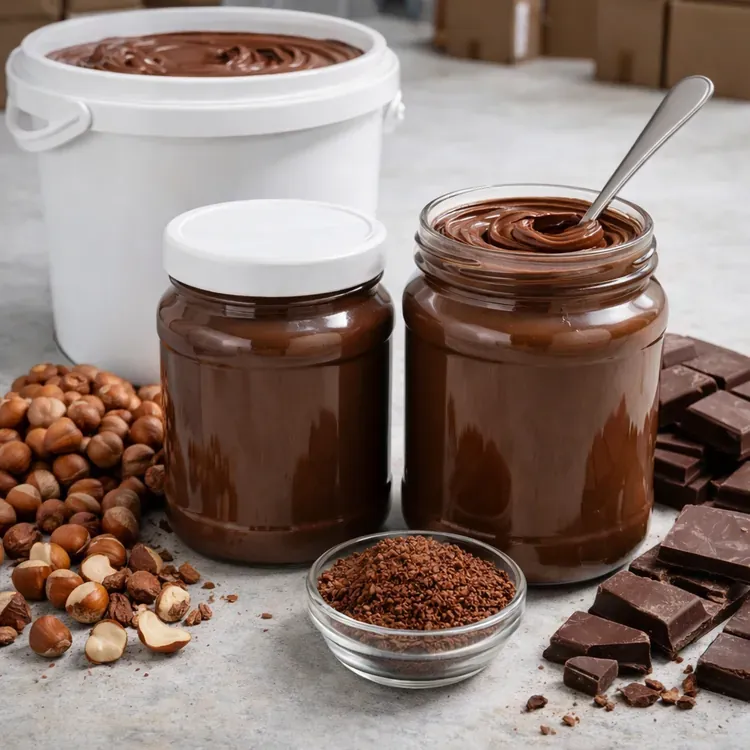
For export, packaging must protect the product and the label. Programs typically choose glass or PET jars for retail, and pails/drums for foodservice or industrial users.

Managing headspace, closures, and temperature exposure helps reduce separation and whitening issues on shelf.

See retail & private label →

Building blocks of a stable hazelnut spread

Export-friendly spreads are designed for repeatability. That means selecting raw materials that behave consistently, then controlling the factors that drive texture drift. From a procurement perspective, you can think of a spread as three functional layers: flavor base, structure, and stability.

Component Role in the product Procurement focus
Hazelnut paste (roasted) Primary nut flavor, aroma, and richness Roast direction, blanching (if needed), fineness, lot consistency
Sugar & dry solids Sweetness, body, and overall texture Particle size compatibility to avoid grittiness
Cocoa (for chocolate variants) Chocolate character and color Flavor balance with roast; cocoa quality consistency
Fats & emulsifiers Spreadability and stability against separation Consistency through temperature cycling; label and allergen considerations
Milk solids (optional) Creamy profile and softer flavor edges Allergen labeling; shelf-life expectations in target markets

If you have a benchmark product, aligning roast direction and paste fineness first typically delivers the biggest sensory match.

Texture & stability through export distribution

Hazelnut spreads can look and feel different depending on how they travel. Long export routes may include temperature swings, extended warehousing, and repeated handling. The most common “customer complaints” in retail programs usually fall into four categories:

  • Oil separation (oil layer forming on top)
  • Whitening / bloom-like appearance (visual change, often related to fat crystallization and temperature cycling)
  • Grittiness (insufficient fineness or incompatible particle sizes)
  • Flavor flattening (oxidation, aroma loss, or roast mismatch over time)

Mitigation is usually a combination of paste spec (fineness and roast), formulation choices (stabilization/emulsifier approach), and packaging discipline (tight closures, appropriate headspace, and avoiding heat exposure in logistics). Procurement teams often specify both incoming hazelnut paste parameters and distribution expectations together, because stability is a system-level outcome.

Smoothness & fineness

Premium spreads are defined by mouthfeel. Fineness and particle distribution help reduce grittiness and improve “clean melt” perception.

  • Define paste fineness / particle targets
  • Align dry solids size to avoid grit
  • Set limits for overs and coarse particles

Separation control

Separation risk increases with temperature cycling. Stability is supported by the right fat system and consistent paste behavior.

  • Stable roast and paste behavior lot-to-lot
  • Packaging and storage recommendations
  • Plan distribution to reduce warm exposure

Aroma protection

Hazelnut aroma is sensitive to oxygen and heat. Protecting “fresh roasted” notes is critical for export shelf life.

  • Oxidation control from ingredient to jar
  • Sealed packaging and correct closures
  • Temperature stability through logistics

Typical specification markers

Below is a practical checklist used by procurement and QA teams for export programs. We align each item to your destination market, customer requirements, and your spread’s formulation direction. For spreads, additional emphasis is often placed on paste fineness and oxidation control.

ParameterHow we align it
Roast / flavor directionAligned to benchmark profile; documented roast targets where applicable
Paste fineness (if paste)Agreed fineness and distribution; limits for coarse particles
MoistureControlled to target range to protect stability and reduce texture drift
Defect sortingScreened and optically sorted where required
Micro profileAligned to customer specifications and destination requirements
AflatoxinManaged through risk-based sourcing and partner controls
Allergen & labeling supportDocumentation for allergens; ingredient declarations and claims support
PackagingExport-ready cases; palletization; liners and protection as required
TraceabilityLot coding, COA linkage, and documentation per shipment

Final values depend on product type and customer requirements. We share lot documentation with each shipment and can align with your QA templates.

FAQ

Which hazelnut format is most common for hazelnut spreads for export?

Most export programs use hazelnut paste (from roasted and often blanched kernels) as the core ingredient, because it delivers consistent flavor and smooth texture. Whole kernels are used when the factory roasts and grinds in-house. Some recipes also use hazelnut meal/flour for cost or texture tuning.

What are the most common technical risks in hazelnut spreads during export?

The most common risks are oil separation, fat bloom/whitening, texture drift from temperature cycling, and aroma loss from oxidation. These are managed through correct hazelnut roast profile, particle fineness, stabilizer/emulsifier selection, and packaging/temperature discipline through distribution.

Can you match a target taste and texture for a private label spread?

Yes. We can align the hazelnut input (roast direction, paste fineness, blanching) to match your benchmark. If you share a reference product or sensory target, we can propose the suitable hazelnut format and specification to keep the profile stable across lots.

Do you support long-term export supply programs?

Yes. We structure annual and multi-shipment programs with consistent specifications, batch documentation, and forecast-based planning. This supports stable flavor and repeatable quality for retail distribution.

Next step

Send your target spread type (classic hazelnut vs chocolate-hazelnut), benchmark product (if available), desired hazelnut intensity, packaging format (retail jar size or foodservice), annual volume, and destination market. We will propose the suitable hazelnut formats (paste/kernels), specification markers, packaging and pallet plan, and an export-ready documentation flow for your program.

Review products