Applications Library • Beverages

Hazelnut syrup and flavor carriers

A practical, procurement-ready guide to building stable hazelnut syrup systems—covering which hazelnut formats work best (oil, paste, powders and inclusions), how flavor is carried through processing, and what to specify so your product pours, pumps and tastes consistent over shelf life.

Back to applications
Hazelnut syrup and flavor carriers illustration

Where it fits

Hazelnut syrups and flavor carriers are used across coffee syrups, milk-based beverages, dessert toppings, ice cream variegates and concentrated beverage bases. The primary goal is to deliver a recognizable hazelnut note that stays stable during storage and performs consistently when mixed into hot or cold systems.

Hazelnuts are valued for their naturally sweet, roasted aroma and clean fat profile. In syrup applications, however, the engineering challenge is different from solid foods: hazelnut character often comes from fat-soluble aroma compounds, while syrups are typically water-based. That means the “carrier” matters. Your chosen hazelnut format—oil, paste, powder or inclusion—determines whether the syrup is clear or creamy, how it behaves under shear and temperature, and how reliably it holds flavor over time.

We support manufacturers by aligning the hazelnut format and processing level to your target system: hazelnut oil for efficient aroma delivery, paste for authentic nut body, blanched components for lighter color profiles, and controlled cuts when a “real nut” visual cue is desired in toppings or mix-ins.

Export-ready documentation Lot traceability Program supply Bulk & retail options

Clear vs creamy: choose the right end state

Start by deciding whether your product should be a clear syrup or an opaque / creamy carrier. This decision drives format selection:

  • Clear syrups: typically favor hazelnut oil (or a compatible flavor system) to keep appearance clean.
  • Opaque / creamy syrups: commonly use hazelnut paste for body, mouthfeel and authentic nut character.
  • Hybrid systems: use oil for top-note aroma and a small amount of paste for depth and “real nut” perception.
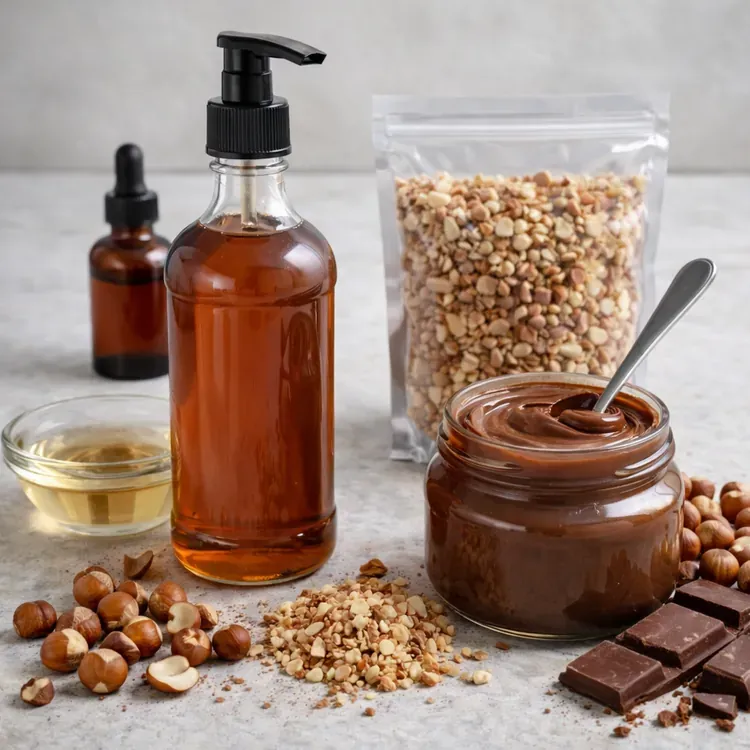
Recommended formats

Typical starting points for pilots and scale-up. We can align roast reference, carrier format and packaging to match your viscosity, clarity and shelf-life targets.

  • Hazelnut oil — efficient aroma carrier for syrups; supports clean pour behavior and rapid flavor release.
  • Hazelnut paste / puree — adds body and authentic nut depth; best for creamy/opaque systems.
  • Roasted kernels — for in-house extraction or infusion where you control intensity and profile.
  • Blanched kernels — supports lighter color targets and softer nut notes in dairy-style systems.
  • Controlled cuts — for toppings or beverage mix-ins; define cut size and maximum fines to reduce sediment.

If you are unsure where to start, oil is usually the fastest pilot format for syrup systems, while paste is the fastest route to authentic, creamy hazelnut character.

Technical considerations

Syrup systems succeed when you control flavor delivery, phase stability and oxidation. These are the variables that most often affect throughput, quality and shelf life.

  • Carrier selection — oil vs paste changes clarity, viscosity and how well hazelnut notes persist in the finished drink.
  • Emulsion strategy — for opaque systems, manage droplet size under your available shear to reduce separation or ring formation.
  • Roast profile alignment — roast drives aroma direction (light/nutty vs deep/caramelized); define a repeatable reference.
  • Oxidation control — hazelnut fats are sensitive to oxygen; oxygen exposure is the main driver of flavor fade and rancid notes.
  • Temperature exposure — hot fill, pasteurization or transport heat can accelerate oxidation; match format and packaging accordingly.
  • Viscosity & pumpability — paste-containing systems can thicken; align packaging units and handling to your dosing equipment.
  • Allergen control — define inbound labeling, segregation and cleaning expectations to protect your line.
  • Inclusion control — if using cuts, control fines to reduce sediment and nozzle blockages.

Practical tip: if a syrup tastes correct at launch but fades early, the first things to review are oxygen exposure (headspace + barrier) and heat history (hot fill, warehouse temperatures and transport conditions).

Packaging approach

Packaging should protect aroma, limit oxygen ingress and fit your receiving operations. We can supply lined cartons, pails or drums and packaging options suited to sea, road or air freight.

Format-by-format packaging priorities

  • Hazelnut oil: protect from light and oxygen; specify headspace control and storage temperature guidance.
  • Paste / puree: oxygen barrier is critical; manage headspace and choose pack sizes that minimize time open on the floor.
  • Roasted components: treat as oxidation-sensitive; prioritize barrier liners and temperature-aware logistics.
  • Controlled cuts: protect aroma and reduce crushing; align cartons and liners to handling needs.

For sensitive formats (oil, roasted cuts, paste), oxygen protection and temperature management are key to preserving aroma and slowing rancidity.

See bulk supply details →

How R&D and procurement build stable hazelnut syrup systems

Syrup formulation and ingredient sourcing intersect at the carrier decision. A procurement-ready spec should reduce ambiguity by describing the desired behavior in the finished syrup, not only the raw ingredient. Below is a practical way teams structure development so scale-up is smooth.

1) Define the end system

  • Use-case: coffee syrup, dairy beverage, dessert topping, ice cream variegate or concentrate base.
  • Serving conditions: hot vs cold mixing, dilution rate, and whether the syrup needs to dissolve instantly.
  • Target appearance: clear vs opaque/creamy; visible particles vs smooth pour.
  • Equipment: pump type, nozzle diameter, and shear available for emulsification (if applicable).

2) Choose the carrier strategy

Hazelnut character can be carried as oil (aroma efficient), paste (authentic body), or a combined approach. Your choice affects processing, shelf life, and sensory persistence.

  • Oil-forward: clean, pourable, fast to pilot; strong aroma delivery.
  • Paste-forward: richer and more “nutty”; best for creamy systems and dessert-style syrups.
  • Hybrid: oil for top notes + paste for depth; often used to keep flavor strong after dilution.

3) Translate into a procurement spec

A good spec is measurable and repeatable. Most syrup projects benefit from clearly stating what “stable” means in your context:

  • Flavor reference: roast direction and sensory expectation (light/nutty vs deep/roasty).
  • Stability expectation: separation tolerance (if emulsified), sediment tolerance (if inclusions are used).
  • Handling: target viscosity/pourability range or practical requirement (e.g., “pumps at X°C”).
  • Packaging and shelf life: oxygen barrier expectations and storage guidance.

Typical specification markers

Below is a practical checklist used by procurement and QA teams for syrup and flavor carrier projects. We align each item to your destination market, customer requirements and the format you choose (oil, paste, kernels or cuts).

ParameterHow we align it
Format Oil, paste/puree, kernels or controlled cuts; align to your system (clear vs creamy) and equipment.
Roast profile Defined roast direction and reference; aligned to your flavor target and process temperature exposure.
Oxidation management Oxygen-barrier packaging, headspace control and temperature-aware logistics for flavor stability.
Moisture / water activity Controlled to target range for the format; supports stability and predictable processing behavior.
Defect sorting Screened and optically sorted where required; aligned to your quality expectations.
Micro profile Aligned to customer specifications and destination requirements; define the test panel and frequency.
Aflatoxin risk Managed through risk-based sourcing and partner controls; align testing expectations where required.
Inclusion sizing (if used) Define cut size range, max fines and handling expectations to reduce sediment and blockage risk.
Packaging Liners, cartons, pails or drums as required; palletization aligned to freight mode and handling.
Traceability Lot coding + shipment documentation aligned to your QA system and recall-readiness requirements.

Final values depend on product form and customer requirements. We share lot documentation with each shipment and can standardize a “repeat pack” for long-term programs.

FAQ

Which hazelnut format is most common for hazelnut syrup and flavor carriers?

Most syrup systems start with hazelnut oil (for efficient aroma delivery) or hazelnut paste (for authentic nut body). Oil is a common first pilot choice because it is easy to dose and keeps the syrup clean and pourable. Paste is preferred when you want a creamy, dessert-style profile that holds nut depth after dilution.

How do you keep hazelnut flavor stable in syrups over shelf life?

Flavor stability is primarily about managing oxygen and temperature. The most reliable levers are oxygen-barrier packaging and headspace control, plus avoiding unnecessary heat exposure during processing and storage. For emulsified (opaque) syrups, controlling phase stability also matters—smaller, well-managed droplets reduce separation and help the hazelnut note stay consistent in every pour.

Can you match a target particle size or cut?

Yes. We can supply calibrated kernels and controlled cuts (sliced, diced or chopped) and align tolerance bands to your process. For syrup-adjacent use cases (toppings or mix-ins), controlling maximum fines is important to reduce sediment and keep dosing/pouring reliable.

Do you support long-term supply programs?

Yes. We structure annual and multi-shipment programs with consistent specifications, batch documentation and forecast-based planning. For beverage syrups, programs often include pre-agreed roast references, a standardized packaging configuration, and a documentation checklist repeated with each shipment.

What information should we send to request a specification or quote?

Share your end application (coffee syrup, dairy beverage, dessert topping), whether you need a clear or creamy system, your process temperature (hot fill/pasteurization if applicable), target shelf life, destination country, and your preferred carrier format (oil/paste). If you are using inclusions, include cut size range and your maximum fines expectation.

Next step

Send your target product style (clear syrup vs creamy carrier), annual volume, shipment cadence and destination. We will propose the most suitable hazelnut formats and packaging options—plus a short checklist of decision points to lock in flavor stability and reliable processing performance.

Review products

If you have a benchmark syrup, share the label or a target sensory direction (light/nutty vs deep/roasty). That helps align roast profile and carrier choice faster.