Applications Library • Dairy

Roasted diced toppings for gelato

A practical, procurement-ready guide for gelato producers and gelaterias — covering recommended diced cuts, roast and flavor options, crunch retention in cold displays, dust control for clean serving, oxidation protection and packaging formats for artisan service or industrial topping lines.

Back to applications
Roasted diced toppings for gelato illustration

Where it fits

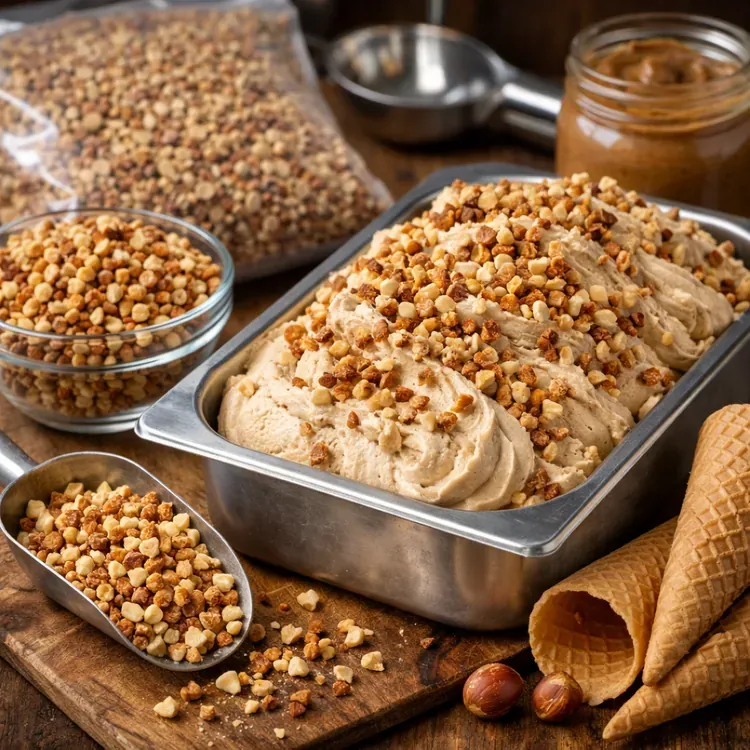
Roasted diced hazelnuts are used as a premium finishing topping for gelato, soft-serve and frozen desserts. They add aroma, texture contrast and an immediate “fresh-roasted” cue at the point of serving. In this application, the main procurement drivers are cut consistency, low fines / low dust, and shelf stability (protecting aroma from oxidation and preventing moisture pickup).

We support producers by matching the hazelnut format to your service style: larger diced pieces for hand sprinkling and visual impact, tighter size bands for topping dispensers, and optional companion formats (paste or flour) for base flavors and variegates. If you share your display time, portioning method and desired crunch, we can propose a practical spec and pack format.

Defined cut sizes Low fines / low dust Roast consistency Export-ready documentation

Gelato is served cold, but the topping is exposed to ambient humidity, repeated lid openings and handling. That environment makes packaging and fines control especially important.
Recommended formats

Typical starting points for pilots and scale-up. We adapt cut size, roast level, screening and packaging to your service and shelf-life target.

  • Roasted diced hazelnuts (defined size band; low fines)
  • Blanched diced / blanched kernels (lighter color targets; gentle roast options)
  • Hazelnut paste / puree (for base flavor, variegates or ribbon systems)

Many gelato brands use paste for the “core flavor” and diced pieces for the “signature texture” on top.

Technical considerations

The variables that most often impact crunch, appearance and repeatability in gelato service.

  • Cut size and tolerance: consistent look and predictable sprinkle rate
  • Fines (dust) control: cleaner serving and better crunch retention
  • Roast profile: aroma development aligned to your flavor target
  • Oxidation protection: barrier packaging and controlled headspace
  • Moisture pickup: managed via packaging and handling guidance
  • Allergen control: clear allergen status and segregation planning

Packaging approach

Topping applications benefit from packaging that preserves aroma and keeps pieces free-flowing and crisp.

  • Foodservice bags (lined cartons) for back-of-house use
  • Small-format bags for high-turnover counters and seasonal flavors
  • Barrier liners with optional MAP/N₂ for longer shelf-life targets

For roasted diced pieces, oxygen barrier and sealing quality are key to avoiding stale or rancid notes over time.

See bulk supply details →

Choosing the right dice for gelato toppings

“Diced” can cover a wide range of particle sizes. The right choice depends on how you apply the topping, whether you use a dispenser, and the visual effect you want on the gelato surface.

Fine dice

Best for even coverage and a delicate crunch; popular for cones and soft-serve swirls.

  • Uniform sprinkle, less bounce-off
  • Specify low fines to prevent “powdering”
  • Good for high-volume service

Medium dice

Balanced look and crunch; a common “signature topping” size for artisan gelato.

  • Visible pieces with satisfying bite
  • Works for hand sprinkling or dispensers
  • Pairs well with hazelnut paste flavors

Coarse dice

Maximum visual impact; best for premium cups and plated desserts.

  • Strong visual identity
  • Use tighter size control for consistency
  • Minimize breakage to keep it “premium”

If you already have a target cut (or a benchmark sample), we can align a size band and screening approach that keeps your topping consistent across shipments.

Crunch retention in cold displays

The biggest performance challenge for diced toppings is moisture exposure during service. Even though gelato is cold, the topping sits in open trays, experiences repeated lid openings, and can pick up moisture from the environment and from contact with the gelato surface. A good specification focuses on the practical levers that protect crunch.

Reduce fines (dust)

Fines absorb moisture quickly and can create a powdery look.

  • Screening to reduce fines improves visual quality
  • Helps pieces stay free-flowing in dispensers
  • Improves perceived freshness at point of sale

Protect aroma from oxidation

Roasted nuts are sensitive to oxygen exposure over time.

  • Oxygen barrier packaging helps preserve aroma
  • Controlled headspace (and optional MAP/N₂) supports longer shelf-life
  • Roast consistency reduces flavor drift between batches

Handle for service

Packaging helps, but service habits matter too.

  • Use smaller open containers with frequent refresh
  • Close lids between rush periods
  • Store reserve stock sealed until needed

Typical specification markers

Below is a practical checklist used by procurement and QA teams for roasted diced toppings in gelato applications. We align each item to your destination market, service format and shelf-life target.

ParameterHow we align it
Cut size (fine/medium/coarse)Defined size band aligned to your topping method and visual target
Fines / dust levelScreening approach and limits to improve crunch and clean serving
Roast profileAligned to flavor target with practical color/aroma checks
MoistureControlled to support crispness and free-flowing performance
Defect sortingScreened and optically sorted where required
Micro profileAligned to customer specifications and destination requirements
AflatoxinManaged through risk-based sourcing and partner controls
Packaging barrierBarrier liners/films; optional MAP/N₂ where shelf-life requires it
TraceabilityLot IDs, COA flow and export documentation with each shipment

Final values depend on cut size, roast intensity, packaging format and customer requirements. We share lot documentation with each shipment.

FAQ

Which hazelnut format is most common for roasted diced toppings for gelato?

Most gelato programs start with roasted diced hazelnut pieces in a defined cut size (fine, medium, or coarse). From there, buyers fine-tune roast intensity, fines limits and packaging protection to match display time and crunch expectations.

How do you keep diced hazelnuts crunchy on gelato?

Crunch retention depends on low fines (less dust that absorbs moisture), controlled moisture in the product, and packaging that limits moisture pickup and oxidation. We can also align cut size and roast profile so pieces hold up better during service.

Can you match a target particle size or cut?

Yes. We supply controlled cuts (sliced, diced or chopped) with defined size bands and optional screening to reduce fines, aligned to your topping dispenser or finishing process.

Do you support long-term supply programs?

Yes. We structure annual and multi-shipment programs with consistent specifications, batch documentation and forecast-based planning.

Next step

Send your target cut size (fine/medium/coarse), roast preference, expected display/service time, monthly volume and destination. We will propose a suitable diced specification (including fines limits), packaging protection and a shipment plan.

Review products