Applications Library • Retail

Roasted kernels for vending and HORECA

A practical, procurement-ready overview for vending operators and foodservice buyers — covering portioning-friendly kernel sizes, roast and seasoning options, breakage and dust control, shelf-life and oxidation management, and packaging formats from bulk bags to single-serve packs.

Back to applications
Roasted kernels for vending and HORECA illustration

Where it fits

Roasted hazelnut kernels are a high-value ingredient for grab-and-go and foodservice because they combine clean labeling with premium taste. For vending, the priority is repeatable portioning, low dust and stable shelf-life in real-world storage conditions. For HORECA, the priority is consistent aroma, appearance and crunch — whether you use kernels as a bar snack, a garnish, or a premium topping.

We support operators and distributors by aligning kernel calibration, roast level, screening (breakage/fines), and packaging protection to your channel. That means fewer machine issues, a cleaner consumer experience, and dependable performance across shipments.

Consistent portioning Low fines / low dust Oxidation protection Export-ready documentation
  • Vending: predictable flow, stable taste, and packaging that survives temperature swings.
  • HORECA: a premium “finish” for desserts, pastries, salads, yogurt bowls, coffee-shop specials and hotel buffets.
  • Distribution: reliable lot traceability and consistent specs simplify multi-site buying.
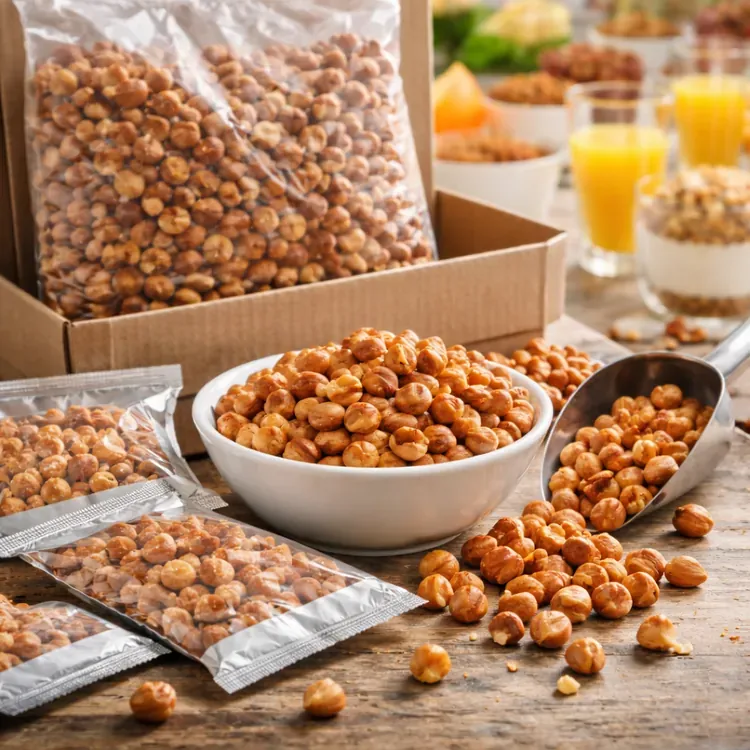
Recommended formats

Typical starting points for pilots and scale-up. We adapt calibration, roast and packaging to your vending format or foodservice use-case.

  • Roasted kernels (calibrated) — the core vending/HORECA format
  • Blanched + roasted kernels — lighter color targets, cleaner look
  • Controlled cuts (optional) — chopped/sliced for toppings and pastry finishing

If you portion by volume, calibration matters even more. If you portion by weight, breakage/fines become the bigger driver.

Technical considerations

The variables that most often affect vending reliability and foodservice consistency.

  • Size calibration: improves dosing consistency and presentation
  • Breakage & fines control: reduces dust buildup and improves pack appearance
  • Roast profile: aroma development aligned to your target (light → deep roast)
  • Oxidation management: barrier packaging, controlled headspace, optional MAP/N₂ flush
  • Moisture control: protects crunch and reduces clumping risk
  • Allergen control: clear allergen status and line segregation planning

Packaging approach

Vending and HORECA have different packaging priorities — but both benefit from oxygen and moisture protection to preserve aroma and crunch.

  • Bulk foodservice bags (lined cartons) for kitchens and distributors
  • Portion packs (single-serve) for vending and airline/hotel service
  • Barrier films + optional MAP/N₂ for longer shelf-life targets

For roasted products, the packaging barrier often matters as much as the roast when you’re targeting long shelf-life.

See bulk supply details →

Channel-specific requirements

“Roasted hazelnuts” can mean very different specs depending on where they are used. Below are the practical priorities we see most often.

Vending operators

Focus on consistent dosing, low fines, and shelf-life stability in less controlled storage environments.

  • Calibration matched to your dispenser and portion size
  • Low fines to reduce dust, bridging and chute residue
  • Packaging barrier to preserve aroma and avoid rancidity notes
  • Pack durability for distribution and temperature variation

HORECA kitchens

Focus on flavor, crunch, and appearance across menu applications.

  • Roast level aligned to the dish (desserts vs savory)
  • Clean appearance, minimal defects and uniform color
  • Optional formats: chopped/sliced for pastry finishing
  • Reliable supply for multi-site operations

Distributors

Focus on documentation, stable specs, and efficient logistics.

  • Traceable lots and consistent COA flow
  • Standardized cartons/palletization for mixed loads
  • Repeatable specs for multiple customer programs
  • Forecast-based planning for peaks and promotions

Roast, seasoning and sensory targets

In vending and foodservice, your “signature” often comes from a repeatable roast and a clean finish. Even without added flavors, tightening roast controls helps reduce batch-to-batch variation in aroma and color.

Roast profiles

Choose a profile that matches the channel and the expected consumption moment.

  • Light roast: cleaner, delicate notes; often preferred for toppings
  • Medium roast: balanced aroma; a common “mainstream premium” option
  • Deeper roast: stronger intensity; useful for robust snack positioning

Salt & flavor options

If you season, define it clearly so it scales and stays consistent.

  • Salt level aligned to your nutritional and taste target
  • Dry seasoning vs light oil-assisted adhesion (where applicable)
  • Clear allergen and cross-contact expectations for added flavors

Crunch & appearance

The simplest drivers of perceived quality in both channels.

  • Moisture control for crunch retention
  • Low breakage and minimal fines for a premium look
  • Color consistency aligned to roast profile

If you share a benchmark sample (or your target sensory notes), we can align a practical roast direction and spec language for procurement and QA.

Typical specification markers

Below is a practical checklist used by procurement and QA teams for roasted kernels in vending and HORECA. We align each item to your destination market, packaging format and shelf-life target.

ParameterHow we align it
Kernel size (calibration)Defined size range to support consistent portioning and presentation
Roast profileAligned to sensory target with practical appearance/aroma checks
Breakage / finesScreening and limits to reduce dust and improve pack appearance
MoistureControlled to protect crunch and reduce clumping risk
Defect sortingScreened and optically sorted where required
Micro profileAligned to customer specifications and destination requirements
AflatoxinManaged through risk-based sourcing and partner controls
Packaging barrierBarrier liners/films; optional MAP/N₂ where shelf-life requires it
TraceabilityLot IDs, COA flow and export documentation with each shipment
Allergen controlsClear allergen status; cross-contact expectations for flavored lines

Final values depend on product form, pack format and customer requirements. We share lot documentation with each shipment.

FAQ

Which hazelnut format is most common for vending and horeca?

Most programs start with calibrated roasted kernels because they portion consistently, present well and deliver strong aroma. Depending on the menu or machine, blanched/roasted options and controlled cuts can be added for specific applications.

What matters most for vending performance?

Vending performance is driven by consistent kernel size (for dosing), low breakage and fines (to reduce dust and machine residue), and packaging that protects against oxidation and moisture pickup. We align roast level, screening and barrier packaging to your shelf-life target.

Can you support single-serve or portion pack formats?

Yes. We supply export-ready bulk formats and can support retail-style portion packs through partner packing lines, including oxygen-barrier films and optional nitrogen flushing/MAP depending on your destination and shelf-life needs.

Do you support long-term supply programs?

Yes. We structure annual and multi-shipment programs with consistent specifications, batch documentation and forecast-based planning, including seasonality planning for peak demand periods.

Next step

Send your channel details (vending vs HORECA), target portion size/pack format, roast preference, estimated volume and destination. We will propose suitable kernel calibration, packaging protection and a shipment plan aligned to your shelf-life target.

Review products