Applications Library • Retail

Single-origin hazelnut assortments

A procurement-ready overview of how to build origin-forward hazelnut assortments for retail, gifting and private label — including origin definitions and traceability, sensory profile design, format selection, and packaging that protects aroma and crunch.

Back to applications
Single-origin hazelnut assortments illustration

Where it fits

Single-origin assortments are used when you want to sell more than “a nut” — you want to sell a story, a sensory experience, and a repeatable standard. This format performs well in premium retail, seasonal gifting, subscription boxes, foodservice retail packs, and private label programs where transparency and provenance help justify a higher shelf price.

In practice, the value of “single-origin” depends on two things: (1) a clear definition of what origin means for your label, and (2) segregation and documentation that keeps lots consistent across processing steps. We support both by aligning a realistic program specification (formats, roast and packaging) and the documentation flow required for export markets.

Origin definition Lot segregation Sensory consistency Retail-ready packaging
  • Retail impact: clear origin claims + consistent taste drive repeat purchase, not just first purchase.
  • Premium positioning: controlled roast and clean appearance help justify the upgrade.
  • Operational reality: seasonal crops require program planning to keep supply consistent.
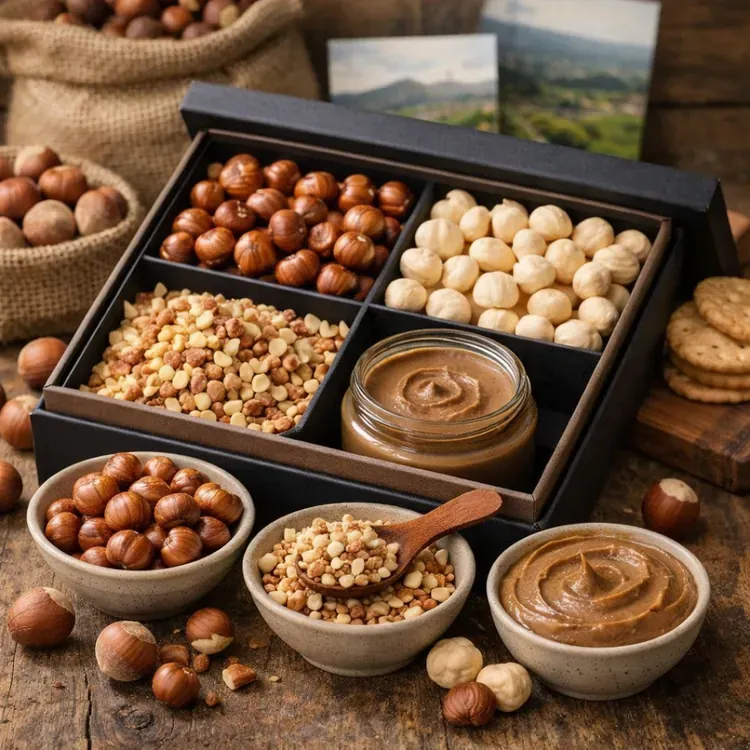
Recommended formats

Typical building blocks for a premium assortment. We adapt format mix, roast level and packaging based on your consumer use-cases and shelf-life target.

  • Whole roasted kernels (tasting, gifting, snacking)
  • Blanched kernels (lighter color, delicate profile)
  • Diced / chopped (toppings, baking, portion control)
  • Sliced (bakery finishing and garnish)
  • Hazelnut paste / puree (spreads, fillings, flavor base)

A strong assortment is built around a clear “hero” format (often roasted kernels) and one or two complementary formats.

Technical considerations

The variables that most often determine whether an origin program feels premium and stays consistent over time.

  • Origin definition: what exactly is claimed (country / region / program lot) and how it’s supported
  • Harvest & lot consistency: maintaining profile across shipments and seasonal transitions
  • Roast profile alignment: repeatable aroma development and controlled color
  • Particle control: calibrated cuts and low fines for clean appearance
  • Oxidation protection: aroma and freshness preservation through barrier packaging
  • Moisture control: protects crunch for kernels and prevents clumping for cuts

Packaging approach

Retail assortments win or lose on aroma, crunch and appearance. Packaging should protect against oxygen, moisture and temperature swings.

  • Vacuum / MAP options for roasted formats and paste where aroma protection is critical
  • High-barrier liners inside export cartons to reduce moisture pickup
  • Retail pack concepts for private label (portion packs, jars, pouches, gift sets)

For paste/puree, temperature management and oxygen control are key to preserving the intended sensory profile.

See bulk supply details →

What “single-origin” means in real procurement terms

“Single-origin” is a powerful claim, but it must be defined clearly to avoid confusion in procurement, QA and labeling. Programs typically fall into one of three practical models:

Country-origin

Simplest label strategy; consistent sourcing from one country with controlled processing and documentation.

  • Good for broad retail distribution
  • Lower complexity and easier replenishment
  • Less “story depth” vs region-level

Region or program-origin

More specific geography or defined supply program; stronger storytelling with tighter segregation.

  • Premium positioning and differentiation
  • Requires clearer lot management and planning
  • Best for gift sets and specialty retail

Lot/harvest edition

A limited “edition” approach where each release is tied to a defined lot and profile.

  • Strong for seasonal marketing
  • Works well with tasting notes and QR storytelling
  • Requires forecast discipline and planned substitutions

We help you choose the model that fits your retail promise, then align the spec and documentation so the claim stays consistent from trial to scale-up.

Assortment design: how to make the differences feel real

A premium assortment should deliver clear, understandable differences — not just different pack labels. The easiest levers are processing level and roast profile, supported by consistent raw material and packaging.

Sensory ladder

Create “steps” consumers can perceive: delicate → balanced → intense.

  • Blanched kernels: lighter, cleaner, delicate notes
  • Roasted kernels: balanced aroma and crunch
  • Deeper roast or paste: richer, more intense flavor base

Use-case mix

Make each component useful, not decorative.

  • Kernels for snacking and topping
  • Chopped/sliced for bakery and desserts
  • Paste for spreads, fillings and drinks

Consistency controls

The behind-the-scenes controls that keep the program stable across shipments.

  • Defined roast targets and appearance checks
  • Low fines and controlled cut tolerances
  • Barrier packaging to protect aroma and crunch

Typical specification markers

Below is a practical checklist used by procurement and QA teams for single-origin assortment programs. We align each item to your destination market, label strategy and processing level.

ParameterHow we align it
Origin definitionCountry / regional / program-lot definition aligned to your labeling and documentation needs
Lot segregationDocumented lot flow and segregation through processing and packing
Processing levelNatural / blanched / roasted; cut formats and paste options as required
Roast profileAligned to sensory target with repeatable appearance and aroma checks
Particle/cut toleranceControlled cuts (sliced/diced/chopped) with fines limits for clean presentation
MoistureControlled to protect crunch and reduce clumping risk
Defect sortingScreened and optically sorted where required
Micro profileAligned to customer specifications and destination requirements
AflatoxinManaged through risk-based sourcing and partner controls
PackagingBarrier liners, vacuum/MAP options, export cartons and retail-ready formats as required
Traceability docsCOA flow, lot IDs, and shipment documentation aligned to your program

Final values depend on product form and customer requirements. We share lot documentation with each shipment.

FAQ

What does “single-origin” mean for hazelnut assortments?

In practice, “single-origin” means the product is sourced from a defined geography and kept segregated through processing and packing so the claim remains credible. The definition can be country-level, regional, or program/lot-based depending on your labeling strategy and documentation requirements.

Which hazelnut formats are most common in single-origin assortments?

Most assortment concepts start with whole roasted kernels for tasting and gifting, then add complementary formats such as blanched kernels (lighter color), chopped/sliced pieces (toppings), and hazelnut paste (spreads or baking). The best mix depends on your consumer use-cases, pack sizes and shelf-life expectations.

Can you build an assortment with different roast levels or sensory profiles?

Yes. We can align roast level and processing to create clear sensory steps (for example: light, medium, and deeper roast) or distinct profiles across formats. We also help you keep appearance and aroma consistent by setting practical controls for moisture, fines, and packaging.

Do you support long-term supply programs for retail and private label?

Yes. We structure annual and multi-shipment programs with consistent specifications, batch documentation and forecast-based planning. For retail, we can also plan for seasonal peaks by aligning production windows and packaging needs.

Next step

Send your target assortment concept (formats, roast levels, pack sizes), estimated volume, and destination. We will propose a practical single-origin program specification, packaging approach, and shipment plan.