Chocolate inclusions
Calibrated kernels for bars and pralines. Roast level aligned to cocoa profile; protective packing helps preserve aroma through storage.
Explore chocolate applications →Roasted kernels built for manufacturing: repeatable aroma, controlled color development and dependable crunch. We align roast profile, calibration, moisture/skin targets and packaging to your process and market requirements.
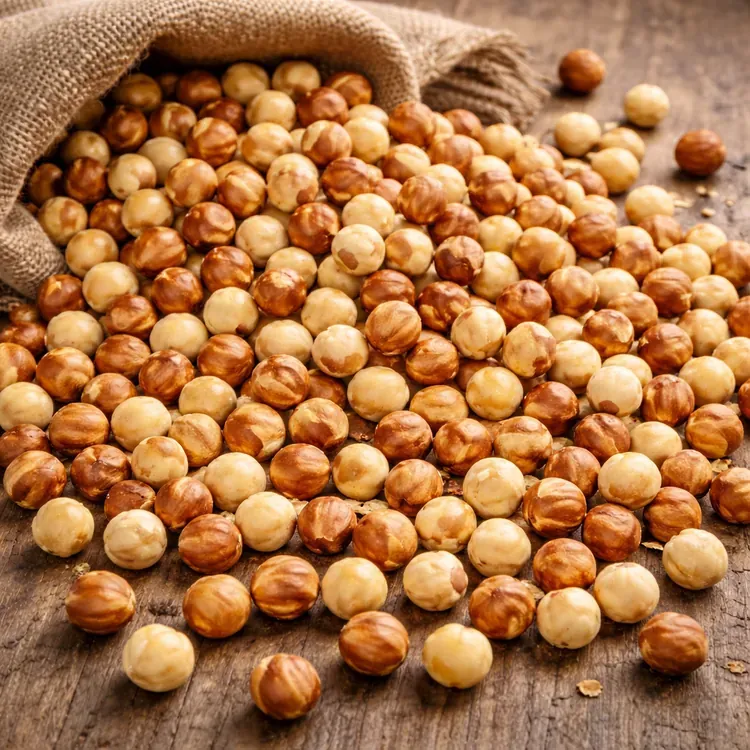
Roasted kernels are chosen when your finished product depends on flavor release, nutty aroma and stable texture. This format is commonly used in confectionery, ice cream, bakery and snack lines where sensory performance must stay stable batch-to-batch.
Send your internal spec (or a sample of your current benchmark). We map it to a repeatable product definition and lock it for ongoing supply.
Below are the most common technical parameters procurement and QA teams specify for roasted kernels. We can align to your target ranges and issue a product specification sheet for sign-off.
| Parameter | Specification options | Why it matters on production lines |
|---|---|---|
| Origin & varieties | Turkey origin; common regional lots include Levant / Akçakoca / Giresun (availability varies by season and program). | Regional lots can influence aroma intensity, kernel shape and sizing distribution. |
| Kernel calibration (size) | Standard size bands (e.g., 9–11 mm, 11–13 mm, 13–15 mm) and interval-based grading where required. | Stable dosing rates, consistent visual appearance, predictable roast penetration. |
| Roast profile | Light / medium / dark; profile matched to your sensory target and downstream process (enrobing, baking, mixing). | Affects aroma, bitterness, color development and oil expression on the surface. |
| Moisture (post-roast) | Targets commonly specified around low single-digits (often ~0.8–3% in market references); aligned to your shelf-life and crunch requirements. | Impacts crunch retention, microbial stability and how kernels behave in chocolate/cream systems. |
| Skin / pellicle residual | Defined tolerance bands depending on “with-skin” or “clean appearance” requirements; tighter control for premium visible inclusions. | Controls visual defects, bitterness notes and perceived quality in finished goods. |
| Defect & foreign matter control | Sorting aligned to your QA thresholds (broken kernels, shriveled, dark, foreign matter, shell fragments). | Reduces line stoppages, protects grinders, improves consumer safety and complaint rates. |
| Oxidation protection | Packaging + handling designed to reduce oxygen exposure; vacuum or MAP available where aroma preservation is critical. | Reduces rancidity risk and protects roasted aroma through distribution. |
| Allergen statement | Tree nut allergen; cross-contact statements aligned to plant and customer requirements. | Label compliance and risk management for downstream brands. |
Signed product specification • COA per lot (as agreed) • Traceability/lot coding • Packing list/invoice support • Destination-market document set (as required).
Roasted hazelnuts are high-value but sensitive: roasting drives flavor formation while also increasing oxidation sensitivity. We plan the product definition around your target shelf-life and distribution conditions.
For chocolate and dairy systems, oxidation control and temperature exposure during transit are often the key shelf-life drivers.
Packaging is selected based on how sensitive your application is to oxygen uptake, humidity exposure and handling damage. We can align packing format, liner specification and pallet pattern to your warehouse handling.
| Packaging format | Typical configurations | Best for |
|---|---|---|
| Industrial sacks | 25–50 kg sacks; kraft options where used; palletized for export routes. | High-throughput ingredient users where re-packing is not required. |
| Cartons with liners | Carton + food-grade liner; options for barrier liners where needed. | Cleaner handling, reduced damage, improved warehouse stacking stability. |
| Vacuum / high-barrier packs | Commonly 5/10/20/25 kg vacuum packs (cartoned or non-cartoned) when oxidation control is a priority. | Aroma retention, longer shelf-life, sensitive downstream processes. |
| MAP (Modified Atmosphere) | Where agreed, inert-gas headspace / barrier systems can be used (program-dependent). | Long routes, warm climates, high-sensitivity premium inclusions. |
| Retail / portion packs | Available for private label programs; barcode-ready cases and label compliance for export markets. | Brand programs and distributor-ready SKUs. |
Roasted kernels are more sensitive than natural kernels. If your route involves heat exposure, discuss protective packing and temperature guidance during transit.
Common use-cases where roast profile and packaging choices materially affect finished product performance.
Calibrated kernels for bars and pralines. Roast level aligned to cocoa profile; protective packing helps preserve aroma through storage.
Explore chocolate applications →Roasted crunch for variegates and toppings. Moisture management reduces softening; particle integrity supports dosing systems.
Explore frozen dessert applications →Roasted kernels used as inclusions or toppings. Size consistency supports depositor and topping lines; roast color can be set to match bake color.
Explore bakery applications →Flavor-forward kernels for mixed nuts and snack blends. Roast profile tuned for direct consumption and visual uniformity.
Explore snack applications →Roasted kernels used as the base for grinding. Consistent roast supports stable paste flavor and color.
See paste/puree format →Whole kernels used for decoration; coated or caramelized lines can require tight defect control and stable kernel strength.
Explore coating applications →Shelf-life depends on roast intensity, oxygen exposure, temperature history and packaging barrier level. We provide handling guidance aligned to your product sensitivity and route.
If roasted kernels are staged near warm enrobing zones, consider shorter staging time or higher barrier packing to reduce aroma loss.
To quote quickly and accurately, include the items below. If you already have a spec sheet, send it as-is.
| Item | Example |
|---|---|
| Roast level target | Light / medium / dark, or “match sample” |
| Calibration | 11–13 mm (or target size band) |
| Moisture & skin tolerances | Target moisture range; max skin % depending on application |
| Packaging | 25 kg carton + liner, or 10 kg vacuum packs |
| Quantity | 5 MT trial / 1×20’ FCL / annual program volume |
| Destination & incoterm | FOB / CIF / DDP + port/country |
| Documents/certificates | COA, traceability, market-specific documents (as required) |
Yes. We align roasting parameters to your aroma, color and crunch target. If you provide a benchmark sample or target description, we map to a repeatable profile and lock it for ongoing shipments.
Yes. Vacuum or MAP can be considered depending on shelf-life requirements, route conditions and how sensitive your application is to oxidation and aroma loss.
Roast level, kernel size/caliber, moisture and skin tolerance, packaging format, quantity, destination and incoterm. If you have an internal spec sheet, send it and we’ll map it directly.
Tell us your roast target, calibration, packaging and destination. We’ll respond with a spec-aligned offer and program options.